

Objective
This blog explains the 4 Ps of marketing and how each element works. It also shows how businesses can use them to understand customers and improve marketing decisions.
- The 4 Ps help businesses plan their marketing activities effectively.
- Product decisions should focus on customer needs and expectations.
- Pricing should balance customer budgets, product value, and business costs.
- Place makes products easier for customers to find and buy.
- Promotion helps businesses reach audiences and communicate product benefits.
- All four Ps should work together to support business goals.
- Regular reviews help businesses improve their marketing mix over time.
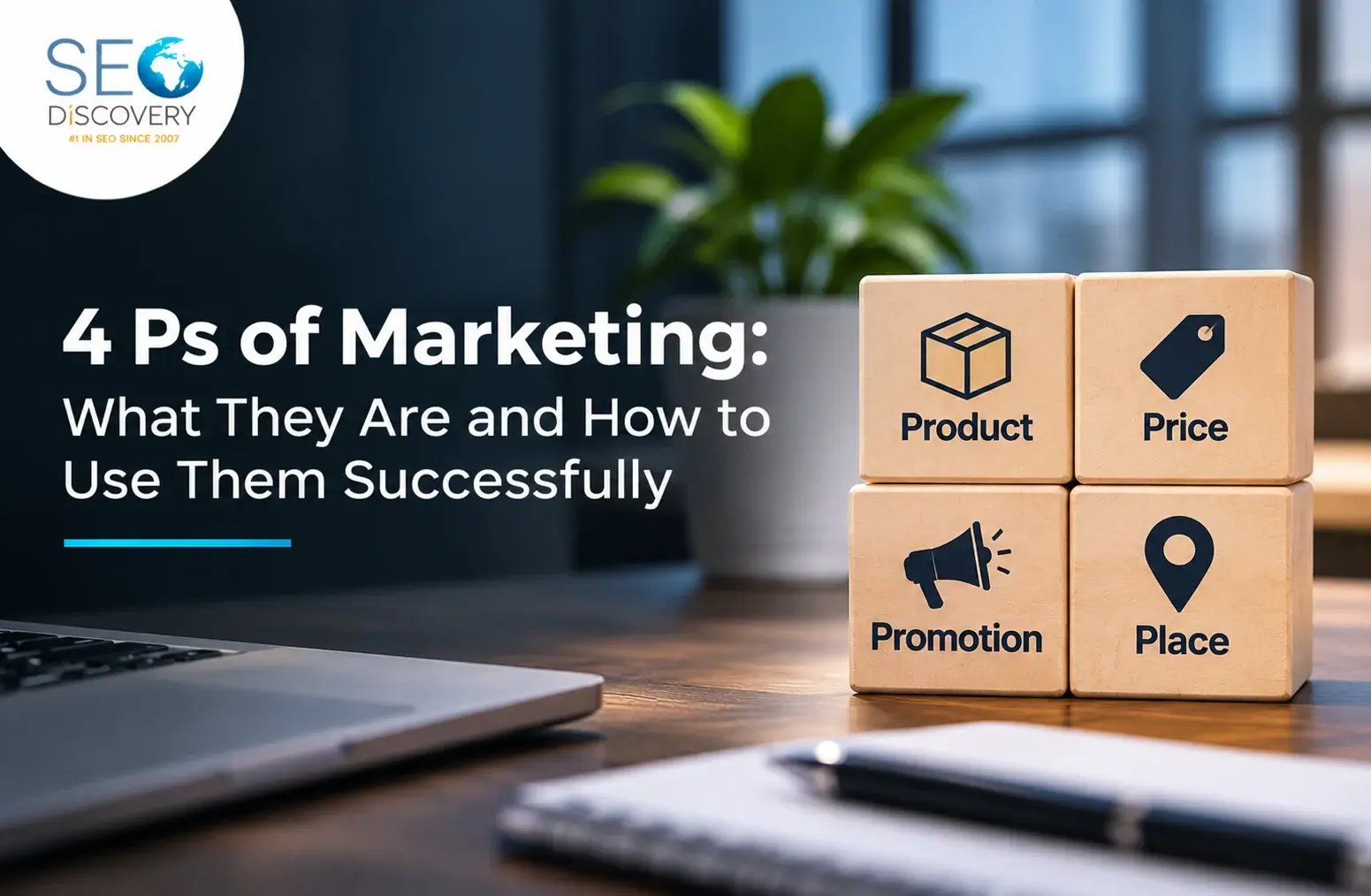
The 4 Ps of marketing, also called the marketing mix, are four key elements that help businesses sell their products or services. Introduced by E. Jerome McCarthy in the 1960s, they include Product, Price, Place, and Promotion. Businesses use them to plan what to sell, how to price it, where to sell it, and how to reach customers.
Did You Know?
According to OpenStax, the marketing mix helps businesses combine key marketing decisions to meet customer needs and achieve their marketing goals.
Understanding these four elements can help businesses stand out from competitors, attract the right audience, and make smarter marketing choices. When planned together, they give businesses a clear direction for their marketing activities and help them work toward their goals.
In this guide, we will explain what each P means, how to use it, and which mistakes to avoid. So continue reading until the end.
Grow Your Business with Expert Digital Marketing Services from SEO Discovery at $250/Month
Table Of Contents
- What Are the 4 Ps of Marketing?
- Why the Marketing 4 Ps Matter for Business Growth
- How to Use the 4 Ps of Marketing Successfully
- Important Metrics to Monitor in the Marketing 4 Ps
- How the 4 Ps, 7 Ps, and 4 Cs of Marketing Differ
- Common Mistakes to Avoid in the 4 P's of the Marketing Mix
- How We Applied the 4 Ps to Grow a Client's Search Visibility
- Keep Your Marketing Mix Strong with SEO Discovery
- FAQs About the 4 Ps of Marketing
What Are the 4 Ps of Marketing?
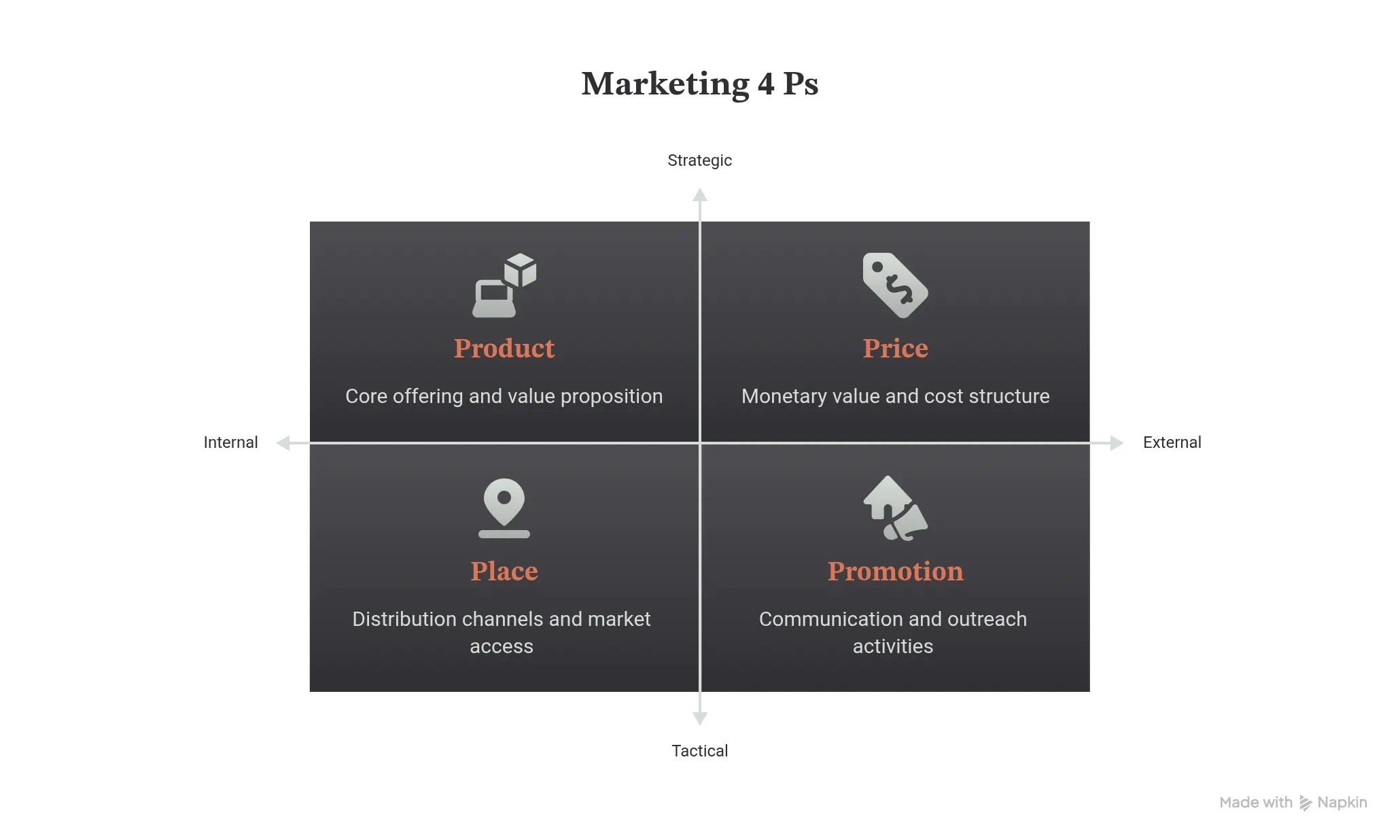
The 4 Ps of Marketing form a framework that helps businesses make important decisions about their marketing activities. Each P focuses on a different part of the process, from creating an offer to encouraging customers to choose it.
The four elements include:
- Product: Product is what a business offers to its customers. It covers the features, quality, design, packaging, and benefits that make the offering useful and appealing.
- Price: Price is the amount customers pay for an offering. It depends on production costs, customer budgets, competitor prices, and the value customers see in the product.
- Place: Place focuses on making products available to customers. It covers distribution methods, store locations, websites, delivery options, and online marketplaces where people can make purchases.
- Promotion: Promotion is how a business communicates with potential customers. It includes advertising, social media, email campaigns, public relations, and discounts that encourage people to consider buying.
The History Behind the 4 Ps of Marketing
The concept of the marketing 4 Ps began to take shape in the mid-20th century. In 1948, James Culliton introduced the idea of marketers combining different business elements to achieve their goals. Later, Neil Borden developed this idea and popularized the term “marketing mix.”
In 1960, E. Jerome McCarthy introduced the four-part framework in his book Basic Marketing: A Managerial Approach. He organized marketing decisions into Product, Price, Place, and Promotion, making the marketing mix easier for businesses to understand and use.
“Understanding the 4 Ps is a good starting point, but businesses should not treat them as separate decisions. Product, Price, Place, and Promotion need to work together. Businesses should keep customer needs at the center, review their marketing choices regularly, and make changes based on customer feedback and market trends.”
Mandeep Singh Chahal, CEO, SEO Discovery
The 4 Ps help businesses plan how to offer products, set prices, reach customers, and communicate value. When used together, these elements help businesses understand their audience, make better marketing decisions, and work toward their business goals.
Here are five reasons why the marketing 4 Ps matter:
- Helps Meet Customer Needs: Understanding customer preferences helps businesses develop products and services that offer the features and benefits people are looking for.
- Helps Set the Right Price: Pricing decisions help businesses balance what customers are willing to pay with production costs, product value, and profit goals.
- Makes Products Easier to Find: Choosing suitable stores, websites, and distribution channels helps customers access products when and where they want to buy them.
- Creates Product Awareness: Advertising, social media, and other promotional activities help businesses introduce their offerings and explain why customers should consider buying them.
- Keeps Marketing Activities Connected: Planning all four elements together helps businesses maintain a consistent approach to their target market. A well-planned marketing strategy also helps keep different marketing activities aligned with business goals.
- Supports Business Growth: Combining all four elements helps businesses attract customers, improve sales opportunities, and build stronger relationships with their audience.
Ready to Grow Your Business?
Build better marketing strategies with our expert team.
The 4 Ps of marketing help businesses make better decisions about their products, prices, sales channels, and promotional activities. To use this framework effectively, understand your customers first and make sure all four elements support the same business goals.
1. Product: Build an Offer Your Target Audience Wants
A good product solves a problem or meets a customer need. The marketing 4 Ps framework starts with understanding your target audience, their interests, and the challenges they face. Use this information to decide what features, quality, packaging, and services your product should offer.
What to Do:
- Understand Customer Needs: Find out what your target customers want and what problems they need help solving.
- Review Customer Questions: Check customer queries, online reviews, and search terms to understand what people expect from products like yours.
- Study Your Competitors: Compare your product with three leading competitors to identify features or benefits that could make your offer more useful.
- Improve Your Product: Use customer feedback to make changes to product quality, design, packaging, or service.
- Highlight Your Main Benefits: Explain what makes your product different and why customers should choose it over other options.
Pro Tip: Ask potential customers to try your product and share their feedback before launch. Use their suggestions to make useful improvements.
2. Price: Set a Pricing Strategy That Signals Value
Price affects how customers judge your product and decide whether it is worth buying. The 4Ps of the marketing mix consider customer budgets, product value, business costs, and competitor prices when setting the right price.
Popular Pricing Strategies
- Penetration Pricing: Start with a lower price to attract new customers and introduce your product in a competitive market.
- Premium Pricing: Charge a higher price when your product offers better quality, special features, or an exclusive experience.
- Competitive Pricing: Set your price by comparing similar products from competitors and offering customers a suitable alternative.
- Value-Based Pricing: Set your price according to the benefits customers receive and how much they believe your product is worth.
What to Do:
- Calculate Your Costs: Include production, packaging, delivery, marketing, and other expenses before deciding your selling price.
- Compare Competitor Prices: Study similar products to understand how your prices compare with other options in the market.
- Understand Customer Budgets: Find out how much your target audience is comfortable spending on products or services like yours.
- Offer Different Price Options: Consider packages, plans, or product sizes to serve customers with different budgets.
- Review Your Pricing: Check sales and customer feedback regularly to see whether your prices need to change.
Pro Tip: Test a new price with a small customer group before applying it to your full product range.
3. Place: Reach Customers Through the Right Distribution Channels
Place covers the channels customers use to find and purchase your products or services. Choosing the right channels makes your business easier to find and gives customers convenient ways to buy.
Important Distribution Channels
- Your Website: Make your website easy to use, with clear product details, prices, and buying options. Use organic search to help potential customers find it.
- Local Search: Improve your local SEO and keep your Google Business Profile updated so nearby customers can find your business.
- Online Marketplaces: List your products on relevant marketplaces where customers already search for and compare similar items.
- Retail Stores and Partners: Work with suitable retailers and distributors to make your products available in places your customers regularly visit.
- AI Search Platforms: Keep your business and product information clear and accurate so platforms such as ChatGPT and Google AI Overviews can understand your offerings.
What to Do:
- Find out where your customers usually search for products or services.
- Make sure your business information is accurate across your website, listings, and sales platforms.
- Provide clear payment, delivery, and contact options to make buying easier.
- List your products on relevant marketplaces and work with suitable retail partners.
- Keep product details and availability updated so customers can easily find and understand your offerings.
Pro Tip: Track which channels bring enquiries and sales. Give more attention to the places where customers find your business and complete purchases.
4. Promotion: Spread Your Message With Impact
Promotion helps businesses tell people about their products and explain why they should consider buying them. The 4 P’s of the marketing mix connect your message with potential customers through different marketing channels.
Popular Promotion Channels
- Content Marketing and SEO: Publish helpful blogs, product pages, and useful information to reach people searching for products or services like yours.
- Email Marketing: Send product updates, useful tips, and special offers to people who have subscribed to hear from your business.
- Paid Advertising: A paid marketing agency can help plan and manage ads on search engines and social media platforms to reach potential customers.
- Social Media Marketing: A social media marketing agency can help create relevant posts, share product updates, and build relationships with your audience.
- Influencer Marketing: The best influencer marketing services can connect your business with content creators whose followers match your target audience.
What to Do:
- Identify the platforms your target customers use to find information and compare products.
- Create helpful content that answers customer questions and explains your product benefits.
- Choose suitable channels such as SEO, email, paid ads, and social media.
- Adjust your message based on whether customers are learning about, comparing, or ready to buy your product.
- Track website visits, enquiries, and sales to understand which campaigns bring potential customers.
Pro Tip: Do not measure a campaign only by likes or views. Check whether it brings relevant visitors, enquiries, and sales.
Is Your Website Missing Opportunities?
Find visibility gaps and improve your search performance with expert guidance today.
Important Metrics to Monitor in the Marketing 4 Ps
Track these important metrics to understand how well your 4Ps of the marketing mix work and identify areas that need improvement across your business.
P | What to Track | Example KPIs |
Product | Demand and satisfaction | Conversion rate, repeat purchases, review rating |
Price | Profit and perceived value | Profit margin, average order value, cart abandonment |
Place | Visibility and reach | Organic traffic, local pack views, sales per channel |
Promotion | Engagement and return | Click-through rate, cost per lead, ROI |
How the 4 Ps, 7 Ps, and 4 Cs of Marketing Differ
The 4 Ps, 7 Ps, and 4 Cs are different marketing frameworks with unique purposes. Understanding how they differ helps businesses choose an approach that fits their products, services, and customer needs.
Model | Elements | Best For |
4 Ps | Product, Price, Place, Promotion | Product-based businesses and fast planning |
7 Ps | 4 Ps plus People, Process, and Physical Evidence | Service businesses and customer experience |
4 Cs | Customer, Cost, Convenience, Communication | Customer-first checks and messaging |
When to Choose Each Model
- Choose the 4 Ps for simple, fast planning.
- Choose the 7 Ps when staff and service delivery drive sales.
- Use the 4 Cs to test your plan from the buyer’s view.
Smart teams combine all three models to build a customer-centric strategy.
Even with the right model, a few errors can slow you down.
Common Mistakes to Avoid in the 4 P's of the Marketing Mix
Avoid these common mistakes when applying the 4 P’s of the marketing mix to make better decisions, meet customer needs, and improve marketing performance.
- Mixing Messages: A premium product promoted with heavy discounts can confuse customers. Keep all four Ps consistent.
- Skipping Customer Research: Do not guess what customers want. Use surveys, website data, and keyword research to guide decisions.
- Ignoring Market Changes: Customer needs and market trends change. Review your marketing mix every few months and make updates.
- Promoting Too Early: Fix product quality and buying problems first. Then promote your business to attract more customers.
How We Applied the 4 Ps to Grow a Client's Search Visibility
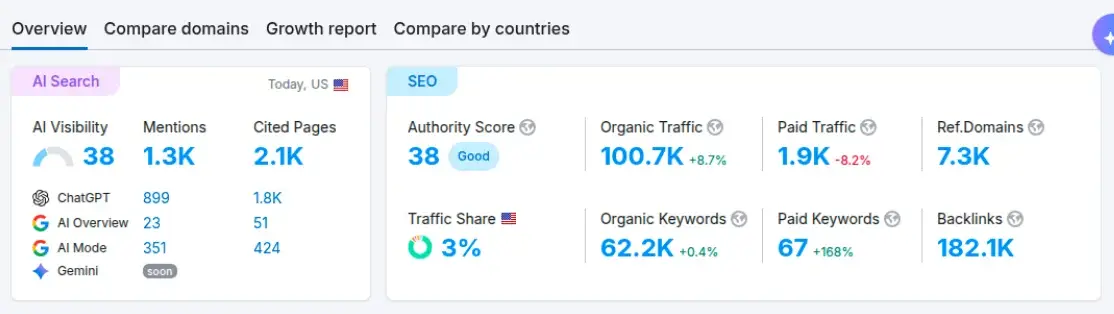
We helped one of our clients whose marketing mix did not work together. Their offer was strong, but buyers rarely found it in search. Their pricing pages ranked poorly, and AI platforms ignored the brand. Competitors captured most of the available clicks and brand mentions.
We started with the product and refined the service pages around buyer needs. For Price, we built clear pricing content for cost searches. For Place, we fixed technical SEO and optimized for ChatGPT and Google AI Mode. For Promotion, we earned quality backlinks, published targeted content, and ran focused paid ad campaigns.
Results:
- The site now ranks for 62.2K organic keywords, matching more buyer searches.
- Organic traffic reached 100.7K, up 8.7% from the previous period.
- AI Visibility reached 38, with 1.3K mentions and 2.1K cited pages across AI platforms.
- ChatGPT mentioned the brand 899 times and cited 1.8K website pages.
- Paid keywords grew 168% to 67, adding focused paid reach alongside organic growth.
Keep Your Marketing Mix Strong with SEO Discovery
The marketing 4 Ps provide a proven roadmap for growth. Audit each P, fix your weakest one, and track results every month. Apply the 4Ps of the marketing mix with data and creativity, and your results will follow.
SEO Discovery brings 22 years of digital marketing experience and a team of 400+ in-house experts. As a digital marketing agency, we build search-first strategies that turn each P into leads and revenue. Contact us today to build a marketing mix that wins more customers.
Take Your Marketing Beyond the Basics
Connect with experts who understand your business goals.
FAQs About the 4 Ps of Marketing
In simple terms, the 4 Ps of marketing are Product, Price, Place, and Promotion. This framework helps businesses decide what to offer, how much to charge, where to sell, and how to communicate value to customers.
Start by researching customer needs and competitors. Then shape your product, set a suitable price, choose convenient sales channels, and promote your offer where your target audience spends time online and interacts with brands there.
The marketing 4 Ps help connect product decisions, pricing, distribution, and promotion. When these elements support one another, businesses can serve customers better and make more consistent marketing decisions across different customer touchpoints and channels.
Yes. Apply the 4ps of the marketing mix to websites, online pricing, ecommerce platforms, search visibility, social media, email, and paid ads. The channels change, but the four decisions remain relevant for both products and services.
The 4 P’s of the marketing mix provide a basic framework: Product, Price, Place, and Promotion. The 7 Ps add People, Process, and Physical Evidence, which help explain service delivery and customer experience in service-based businesses.
Track product reviews and repeat purchases, profit margins and average order value, sales by channel, and campaign conversions. Review these measures together to identify which part of your marketing mix needs attention consistently over time.
Customer expectations, competitors, costs, and buying habits can change. Review your 4 Ps regularly, check performance data, and update products, prices, sales channels, or promotional messages when needed, rather than relying on old assumptions alone.
SEO Discovery brings 22+ years of experience and a team of 400+ in-house specialists. It offers SEO, PPC, content, social media, and AI-focused services for businesses seeking online visibility and leads for measurable, sustainable growth.