

Objective
This blog highlights why backlinks are essential for SEO success and how they influence rankings, authority, and traffic. It also explaines the different types of backlinks and actionable strategies to build them effectively.
- Backlinks in SEO serve as votes of confidence from other websites, signalling authority to Google.
- High-quality backlinks directly correlate with higher search engine rankings.
- Not all backlinks are equal; dofollow links pass link equity while nofollow links do not.
- Building backlinks through guest posting, digital PR, and broken link building is most effective.
- Spammy or low-quality links can trigger Google penalties and hurt your rankings.
Build Your Authority with Quality Backlinks by SEO Discovery, Starting at $250/Month
Backlinks are crucial because they serve as a primary “vote of confidence” from other websites, signaling to search engines that your content is authoritative, trustworthy, and worth ranking. They are one of Google’s top three ranking factors, and websites with strong backlink profiles consistently outrank those without.
Did you know? A Semrush study evaluating 1,000 domains shows that having high-quality backlinks improves search ranking on AI visibility.
This reveals why mastering backlinks in SEO can be beneficial for your website. Search engines have evolved a lot over the years. Backlinks, on the other hand, are still a major ranking signal. They tell Google and AI search engines, “This page is worth visiting.” It doesn’t matter if you run a small blog or a big e-commerce site; understanding the importance of backlinks in SEO is non-negotiable.
In this guide, we will break down what backlinks in SEO are, how they work, why they matter, and how you can build them the right way. So, read until the end!
Table Of Contents
- What Are Backlinks in SEO and How Do They Work?
- Key Reasons Why Backlinks Are Important for SEO
- Types of Backlinks in SEO: Not All Links Are Equal
- How We Improved Website Authority for Our Client Using Backlink Building
- How to Build Quality Backlinks for SEO
- Gain Visibility with SEO Discovery’s Expert Link Building Services!
- FAQs About Why Are Backlinks Important in SEO
What Are Backlinks in SEO and How Do They Work?
A backlink is just a link from one website to another. When site A links to site B, that link is a backlink for site B. The backlink meaning in SEO goes deeper than just a hyperlink. Search engines like Google treat each backlink as a vote of confidence. The more good votes your page gets, the more trustworthy it appears.
Here is how backlinks work in SEO at a fundamental level:
- Discovery: Google’s crawlers follow links across the web to find new pages.
- Authority Transfer: When a high-authority site links to you, it passes link equity (also called PageRank) to your page.
- Ranking Signal: Google uses the quantity and quality of backlinks as a key factor to rank pages.
- Trust Building: Backlinks from reputable domains signal that your content is trustworthy and relevant.
Key Reasons Why Backlinks Are Important for SEO
Backlinks play a vital role in SEO by building authority, improving rankings, driving referral traffic, and helping search engines discover content faster. Over time, they create compounding growth and long-term visibility.
1. Signal Authority and Trustworthiness
Google’s algorithm is built on trust. A page with backlinks from credible sources like universities (.edu) or government sites (.gov) carries enormous weight. This is why quality backlinks in SEO outperform sheer quantity every single time.
Here is how high-authority links establish your site’s credibility:
- Trust by association: When a reputable organization links to you, their “trust signal” is passed to your domain, signaling to Google that you are a reliable source.
- Weighted link equity: A single link from a high-DR site provides more “ranking power” than hundreds of low-quality or spammy links.
- Niche relevance: Obtaining links from recognized leaders in your specific industry proves to search engines that you are a topical expert.
- Sustainable rankings: Unlike low-quality tactics, white hat SEO services build a foundation of trust that protects your site from future algorithm updates.
Example: A backlink from Harvard.edu carries far more authority than 50 links from unknown blogs. Domain Rating (DR) and Domain Authority (DA) are metrics that measure this authority.
2. Improve Your Rankings
A Backlinks analysis of over one billion web pages found that pages ranking on Google’s first page had an average of 3.8x more backlinks than those on pages two through ten. This is why backlinks are so important in SEO. Without them, even the most optimized page struggles to rank.
Here is how a strong backlink profile influences your search rankings:
- Competitive edge: In high-competition niches, a superior link profile is often the deciding factor that pushes a page into the top three spots.
- Keyword-specific boosts: High-quality anchor text from external sites signals to Google exactly which keywords your page should rank for.
- Sustained visibility: Pages with a diverse array of referring domains tend to maintain their rankings longer, even as competitors enter the market.
Example: A boutique fitness brand targets the keyword “best home workout equipment.” Initially stuck on page four, they secure three guest posts on high-traffic health blogs. Within a month, the page climbs to the number two spot on Google.
3. Drive Referral Traffic Beyond Just Rankings
The purpose of backlinks in SEO is not limited to rankings alone. A backlink from a website with a lot of users can bring real visitors to your site over and over again.
Here is how referral traffic from backlinks benefits your business:
- Pre-qualified leads: Visitors clicking a link from a niche site are already interested in your topic, making them more likely to convert.
- Reduced bounce rates: Users who arrive via a relevant referral link tend to spend more time exploring your site’s internal pages.
- Brand awareness: Even if a reader doesn’t click immediately, seeing your brand mentioned on a trusted site builds long-term recognition.
- Diversified traffic sources: Relying solely on Google is risky; referral links from guest posting services provide a safety net if search algorithms shift.
Example: A software company is mentioned in a “Top 10 Productivity Tools” article on a major tech blog. Over the next month, 500 new users click through to their site, resulting in 40 new trial sign-ups.
4. Improve Crawling and Indexing of New Pages
Backlinks are important for SEO because they help Google find your new content more quickly. When other well-known pages link to your new post, Googlebot follows those links and indexes your page quickly.
Here is how backlinks accelerate the indexing process:
- Faster discovery: High-authority sites are crawled more frequently; a link from one of these sites acts as an “express lane” for your content.
- Reduced crawl delay: New domains often face delays in being indexed; backlinks from trusted sources validate your site’s relevance to search engines.
- Deep page crawling: Backlinks can point directly to internal pages that might be buried deep within your site architecture, ensuring they aren’t missed.
- Site authority signals: Consistent internal linking from authority-building services signals to Google that your new pages are worth prioritizing for a crawl.
Example: A tech startup publishes a “Future of AI” whitepaper. A major industry news site links to it in their daily newsletter. Within hours, Googlebot follows the link, and the whitepaper appears in search results the same day.
5. Compound Over Time
Quality backlinks work together to help your site. It ranks higher as more people link to it. More people visit when you rank higher. More spontaneous backlinks happen when there is more traffic. This snowball effect means that investing in backlinks today pays dividends for years.
Here is how the compounding nature of backlinks builds long-term authority:
- Exponential authority growth: Each new high-quality link adds to your total “Domain Authority,” making it easier for every future page you publish to rank.
- Self-sustaining discovery: Top-ranking pages are the first ones found by researchers and journalists, leading to “passive” backlink acquisition without extra outreach.
- Lower long-term costs: While initial digital PR services require investment, the organic links earned later have a $0 acquisition cost.
Example: A travel blog writes a definitive guide to “Budget Packing.” After an initial outreach campaign secures five links, the post hits page one. Over the next year, 50 other bloggers find the guide via Google and link to it as a reference, cementing its #1 position indefinitely.
Struggling to Get Quality Backlinks?
Let’s eliminate the struggle by securing niche-relevant, high-traffic backlinks for your brand.
Types of Backlinks in SEO: Not All Links Are Equal
Before you start building backlinks, you need to know about the different types of backlinks in SEO. Here are the main kinds of backlinks you will come across:
Dofollow Backlinks
In terms of off-page SEO, these are the best types of backlinks. This type of link tells Google to follow it and pass PageRank. By default, most editorial links are set to “dofollow.”
Nofollow Backlinks
A nofollow feature tells Google not to pass link equity. This tag is often found on comments, most paid links, and links from social media. Also, they still bring in traffic and add link diversity.
Editorial/Natural Backlinks
These are the best ones. Another site links to your content because it is genuinely valuable. No need to reach out. SEO content writing that educates or solves problems earns these naturally.
Guest Post Backlinks
When you write a piece for another site, you put a link to yours in it. This is one of the main things that guest posting services and writer outreach services do. It builds influence and traffic from referrals at the same time.
Forum Backlinks in SEO
Forum backlinks in SEO come from Q&A and community talk sites like Quora marketing and Reddit marketing. Even though they don’t always follow, they can bring you targeted traffic if your answer genuinely helps users.
Directory Backlinks
You can get good backlinks to your site by submitting it to niche-related platforms. Pay attention to quality directories. Spammy directories can harm your site.
Social/Profile Backlinks
Your backlink profile will look more interesting if it has links from social accounts and platforms. They don’t pass strong link equity very often, but they do help with brand exposure and visibility.
How We Improved Website Authority for Our Client Using Backlink Building
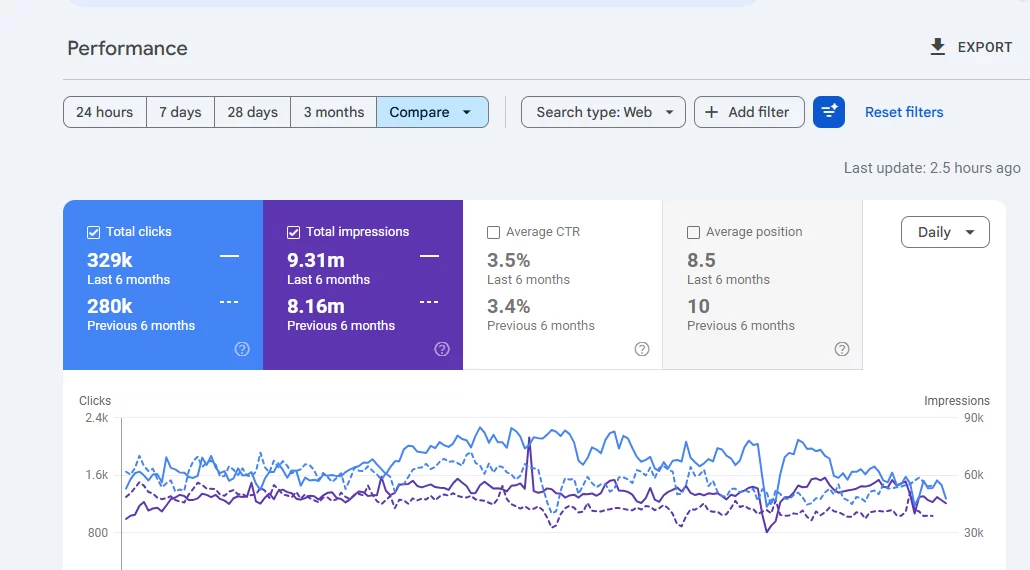
To improve website authority and organic growth for our client, we first analyzed six months of search performance using Google Search Console. Instead of focusing on vanity metrics, we evaluated click growth, impressions, ranking improvements, and how backlink activity was accelerating content discovery and domain trust across search engines.
Our main objective was simple:
Build a targeted backlink strategy through guest posting, digital PR, and broken link outreach that earns authority from high-quality domains.
The Results (6-Month Growth)
- 329K Total Organic Clicks (Up from 280K in the previous 6 months)
- 9.31M Search Impressions (Up from 8.16M previously)
- Average Position improved from 10 to 8.5
- CTR improved from 3.4% to 3.5% (with significantly higher click volume)
- 17.5% Growth in Total Organic Clicks
Want to Build Authority for Your Website?
Let SEO Discovery build your domain into a niche leader with high-quality authority links.
How to Build Quality Backlinks for SEO
Knowing what is the importance of backlinks in SEO is just the first step. Building them in a smart way gives them real power. Here are proven methods:
1. Create Link-Worthy, Original Content
Content that earns links solves a real problem. Original research, comprehensive guides, infographics, and data-driven posts attract natural backlinks. This is what content marketing and SEO content writing are built on.
2. Guest Posting on Authoritative Sites
Contact well-known websites in your field and offer to write a good post for them. Put a backlink to your site in the right place. Blog outreach and guest blogging services make this process easier and faster.
3. Broken Link Building
To find broken backlinks on quality sites, use tools like Ahrefs or Check My Links. Tell the site owner about the broken link and offer your content as a replacement. Because you are really giving them something of value, this strategy works very well.
4. Digital PR and Thought Leadership
Digital PR services can help your business get written about in major news outlets and publications. When Forbes or TechCrunch talks about you, you can get strong, high-authority backlinks. This also helps people believe in and trust the brand in the long run.
5. Leverage Niche Directories and Communities
Put your website in niche directories that are important to it, and actively participate in industry communities. Citations and directory links in platforms that are specific to an area are very helpful for local SEO services.
6. Avoid Spammy Link Schemes
Google’s Penguin algorithm actively penalizes manipulative link practices. Buying links, participating in link farms, or using Private Blog Networks (PBNs) can result in a manual penalty and a sharp drop in rankings.
Gain Visibility with SEO Discovery’s Expert Link Building Services!
The importance of backlinks in SEO cannot be ignored. They show influence, affect rankings, bring in traffic from other sites, and compound over time. Building a good backlink profile is important whether you are just starting out or looking to scale.
But building quality backlinks takes expertise, time, and the right connections. That’s where SEO Discovery comes in. We help businesses of all kinds build strong backlink profiles that get real results. We are also a leading provider of best SEO services, off-page SEO services, link building services, digital PR services, and best digital marketing services.
Get in touch with us right away, and we’ll help you build the backlink plan your site needs.
Get a Custom Link Building Roadmap
Not sure where to start? Let’s chat about a strategy that fits your niche and budget.
FAQs About Why Are Backlinks Important in SEO
Backlinks in SEO are links from one website to another. They matter because Google uses them as votes of credibility, which directly influences your search engine rankings and overall site authority.
The backlink meaning in SEO refers to any external hyperlink pointing to your website. It signals to search engines that your content is credible, relevant, and worth ranking higher in search results.
Understanding how backlinks work in SEO: search engines crawl links to discover pages, then use the number and quality of backlinks to determine how high a page should rank in search results.
The role of backlinks in SEO for new sites is critical. They help Googlebot discover and index pages faster, and they build initial domain authority that helps new sites rank competitively over time.
Dofollow links pass link equity and influence rankings directly. Nofollow links include an attribute that tells search engines not to pass PageRank, but they still generate referral traffic and link profile diversity.
The main types of backlinks in SEO include dofollow, nofollow, editorial, guest post, forum, directory, broken link, and social/profile backlinks. Each type serves a different purpose in your link-building strategy.
The purpose of backlinks in SEO extends to driving referral traffic, improving crawlability, building brand authority, and strengthening domain trust. All of these factors support long-term SEO growth.
Forum backlinks in SEO are typically nofollow but drive highly targeted traffic from active communities like Reddit and Quora. They also diversify your backlink profile and build brand visibility in niche audiences.
Quality backlinks in SEO come from high-authority, relevant, and trusted domains. You can earn them through original content creation, guest posting, broken link building, and strategic digital PR campaigns.
Yes. Links from spammy, irrelevant, or penalized sites can trigger Google penalties. Use Google Search Console or tools like Ahrefs regularly to audit and disavow harmful links from your backlink profile.