


Objective
This blog explains how to optimize Core Web Vitals in 2026 to improve search rankings, website performance, and user experience. It also provides practical strategies aligned with Google’s evolving, user-focused ranking algorithms.
- Improve Largest Contentful Paint by using AVIF formats to load main content under 2.5 seconds.
- Optimize Interaction to Next Paint by keeping all page responses under 200ms for better interactivity.
- Prevent Cumulative Layout Shift by defining media dimensions to keep visual stability below a 0.1 score.
- Focus on Real User Monitoring data rather than lab scores to influence actual Google rankings.
- Prioritize Mobile Performance as the primary factor for visibility in 2026 AI-driven search results.
Make Your Website Load Faster and Rank Higher with SEO Discovery’s Core Web Vitals Optimization, Starting at $100.
In 2026, optimizing Core Web Vitals means making changes to your website so that it works well with AI-powered search, loads faster visually, and responds quickly to user interactions. To do this, current image formats like AVIF and WebP should be used to improve LCP, JavaScript should be kept to a minimum to improve INP, and layout shifts should be stopped to keep the CLS stable.
According to Google, a one-second delay in mobile load times can impact conversion rates by up to 20%.
This is why a professional core web vitals optimization service is important for the growth of any business today. In the year 2026, user experience is the most important part of Google’s algorithms.
In this guide, we will understand how to optimize core web vitals in 2026. So, read to the end!
Table Of Contents
- What Are Core Web Vitals and Why They Matter for SEO
- Understanding the Three Core Web Vitals Metrics in 2026
- Best Practices for Core Web Vitals Optimization in 2026
- How Our Core Web Vitals Strategy Restored a Client’s Website Performance
- Essential Tools for Core Web Vitals Optimization
- Common Core Web Vitals Optimization Mistakes to Avoid
- Optimize Core Web Vitals in 2026 with SEO Discovery!
- FAQs about How do I optimize for Core Web Vitals in 2026?
What Are Core Web Vitals and Why They Matter for SEO
Core Web Vitals is a set of metrics that measure how well a page loads, how interactive it is, and how stable it looks to users. Google uses Core Web Vitals to evaluate how users experience a website in real-world conditions. In 2026, core web vitals have a larger impact on SEO than ever before. This means that website speed optimization is important for growth and visibility.
- Real user experience metrics: Core Web Vitals measure how fast content loads, how fast pages respond to interactions, and how stable layouts stay while loading.
- Direct influence on rankings: Google recognizes websites that offer smooth, dependable experiences, which has a direct effect on their rankings. When pages perform well, they move up in the SERPs.
- Lower bounce rates and more engagement: Pages that load quickly and respond to users keep them on the page longer, which increases dwell time and conversion rates.
- Alignment with Google’s user-first approach: By focusing on SEO core web vitals, your website aligns with Google’s goal of delivering the best possible experience to searchers.
- Foundation of technical SEO success: Core web vitals support all SEO efforts, from making content visible to link building authority and ensuring long-term performance.
Understanding the Three Core Web Vitals Metrics in 2026
In 2026, you should know about LCP, INP, and CLS to improve the user experience, boost your SEO results, and make your site run faster.
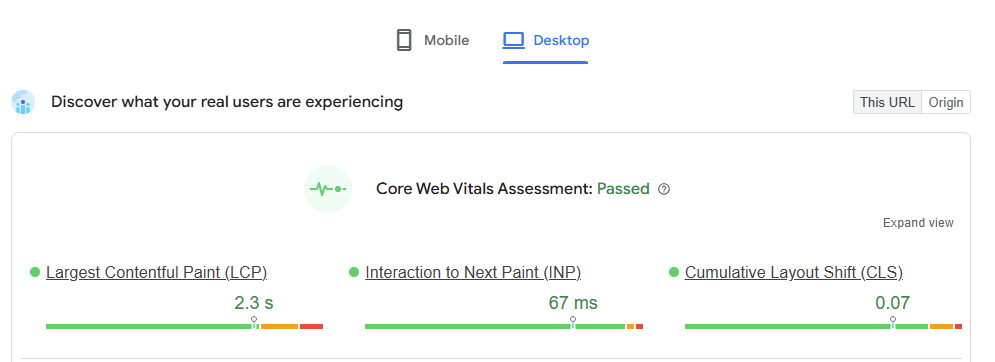
Largest Contentful Paint (LCP): Enhancing Load Performance
LCP measures how long it takes for the largest element to show up on the screen. This is usually a large heading or a hero image. For Google Core Web Vitals optimization, you need to aim for less than 2.5 seconds.
What users see first affects how fast they think your site is. Users think the site is broken if the main content takes too long. Media that isn’t optimized and slow computer response times are two common problems. These must be taken care of if you want to optimize core web vitals well.
Interaction to Next Paint (INP): Improving Interactivity
In March 2024, INP took the place of First Input Delay (FID) as a key metric. It measures the latency of all interactions on a page. Your aim should be to get a score below 200ms.
A lot of site owners have trouble optimizing key web vitals in WordPress because the plugins are so heavy. Too much JavaScript can slow down how quickly a page reacts to clicks. In 2026, this measure will be very important for Google Core Web Vitals SEO success.
Cumulative Layout Shift (CLS): Ensuring Visual Stability
CLS measures how much the page’s information moves around while it’s loading. Users are happy when the score is less than 0.1. It’s very annoying when you click a button, and it moves quickly.
Ads without dimensions and cookie banners that don’t work right are common causes. To stop style changes, you need to make sure that the cookie banner is optimized for core web vitals. High visual stability makes SEO and key web vitals work better on all devices.
Best Practices for Core Web Vitals Optimization in 2026
In 2026, website speed is no longer optional; it is a must. Core Web Vitals have a direct effect on sales, user experience, and rankings. Structured optimization makes sure that pages load faster, interactions run more smoothly, and visual stability is maintained across devices.
1. Strategies for LCP Optimization
Largest Contentful Paint measures how quickly your main content loads. For first impressions, LCP needs to be improved. Load speed, user experience, and results all get better when LCP is optimized.
- Use advanced image optimization: Use hero images in modern formats like AVIF or WebP. Set the fetchpriority of pictures above the fold to “high” to speed up rendering.
- Get rid of resources that slow down rendering: Remove useless CSS and avoid running non-essential JavaScript. This makes it easier for browsers to paint visible content faster.
- Improve server reaction time (TTFB): A reliable core web vitals speed optimization service can make backend performance better by using server-side caching and better hosting.
- Set up CDN and caching layers: A strong CDN brings assets closer to users, which lowers latency and boosts LCP around the world.
2. Advanced INP Optimization Techniques
The responsiveness of your website during user interactions is the main focus of Interaction to Next Paint. By limiting JavaScript execution, managing third-party scripts, enhancing WordPress performance, and cleaning codebases with Google Core Web Vitals optimization services, advanced INP optimization increases responsiveness.
- Reduce JavaScript execution time: Break long tasks into smaller chunks to keep the main thread responsive.
- Control third-party scripts carefully: Scripts for marketing and data can slow down interactions. Only load what you need.
- Optimize WordPress performance: To make WordPress run faster, use lightweight, performance-first themes and limit the number of running plugins.
- Clean up bloated codebases: As part of our Google Core Web Vitals optimization services, we get rid of scripts that aren’t needed so buttons and links work right away.
3. Effective CLS Optimization Methods
Cumulative Layout Shift measures visual stability during page load. Effective CLS optimization improves visual stability by setting media dimensions, preventing dynamic layout shifts, stabilizing font loading, and using CSS aspect-ratio properties to enhance core web vitals performance.
- Establish clear dimensions for images and videos: Always specify width and height to allow for room to be used before assets load.
- Avoid dynamic content shifts: After the page has started rendering, avoid placing banners or advertisements over already-existing content.
- Ensure stable font loading: Prevent layout jumps brought on by font swaps or late-loading font files.
- Use CSS aspect-ratio properties: This keeps layouts consistent across screen sizes and prevents unexpected shifts.
In 2026, these fundamental core web vitals optimization techniques will be necessary to provide a polished, quick, and easy-to-use experience.
Need Help Fixing Core Web Vitals?
Let SEO Discovery fix speed, stability, and interactions for higher rankings.
How Our Core Web Vitals Strategy Restored Client’s Website Performance
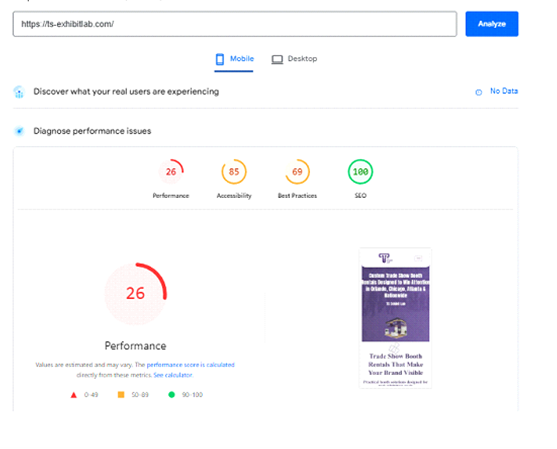
Our client, a specialized trade show booth rental provider, was struggling with a critical drop in search visibility and stagnant traffic due to a poor user experience on both mobile and desktop. They needed a comprehensive technical overhaul. We implemented a multifaceted Core Web Vitals optimization strategy that transformed their site’s speed and responsiveness.
The Results
Within a short period of implementing our technical optimization strategy, the client experienced a radical shift in performance metrics:
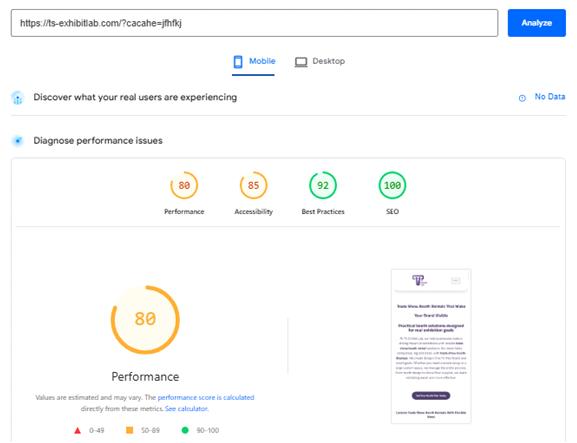
Mobile Performance Metrics
Performance Score: 80 (last test)
- Growth: +207% increase from the previous score of 26.
- Impact: Over double the speed for mobile users, significantly reducing bounce rates and improving conversion potential.
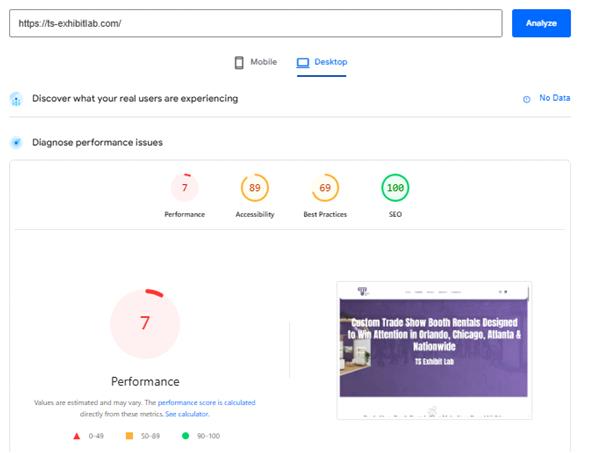
Desktop Performance Metrics
Performance Score: 92 (last test)
- Growth: +1,214% increase from the previous critical score of 7.
- Impact: A transition from a “Critical” state to “Excellent” performance, ensuring first-page dominance for high-intent searchers.
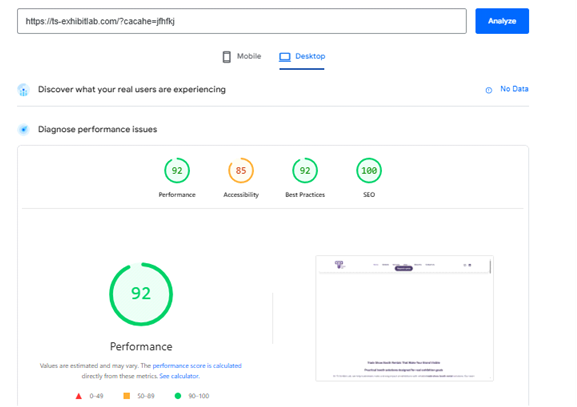
Accessibility & Best Practices
Average Score: 92
- Improvement: Significant climb from initial scores of 69 in Best Practices.
- Impact: Better compliance with modern web standards and accessibility guidelines indicates improved user trust and cleaner code execution.
SEO Stability
Average Position: 100/100
- Maintenance: Held a perfect SEO score throughout the technical transition.
- Impact: By fixing the performance foundation, we ensured that the client’s high-quality content is no longer held back by technical debt.
Essential Tools for Core Web Vitals Optimization
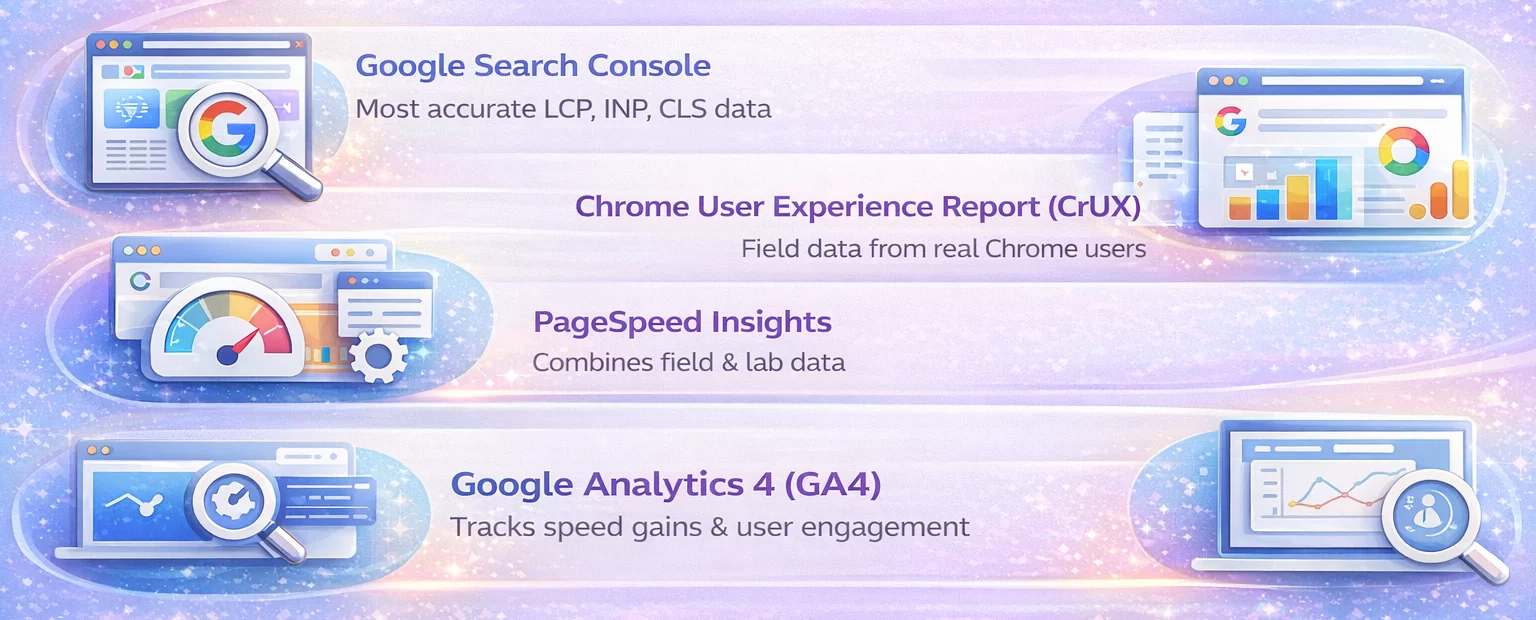
Accurately measuring, evaluating, and enhancing Core Web Vitals requires the use of the appropriate tools. Every tool has a distinct function in identifying actual user experience, assessing performance problems, and monitoring advancements over time.
- Google Search Console: This is the most trustworthy source of actual Core Web Vitals data. It assists in identifying pages that require optimization by reporting LCP, INP, and CLS based on real user interactions over a 28-day period.
- Chrome User Experience Report (CrUX): Provides aggregated field data collected from real Chrome users. CrUX facilitates long-term trend research and aids in the validation of key web vitals in SEO performance at scale.
- PageSpeed Insights: Identifies performance problems by combining field and lab data. It provides practical suggestions for enhancing Google Core Web Vitals optimization.
- Chrome DevTools: Allows Developers to stimulate various devices, network speeds, and CPU conditions. During development, it aids in debugging JavaScript execution, layout changes, and rendering problems.
- Google Analytics 4 (GA4): Monitors both performance metrics and user behavior. GA4 aids in the correlation of speed gains with bounce rates, engagement, and conversions.
Common Core Web Vitals Optimization Mistakes to Avoid
Common mistakes prevent many websites from improving Core Web Vitals. Instead of relying just on tools, Google uses actual user data. Preventing these mistakes protects user experience and rankings.
- Don’t just aim for flawless lab results: While real-world field data is used by Google for rankings, lab data aids in troubleshooting. Making poor decisions can result from optimizing without consulting CrUX or Search Console.
- Avoid lazy loading above-the-fold content: Lazy loading banners or hero images delays rendering and negatively affects your LCP score. Elements above the fold should always load right away.
- Never ignore mobile performance: Mobile devices bring the majority of traffic. If mobile Core Web Vitals scores are low, a speedy desktop site is of limited use.
- Avoid over-optimization that breaks functionality: Layouts, interactions, and conversions can be harmed by aggressive script removal or CSS deferral. Performance should never be sacrificed for performance.
Watch out for WordPress plugin overload: An excessive number of plugins can cause layout changes and longer JavaScript execution times. The performance cost of each plugin should be justified.
Optimize Core Web Vitals in 2026 with SEO Discovery!
Optimizing for Core Web Vitals in 2026 is not a one-time fix. To provide long-lasting rankings and improved user experiences, a balanced emphasis on speed, engagement, and visual stability is needed.
SEO Discovery helps businesses maintain their competitiveness by providing performance-driven strategies. In order to increase speed, engagement, and conversions, our team combines link building, AI SEO, and data-backed content marketing to deliver the best digital marketing services.
Are you having trouble with sluggish load times or a bad user experience? SEO Discovery offers a free Core Web Vitals audit. Let us take care of the technical details so you can concentrate on expanding your company.
Stop Losing Traffic to Slow Load Times!
Slow websites lose visitors fast. Partner with SEO Discovery and improve speed, rankings, and conversions before potential customers leave.
FAQs about How do I optimize for Core Web Vitals in 2026?
These FAQs address common questions about Core Web Vitals in 2026, explaining their SEO impact, ideal scores, optimization tools, and best practices.
Yes, Core Web Vitals are a real factor that Google will use to rank websites in 2026. They help Google figure out how real users really experience on all devices. The websites that load quickly, have good interactions, and look good on all devices get a lot of clicks.
Tools like Google Search Console, PageSpeed Insights, Chrome DevTools, and CrUX are very important. They give us data from both the field and the lab that helps find speed problems and figure out how to optimize Core Web Vitals most effectively.
To make LCP better, you can use modern image formats like WebP or AVIF, optimize images, enable CDN delivery, and speed up server reaction time so that important page elements load faster.
INP checks how fast your site reacts to things like clicks and taps from users. A low INP score makes sure that the site is easy to use, lowers frustration, and boosts engagement, conversions, and SEO success overall.
Always set the width and height of images to fix CLS. Don’t put ads or banners above the content once it has started to load. Make sure the fonts load slowly so the layout doesn’t change unexpectedly.
If you optimize WordPress properly, it can work well for Core Web Vitals. Using light themes, limiting plugins, and professional Google Core Web Vitals optimizations can help keep speed fast and stable.
LCP must be less than 2.5 seconds, INP must be less than 200 milliseconds, and CLS must be less than 0.1 for a good Core Web Vitals result. If these goals are met, Google considers the page to be performing “Good.”
Yes, heavy images that aren’t optimized slow down LCP a lot and hurt SEO. For better rankings, you must use Core Web Vitals optimization methods such as compression, responsive images, and modern formats.
Hiring professional Google Core Web Vitals optimization services is a quick and easy way to solve difficult technology problems. Fixes made by experts are sure to be correct, save you time, and keep your website competitive in search results.