


Objective
The purpose of the blog is to outline the top 10 ecommerce SEO trends for 2026, describing how brands are utilizing agentic AI, social commerce, and composable architecture to climb search rankings and achieve long-lasting growth.
- Agentic AI is changing how customers discover and purchase products through autonomous shopping agents
- AI Optimization (AIO) is replacing traditional SEO as brands optimize for ChatGPT, Perplexity, and AI assistants
- Social commerce platforms now process complete transactions without redirects, thus removing conversion friction.
- Composable architecture enables rapid adaptation to emerging technologies and market changes
- Zero-party data strategies replace third-party cookies through voluntary customer information sharing
- Digital Product Passports are now mandatory in EU markets, verified through blockchain technology
Grow Your Ecommerce Website With SEO Discovery , Starting At $450/month.
The ecommerce rules have been rewritten. While many brands continue pouring budgets into conventional SEO, a quieter revolution is reshaping how consumers discover and buy online. Purchase decisions are increasingly influenced by autonomous AI agents rather than humans. At the same time, social platforms have evolved into complete commerce ecosystems, with blockchain-backed authentication becoming standard in major markets.
Global ecommerce sales reached $6.86 trillion in 2025 and is projected to reach $7.89 trillion by 2028, yet most DTC brands are barely growing. Median revenue growth is only at 3%, which is a strong indication that the path for growth-at-all-costs is closed, and efficiency has become the new success marker.
The brands that will succeed in 2026 will not just focus on Google. They will also create AI-ready systems, show authenticity with blockchain-verified transparency, and achieve operational efficiency at scale. This guide reveals the 10 ecommerce SEO trends that set market leaders apart from those who fall behind.
Table Of Contents
- Agentic AI Redefines Ecommerce Discovery
- AI Optimization (AIO) Replaces Traditional SEO
- Social Commerce 2.0 Drives In-App Transactions
- Composable Commerce Becomes Infrastructure Standard
- Digital Product Passports Ensure Transparency
- Zero-Party Data Powers Personalization
- Spatial Commerce (AR/VR) Reduces Returns
- Human-Made Premium Content Differentiation
- Dynamic Pricing Protects Profit Margins
- Emotional Loyalty Replaces Transactional Programs
- How SEO Discovery Recovered Ecommerce Traffic After Algorithm Shifts
- Ecommerce SEO Best Practices for Implementation
- Upgrade Your Ecommerce Strategy With SEO Discovery
- FAQs About Ecommerce SEO Trends 2026
1. Agentic AI Redefines Ecommerce Discovery
Agentic AI is the most significant shift in SEO for ecommerce since mobile-first indexing. These systems can research, compare, and even buy products for shoppers.
The evolution beyond simple chatbots
Instead of saying, “Alexa, add coffee to cart,” customers now experience fully automated shopping. AI assistants notice when supplies run low, find favorite brands on sale, and place orders within set budgets and with biometric approval. BigCommerce reports that agentic AI platforms are already handling millions of autonomous transactions each month.
Strategic implications
Traditional ecommerce focused on human browsers. Now, you need to optimize for AI agents that analyze structured data, compare specifications, and make recommendations without any human help.
Main Requirements for AI discoverability:
- Complete product attributes including size, material, compatibility, and use cases
- Schema.org structured data markup for instant information extraction
- Conversational descriptions that answer natural language questions
Incomplete product data can make you invisible to this rapidly growing discovery channel. An ecommerce SEO audit should now assess AI readability alongside traditional ranking factors.
2. AI Optimization (AIO) Replaces Traditional SEO
Traditional SEO targeted Google’s algorithm, while AI Optimization targets shopping assistants such as ChatGPT, Perplexity, Google AI Mode, and other emerging agentic platforms.
The Significant Change
Previously, product titles were optimized with keywords. Now, content must provide conversational answers to natural questions. AI assistants extract and consolidate information rather than rank websites. To receive AI recommendations, ensure your content is quotable, clear, and contextually complete.
Implementation
Top AI SEO services now concentrate on Answer Engine Optimization (AEO) to capture featured snippets, create conversational content structures that AI can easily process, and conduct semantic keyword research based on user intent. Brands that optimize for AIO experience 35% higher visibility in AI-generated responses.
Action step: Test your product pages by asking ChatGPT to suggest items from your catalog. If the AI has difficulty understanding or selecting your products, you have key structural data issues that need urgent attention.
3. Social Commerce 2.0 Drives In-App Transactions
Social platforms have transformed from basic traffic sources into integrated commerce channels, enabling users to discover and complete purchases within the app.
Growth numbers
Recent data highlights significant growth in social commerce:
- TikTok Shop: 108% annual growth in 2025, reaching $15.82 billion in US sales
- Pinduoduo: $715B GMV, positioning itself as a major competitor to Amazon
- Instagram Checkout: Processing billions in transactions
Advantages of in-app checkout
Redirects often result in lost conversions. In-app checkout streamlines the process by removing browser switching, repeated payment entry, and unfamiliar navigation, which can disrupt sales momentum. Integrating social discovery with instant purchase eliminates traditional funnel friction.
4. Composable Commerce Becomes Infrastructure Standard
Monolithic ecommerce platforms cannot keep pace with specialized innovation. Composable architecture has become the standard for businesses generating over $5 million in annual GMV.
Strategic advantage
The primary benefit is the ability to replace any component within weeks rather than months. New solutions can be integrated quickly, eliminating the challenges of full platform migrations.
This architecture offers several advantages, including:
- Faster implementation of updates related to ranking factors
- Access to best-in-class tools for each area of optimization
- Reduced technical debt, resulting in improved site performance
- Greater agility in responding to algorithm changes
Composable architecture supports rapid deployment of location-specific storefronts, which is essential for Local SEO Services strategies that target geographic markets with tailored experiences and localized inventory.
5. Digital Product Passports Ensure Transparency
The EU now requires Digital Product Passports (DPPs) for many product categories. This regulation is expanding worldwide, shifting sustainability from a marketing focus to a compliance requirement.
What DPPs track
Digital Product Passports record the entire product lifecycle, from raw materials and manufacturing to shipping and end-of-life disposal. Blockchain technology verifies each step, ensuring tamper-proof records.
SEO impact of verified sustainability
Implementing DPPs offers several search ranking benefits:
- Enhanced E-E-A-T signals through verifiable sustainability claims
- Rich snippet opportunities displaying certification badges
- Customer filter optimization for “Carbon Neutral Shipping.”
Work with an ecommerce SEO expert to structure DPP data for maximum search visibility while meeting regulatory requirements. Brands implementing DPPs early gain competitive advantage before mandates force industry-wide adoption.
Ready to Future-Proof Your Ecommerce SEO Strategy?
SEO Discovery implements AI optimization, composable architecture, and blockchain-verified transparency to dominate 2026 rankings.
6. Zero-Party Data Powers Personalization
Now that third-party cookies are gone and browser tracking is limited, collecting customer data by offering something valuable in return is more important than ever.
Effective value exchanges
It is important to ensure that data sharing feels valuable to customers rather than intrusive.
- “Tell us your skin type → Perfect product recommendations.”
- “Share your running style → Ideal shoe matches.”
- “Complete style quiz → Personalized outfit suggestions”
SEO impact of verified sustainability
Zero-party data helps you create content that matches what each person is looking for. This can boost time on site, page views, conversions, and repeat visits. Tools like quizzes, preference centers, and loyalty programs make it easy for customers to share useful data while staying within privacy rules.
7. Spatial Commerce (AR/VR) Reduces Returns
Augmented and virtual reality can show how products fit in real spaces, which has led to a 25% drop in returns for furniture and fashion.
Customer expectations evolve
Customers now expect to see how products will look in their own space. Spatial commerce lets them do this before buying, which helps them feel more confident and reduces regret after purchase.
Implementation requirements and considerations
To make this work, companies need to create 3D models for each product in formats like GLTF or USDZ. This investment pays off in several ways:
- Lower return rates and associated logistics costs
- Higher conversion rates from improved purchase confidence
- Enhanced user experience signals improving search rankings
- Rich visual content opportunities for SEO content writing
Spatial commerce combines the ease of online shopping with the ability to see and feel products like in a store. This helps solve a major challenge for buying furniture and fashion online.
8. Human-Made Premium Content Differentiation
With so much AI-generated content online, real human authenticity stands out. Products labeled as “Human Made” or “Artisan Crafted” often sell for 30-50% more than mass-produced items.
Authenticity as a competitive advantage
One of your strongest assets is video showing real makers at work, highlighting their hands, skills, and the small imperfections that AI cannot copy. This human touch builds an emotional connection that automated content cannot match.
SEO benefits of authentic content
Using human-crafted content brings several benefits:
- Your content will be unique and more noticeable among search results filled with AI-generated material.
- Genuine storytelling leads to higher engagement from your audience.
- Authentic stories about your brand can naturally attract link building from other sites
- Showing real people and stories builds trust, which can help improve your E-A-T rankings.
Showcase humans as your competitive advantage in a world of AI-generated sameness. Document your processes, introduce your team, and emphasize the human expertise behind your products.
9. Dynamic Pricing Protects Profit Margins
Most online merchants, about 87%, have increased prices to deal with tariffs and higher costs. Keeping prices the same in a changing market can quickly reduce profit margins.
Using real-time algorithms helps businesses adjust prices quickly and stay competitive
Dynamic pricing changes in response to supply and demand, competitor prices, inventory, and how much different customer groups are willing to pay. Top ecommerce platforms now include dynamic pricing as a standard feature.
Best SEO practices for dynamic pricing in ecommerce
- Add schema markup to make sure prices show up correctly in search results.
- Be clear with customers about pricing changes to help prevent negative reviews.
- Make sure your prices are visible and competitive in Shopping feeds.
- Send price drop alerts to keep customers coming back to your site.
When using dynamic pricing, keep prices consistent across all channels. This helps avoid confusing customers, protects trust, and reduces the risk of negative reviews.
Losing Traffic to AI-Powered Competitors?
SEO Discovery optimizes your ecommerce store for agentic AI, social commerce, and 2026 search algorithms.
10. Emotional Loyalty Replaces Transactional Programs
Loyalty programs are moving past simple offers like “buy 10, get 1 free” and focusing on membership models that help customers feel like they belong to a community.
What works in 2026
Emotional loyalty programs deliver superior results:
- Early product access before public launches
- Community voting rights on product features
- Expert consultations and VIP experiences
- Member-only forums and exclusive events
ROI and SEO benefits
Members spend three to five times more than customers who only buy for discounts, since emotional connections encourage more purchases. These loyalty programs also help with SEO by increasing branded searches, bringing back more visitors, encouraging user content, and earning backlinks from active members.
How SEO Discovery Recovered Ecommerce Traffic After Algorithm Shifts
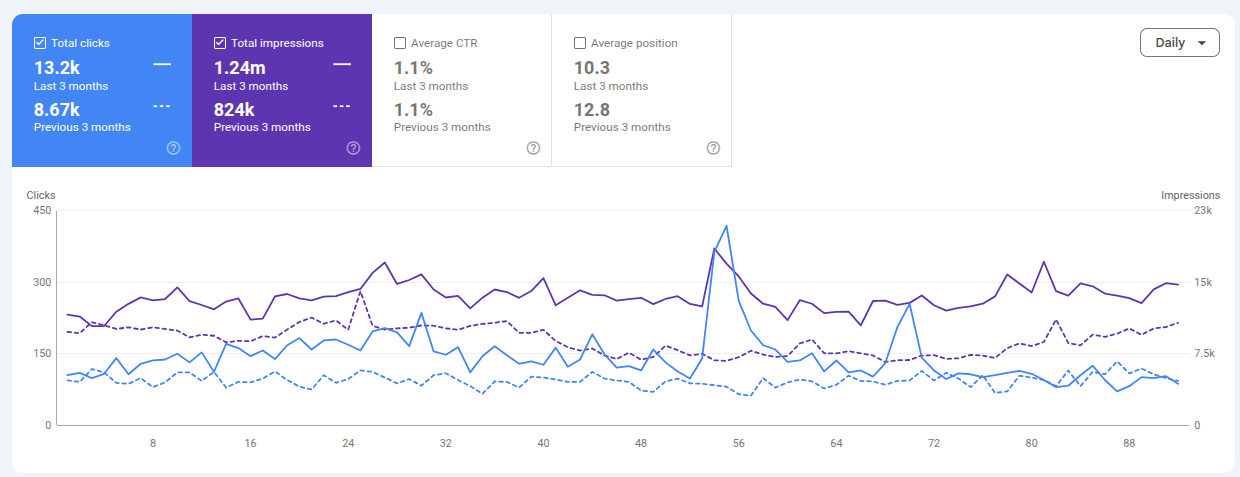
When major Google’s algorithm changes affects e-commerce rankings, it takes a smart, data-based plan to recover. Here’s how we helped an online retailer get back on track:
The Challenge:
A mid-sized e-commerce client saw their website traffic drop by 35% after a Google algorithm update. Important product pages slipped from positions 3-7 down to 12-18, which led to a big loss in revenue.
Our Recovery Strategy:
SEO Discovery used a complete strategy that focused on AI optimization, stronger E-E-A-T signals, and better technical performance. We updated product data to help AI find it, added content based on real experience, and improved Core Web Vitals.
The Results in 90 Days:
- 13,200 monthly clicks (+52% recovery from 8,670 baseline)
- 1.24M impressions (+51% visibility increase from 824k)
- Average position 10.3 (2.5-position improvement from 12.8)
- 1.1% CTR maintained (consistent engagement throughout recovery)
The recovery kept moving upward, and rankings are now stable in top spots. This shows that a smart SEO strategy with AI readiness, real content, and strong technical work can bring real results, even when algorithms change often.
Ecommerce SEO Best Practices for Implementation
To put these ecommerce SEO tips into action, you need both a solid plan and the right technical steps.
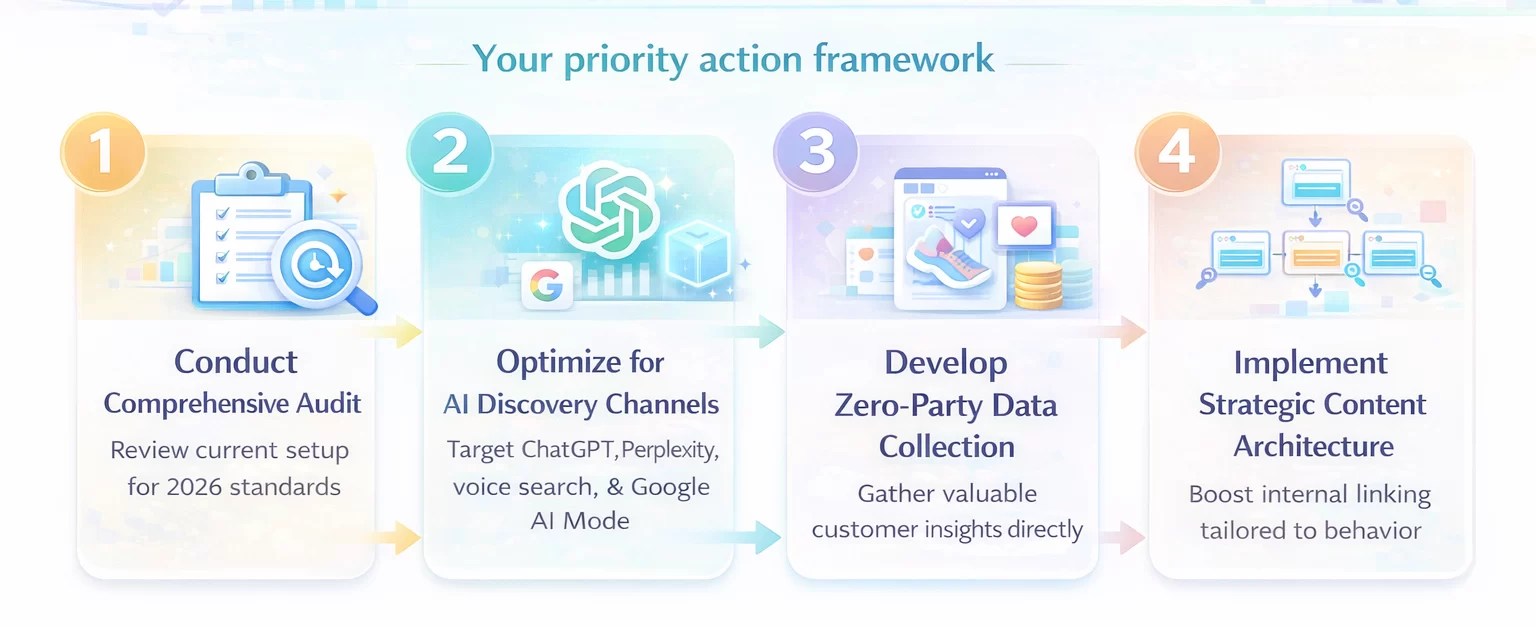
Your priority action framework
- Conduct comprehensive audit
Check your current setup to make sure it meets 2026 standards. Look at how easily AI can read your product data, whether your system is ready for composable architecture, if you can connect with social commerce, and how your site performs on Core Web Vitals. - Optimize for AI discovery channels
Don’t just focus on Google. Make sure your products are easy to find through ChatGPT recommendations, Perplexity shopping searches, Google AI Mode summaries, and voice assistant shopping requests. - Develop zero-party data collection
Earn customer trust by being clear about what you offer in return for their information. Use tools like interactive product finders, quizzes about style and preferences, and personalized recommendations.
4. Implement strategic content architecture
Internal linking help both people and AI find products on your site. Choose anchor text that fits the context and connect links based on how users behave.
Upgrade Your Ecommerce Strategy With SEO Discovery
To put these ecommerce SEO tips into action, you need both a solid plan and the right technical steps.
Your priority action framework
The future of ecommerce will favor brands that focus on efficiency, use AI to discover new opportunities, and can grow at scale. SEO Discovery can help you reach these goals faster. Our ecommerce SEO services do more than improve your rankings. We combine AI readiness, technical skill, and a focus on conversions to help you see real revenue growth. Our custom ecommerce SEO packages help brands keep up with changing search trends, social commerce, and data-driven decisions. We don’t just talk about results—we deliver them. If you want to prepare your ecommerce business for the future and lead in 2026, SEO Discovery is ready to help.
Want to Rank Higher in AI Shopping Assistants & Google?
Let SEO Discovery transform your product data, technical infrastructure, and content strategy for sustainable growth.
FAQs About Ecommerce SEO Trends 2026
For 2026, a strong e-commerce SEO strategy combines AI optimization with a flexible site structure. Make your product data clear so AI shopping agents can use it easily, and set up systems that adapt to new technology. Gather zero-party data, engage customers through social commerce, and offer loyalty programs that inspire customers to recommend your brand and support your business’s organic growth.
Choose e-commerce SEO providers who have up-to-date experience with agentic AI, composable commerce, and social platform integration. Check their case studies to see real results in traffic and revenue for different clients. Make sure they do thorough audits before starting and provide clear reports on important metrics like organic traffic, conversion rates, and customer acquisition costs, with easy-to-understand attribution.
In 2026, SEO for e-commerce is about making sure AI shopping assistants can find, understand, and recommend your products on different platforms. To do this, you need to use structured data, create content that sounds natural in conversation, and have systems that connect easily with other tools. Just focusing on keywords is not enough. You need to optimize for both search engines and AI agents that gather information from places like ChatGPT, Perplexity, and new platforms as they appear.
You can handle basic SEO tasks on your own, but working with an ecommerce SEO specialist can help you see results much faster. These experts know how to use AI, set up technical systems, and work with new platforms in ways most in-house teams cannot. If your business makes over $5 million a year, hiring a specialist often brings a return of three to five times your investment within a year. This is because they work quickly, help you avoid expensive errors, and have access to advanced tools that most businesses do not buy on their own.
What are the best
You can do simple SEO tasks by yourself, but working with an ecommerce SEO expert can help you get results much faster. Most in-house teams don’t know how to use AI, set up technical systems, or work with new platforms like these experts do. If your business makes more than $5 million a year, hiring a specialist can often pay off three to five times what you paid them within a year. This is because they work quickly, help you avoid costly mistakes, and have access to tools that most businesses don’t buy on their own.
SEO for ecommerce product pages requires complete structured data using Schema.org markup, high-quality images with descriptive alt text containing target keywords, conversational product descriptions answering natural questions, authentic customer reviews with response management, video demonstrations showing product usage, and related product recommendations based on behavioral data. Ensure fast load times under 2 seconds, mobile optimization with touch-friendly elements, and clear calls-to-action guiding purchase decisions. Include zero-party data collection tools like size finders or style quizzes that improve recommendations while gathering valuable customer insights.
SEO for ecommerce sites involves unique challenges like managing thousands of product pages without duplicate content, preventing issues across product variants and color options, optimizing complex category hierarchies with proper internal linking, handling out-of-stock items without creating dead pages, and maintaining site speed despite large catalogs with hundreds of thousands of images. E-commerce SEO also requires product feed optimization for Shopping ads, review schema implementation for star ratings, dynamic content personalization based on browsing behavior, and continuous inventory updates reflected in search results.
The best ecommerce platform for SEO depends on your business size, technical resources, and growth objectives. Shopify offers excellent out-of-box SEO with extensive apps for advanced optimization suitable for most businesses. BigCommerce provides strong built-in features for larger catalogs without requiring as many third-party apps. WooCommerce offers maximum customization for WordPress users with technical expertise. For enterprise brands doing $50M+ revenue, composable architecture combining best-in-class tools typically delivers superior results versus single-platform solutions by enabling faster innovation and specialized optimization for each function.