

Objective
This blog highlights the essential metrics, tools, and strategies required to accurately measure SEO success. It explains how to track performance, improve visibility, and turn organic traffic into proven business growth.
- Track AI visibility to understand how often platforms like ChatGPT, Perplexity, Gemini and others reference your brand or content.
- Combine keyword ranking with engagement, conversions, and CTR because they are insufficient on their own.
- Strong technical SEO health guarantee, a smoother user experience, improved crawling, indexing, and rankings.
- High-quality backlinks from authoritative sites strengthen trust, relevance, and long-term search visibility.
- Use Google Analytics, Search Console, and Ahrefs to monitor performance and guide improvements.
Attain SEO Success with SEO Discovery, Starting at $250/Month
You can measure SEO success by tracking AI visibility, organic traffic, SERP presence, keyword rankings, conversions, CTR, and technical health over time. These metrics help you understand what is generating visibility, leads, and real business growth from search engines.
Did you know? According to Semrush, Google sees more than 5 trillion search queries annually, which averages out to 9.5 million searches per minute.
However, a lot of marketers still have trouble effectively measuring SEO success. Without clear measurement, you are lagging behind. That means missed opportunities, wasted budget, and slower growth.
This guide breaks down every critical metric, tool, and strategy you need to track your SEO success. So, read till the end.
Why Measuring SEO Success Is Non-Negotiable
SEO is a long-term process. Your investment cannot be justified if you are unable to demonstrate the effectiveness of your SEO efforts. You also cannot improve what you do not track.
Consider SEO measurement to be similar to a health check. To determine what is working and what needs to be fixed, you must conduct tests on a regular basis. Whether you are a law firm or an enterprise business, the principles of measuring SEO success in digital marketing remain the same.
Why you must measure SEO performance:
- It shows which strategies are bringing real results.
- It helps you allocate the budget more effectively.
- It lets you spot problems before they become costly.
- It proves ROI to stakeholders and clients.
Without proper measurement, even great SEO content goes unnoticed. Whether you use AI SEO services or manual efforts, tracking is what turns strategy into results.
Key Metrics to Measure SEO Success
Here are the key metrics you can use to measure success for your SEO campaigns. These key metrics help you evaluate organic growth, keyword rankings, traffic quality, and conversions to ensure your SEO success.
1. AI Search Visibility
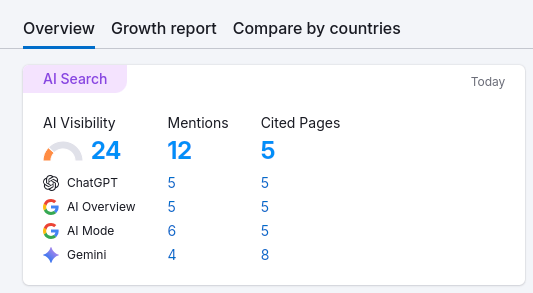
Every time an AI platform like ChatGPT, Perplexity, or Google’s AI Overviews recommends your brand, that is earned visibility. AI visibility measures how prominently your content appears within AI-generated responses.
Here is how to measure it:
- Track AI-Generated Brand Mentions: Use dedicated tools like Semrush, Profound, Brandwatch, or Otterly.ai to monitor how often AI platforms cite your content.
- Establish a Starting Benchmark: Before optimizing, document your current AI citation rate across major platforms.
- Monitor Trends Over Meaningful Time Frames: A single mention means little on its own. Track your AI visibility consistently across 30 to 90-day periods to spot genuine momentum, identify content gaps, and understand how algorithm updates.
- Identify Your Highest-Performing Content Formats: Not all content earns equal AI visibility. Analyse whether your FAQs, thought leadership articles, structured data pages, or how-to guides are getting cited most frequently.
2. Organic Traffic
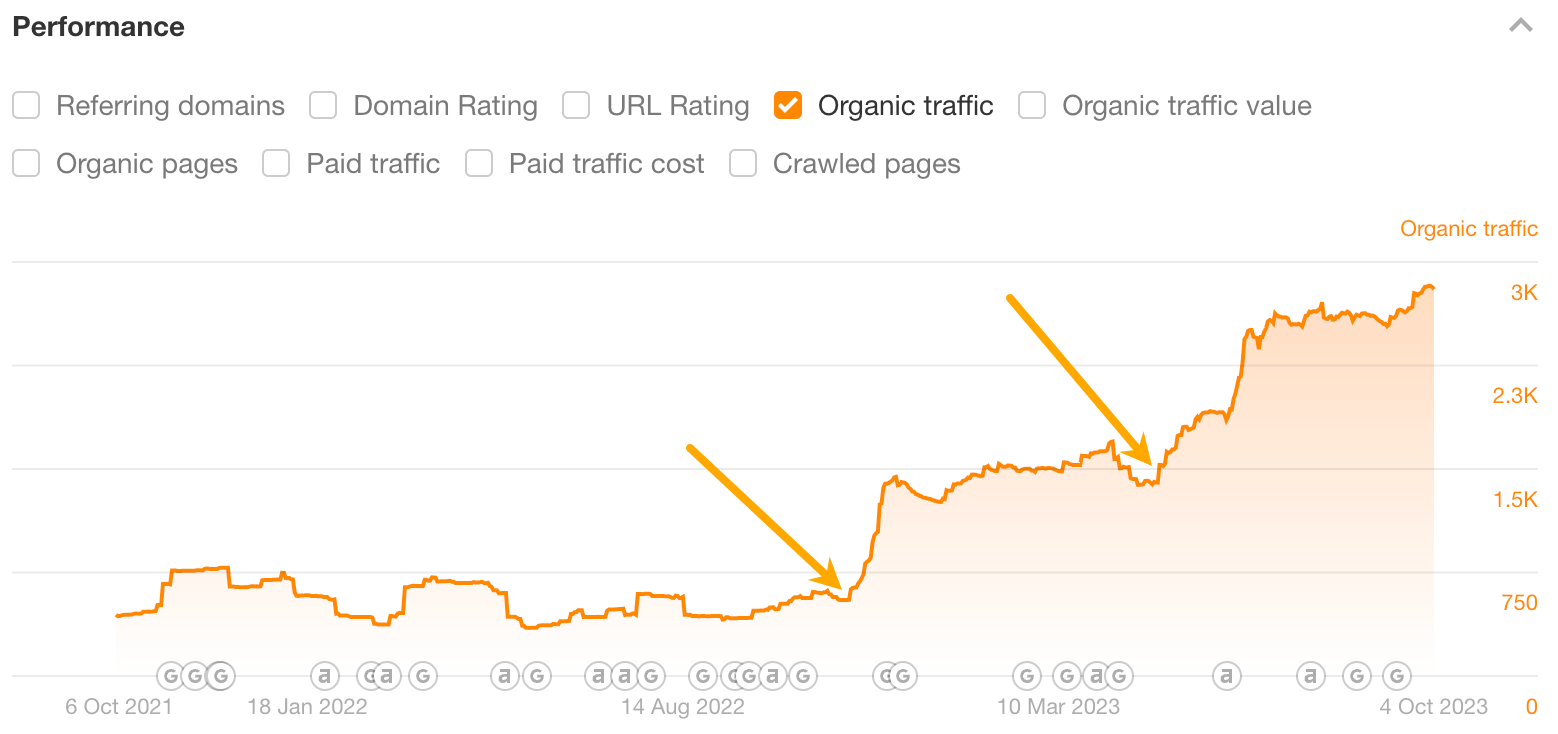
Some visitors land on your website without unpaid search results. Organic traffic is one of the clearest indicators that your SEO strategy is working effectively.
Here is how to measure it:
- Use Google Analytics 4 (GA4): Go to Acquisition > Traffic Acquisition > Organic Search. To identify significant growth trends, compare traffic month over month.
- Set a Baseline: Note the number of organic visitors you currently have. Make use of it as a benchmark to precisely gauge future growth.
- Examine Monthly and Weekly Trends: Avoid reading too much into daily fluctuations. Keep an eye out for steady upward movement over intervals of 30 to 90-day periods.
- Segment by Landing Page: Determine which landing pages, blog entries, and pages with internal linking enhancements are generating the most organic traffic.
3. SERP Presence
How often your website shows up in search results is determined by rankings. SERP Visibility measures how frequently your site shows up on the Search Engine Results Page for your target keywords.
Here is how to measure it:
- Use Ahrefs or SEMrush: Both offer a SERP Visibility score. To see how well your entire keyword portfolio is doing, monitor this score once a week.
- Track the Presence of Featured Snippets: Find out how frequently your content shows up in search results’ AI Overviews, People Also Ask boxes, and featured snippets.
- Compare Against Competitors: To find out how your visibility score stacks up against competing domains in your niche, use SEMrush’s competitive positioning analysis.
- Track Keyword Coverage: To measure complete search visibility, find out how many of your target keywords are appearing in the top 10, top 20, and top 50 rankings.
4. Conversions and Revenue
Without action, there is no true impact. Measuring SEO success is significant only when it comes to conversions and revenue, particularly for professional services firms.
Here is how to measure it:
- Set Up Conversion Goals in GA4: Define particular actions, like completing a form, making a phone call, buying a product, scheduling a demo, or signing up for an email from organic traffic.
- Link Search Console with GA4: To find out which keywords are bringing in visitors who convert, connect both the tools. This provides you with a comprehensive view of the performance of search to revenue.
- Calculate Organic Revenue: Use GA4’s eCommerce reports or goal value settings to assign a monetary value to each conversion. This turns SEO data into a business metric.
- Monitor Landing Page Conversion Rate: With the help of the best SEO services, determine which pages with the highest organic rankings convert the most, then replicate their layout and content across underperforming pages.
Make Every SEO Metric Count!
From AI mentions to revenue tracking, we measure what truly matters.
5. Keyword Rankings
Your visibility in search results depends on certain positions. Keyword Rankings indicate where your pages show up on Google and other search engines for particular search queries.
Here is how to measure it:
- Use Google Search Console: To view your average position for each keyword, navigate to the Performance report and filter by queries. To monitor trends, export this data once a month.
- Set Up Rank Tracking in Ahrefs or SEMrush: In a rank tracker, enter your primary, secondary, and long-tail keywords. Track weekly trends to determine profits and losses.
- Group Keywords by Intent: Keep transactional, navigational, and informational keywords apart. Analyze rankings within each group to determine the most effective intent kinds.
- Benchmark Against Competitors: Use competitor ranking comparisons to identify keyword research gaps where competitors outrank you and where you have the strongest opportunities.
6. Organic Click-Through Rate (CTR)
Sometimes your page is ranked on the first page but still gets no traffic. The percentage of users who saw and clicked on your result is known as the Organic Click-Through Rate, or CTR.
Here is how to measure it:
- Use Google Search Console: Go to the Performance tab in Google Search Console and turn on the CTR column. To get results with high impressions but low CTR, filter by page or query.
- Determine Pages with Low CTR: Sort pages by impressions and flag any with a CTR below 2% despite ranking in the top five positions. These are your priority optimization targets.
- A/B Test Title Tags and Meta Descriptions: Rewrite underperforming titles with more compelling value propositions and powerful emotional appeals. Track changes in CTR over the following 30 days.
- Benchmark by Position: To determine if your click-through rate is typical or below average for your ranking tier, use average CTR standards per SERP position.
7. Technical Health
Sometimes great content still doesn’t rank. Your website’s technical health affects how well search engines can crawl, index, and rank it. If there are technical issues with your website, your content will not perform properly. This is why technical SEO audit services are critical for long-term success.
Here is how to measure it:
- Run Google Search Console Coverage Reports: Every week, look for crawl issues, excluded pages, and any invalid URLs in the Index Coverage report. Fix critical errors immediately.
- Test Core Web Vitals: To determine LCP, FID, and CLS scores on desktop and mobile devices, use Google PageSpeed Insights and Search Console’s Core Web Vitals report.
- Crawl Your Site with Screaming Frog: To find broken links, redirect chains, duplicate content, and missing meta tags that compromise technical health, perform a comprehensive site crawl once a month.
- Check for Mobile-Friendliness: Consult technical SEO services to make sure all important pages adhere to Google’s mobile-first indexing guidelines by using Google’s Mobile-Friendly Test tool.
8. Engagement Metrics
Google can learn a lot about your page from how people use it once they get there. Bounce rate, average session duration, pages per session, and scroll depth are some important engagement measures to keep an eye on.
Here is how to measure them:
- Utilize GA4 Engagement Reports: To monitor average engagement time, bounce rate, and engaged sessions across organic landing pages, go to Reports > Engagement > Overview.
- Set Up Scroll Depth Monitoring: In Google Tag Manager, activate scroll depth triggers. The percentage of users who scroll past 25%, 50%, 75%, and 100% of your content is displayed here.
- Monitor using Microsoft Clarity or Hotjar: To see precisely where users click, scroll, and drop off on your most popular pages, use heatmaps and session records.
- Segment Organic Users Only: In GA4, include a division for organic traffic in your reports on engagement metrics. This isolates SEO-driven behavior from paid or direct traffic.
9. Backlink Profile
There are signals that search engines look for to see if they can trust your website. In SEO, your backlink profile is one of the best ways to show how authoritative you are. As of now, backlinks are still one of Google’s top three ranking factors. A strong and natural backlink profile signals credibility, relevance, and industry authority to search engines.
Here is how to measure it:
- Use Ahrefs or SEMrush Backlink Reports: Run a full backlink profile audit monthly. Track total referring domains, new backlinks acquired, and lost backlinks to understand your link velocity.
- Check Domain Authority (DA) and Domain Rating (DR): Keep an eye on the DR or DA of websites that connect to you. Prioritize earning links from authoritative domains with scores above 40 for maximum SEO impact.
- Analyse Anchor Text Distribution: Examine your Ahrefs anchor text report to analyse anchor text distribution. Ensure a healthy mix of branded, generic, and keyword-rich anchors to maintain a natural link building footprint.
- Identify and Deny Toxic Connections: Use the hazardous link filter in Ahrefs in conjunction with the disavow tool in Google Search Console. Remove or disavow spammy backlinks before they trigger a manual penalty.
Get Ready to Measure SEO the Right Way!
Gain clarity on rankings, traffic, conversions, and AI-led visibility.
How We Measured and Enhanced Our Own SEO Performance
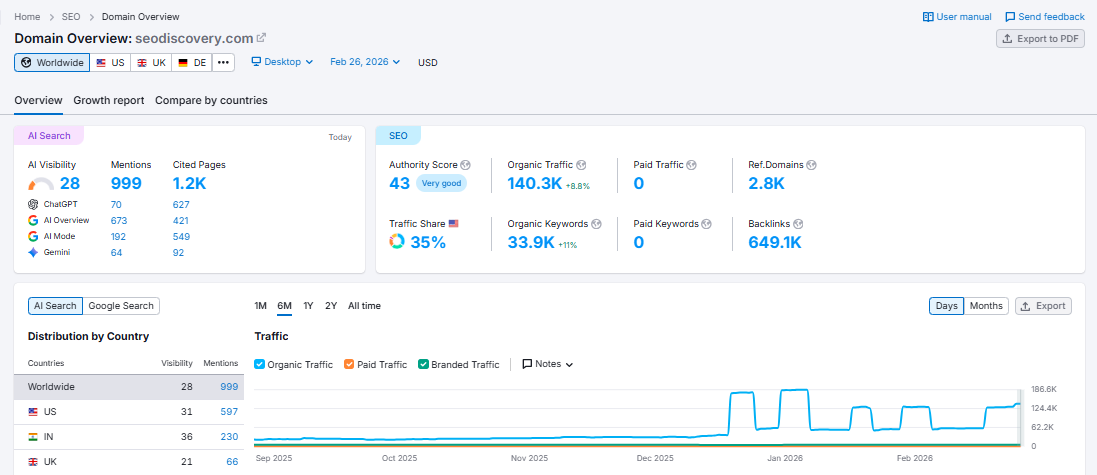
To improve our website’s organic growth, we first focused on measuring what truly matters. Instead of chasing vanity metrics, we tracked rankings, organic traffic, keyword growth, authority signals, backlink quality, AI visibility, and conversion paths.
By applying a proper strategy, we transformed our own website into a proven SEO case study.
The Results (6-Month Growth)
- 140K+ Monthly Organic Traffic
- 33K+ Ranking Keywords
- Authority Score Improved to 43
- 2.8K Referring Domains
- 649K+ Backlinks
- 999 AI Mentions & 1.2K AI Cited Pages
- 35% Traffic Share Growth
Essential Tools to Measure SEO Success
Knowing which tools to measure AI SEO success and performance saves time and gives you accurate data. Here are the must-haves:
Tool | Best For |
Google Search Console | Keyword data, CTR, index coverage |
Google Analytics 4 (GA4) | Traffic, conversions, and user behavior |
Ahrefs | Backlinks, keyword rankings, competitor analysis |
SEMrush | SERP presence, AI visibility, site audit, share of voice |
Google PageSpeed Insights | Core Web Vitals, site speed |
Hotjar / Microsoft Clarity | Engagement, heatmaps, scroll depth |
How AI platforms measure SEO success metrics is evolving fast. Machine learning is now used by tools like Semrush AI and BrightEdge to analyze success in AI-generated search results and forecast traffic prospects.
Combining these best SEO tools allows you to see your SEO performance from all angles. Any effective measuring SEO success strategy must start with this.
Build Consistent SEO Growth with SEO Discovery!
Now you know the right way to measure SEO success. You know the plan, the metrics, and the tools. But being aware is only half the battle. Execution in everything. The things you do should all be well thought out, like keeping track of organic traffic, fixing technical problems, or building a reputation through backlinks.
Ready to take your SEO performance to the next level with the help of the best digital marketing services? Work with SEO Discovery, a reputable company that builds strategies that generate proven results.
Start today and get a free SEO audit from SEO Discovery! Visit our website and let our experts show you exactly where your SEO stands and how to improve it.
Want to Reveal Hidden Gaps in Your SEO Strategy?
At SEO Discovery, we identify SEO weaknesses and improve performance.
FAQs about Measuring SEO Success in 2026
Track a steady increase in AI visibility, organic traffic, keyword ranking gains, and the acquisition of new backlinks to measure a new website’s SEO success. To assess actual success, use GA4 data and Google Search Console data collected over a period of three to six months.
Organic traffic, AI visibility, keyword rankings, conversions, click-through rate, backlink quality, and technical health are among the most crucial SEO indicators. These metrics collectively show the visibility, authority, engagement, and overall search performance of your website.
After three to six months of regular optimization, the majority of websites start to show SEO gains. It could take six to twelve months of strategic content production and technical advancements in highly competitive industries.
Monitor map pack presence, Google Business Profile interactions, and local keyword rankings. To precisely measure local SEO performance and consumer interaction, keep an eye on location-based organic traffic, phone calls, and direction inquiries.
Google Search Console and GA4 help track traffic, impressions, and conversions. Ahrefs, SEMrush, and Screaming Frog provide insights into backlinks, keyword rankings, competitor analysis, and technical SEO health for complete performance tracking.
No, the complete effect of SEO activities is not demonstrated by keyword rankings alone. In order to comprehend actual business growth and search visibility enhancements, combine ranks with organic traffic, conversion statistics, and CTR metrics.
Massive datasets are analyzed by AI-powered technologies to find keyword opportunities and ranking patterns. In addition, they assess visibility across conventional and AI-powered search results, measure share of voice, and forecast traffic potential.
In most industries, a CTR of more than 3% is regarded as strong. Top-ranking results, on the other hand, frequently attain 30–40% CTR, demonstrating how better positions dramatically boost clicks and traffic success in general.
Prioritize high-intent service keyword rankings, consultation bookings, and organic lead creation. Monitor conversion rates and GA4 goal completions to measure long-term customer acquisition success and revenue-led SEO performance.
Track growth patterns and spot chances by reviewing key SEO performance indicators on a monthly basis. To sustain consistent progress and a competitive edge, check for technical issues every week and perform a thorough SEO audit every three months.