

Objective
In this blog, we will discuss what metadata SEO is, its types, importance, and how to optimize your metadata to effectively increase search rankings, click-through rates, and the overall organic performance of your website.
- Metadata helps search engines understand and rank web pages correctly.
- Meta titles are a strong ranking signal and directly influence search visibility.
- Meta descriptions improve click-through rates even though they are not a direct ranking factor.
- Image metadata, such as alt text and file names, also contributes to overall SEO performance.
- Duplicate or missing metadata can reduce SEO performance and confuse search engines.
Improve Search Performance with Metadata SEO Services by SEO Discovery, Starting at $250/Month
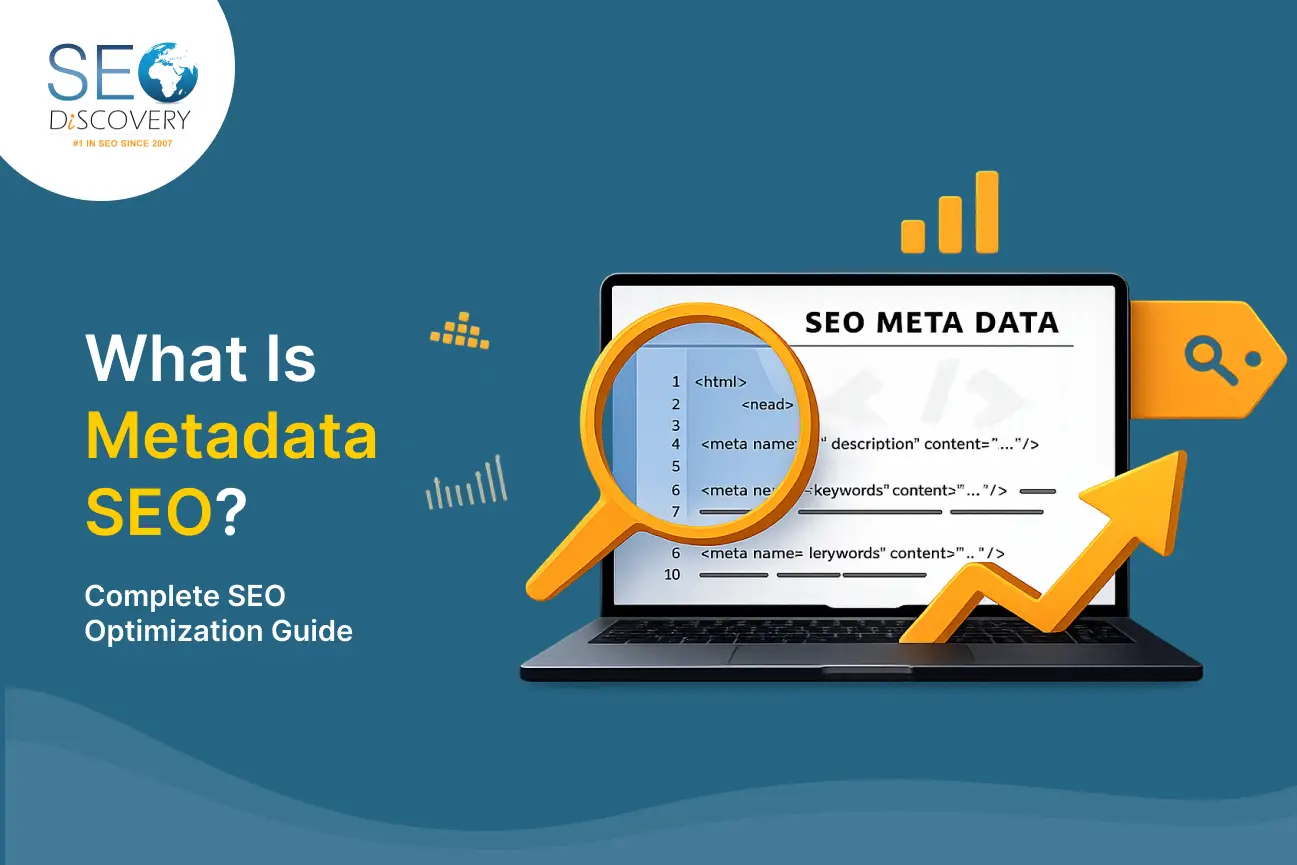
Metadata for SEO are HTML tags like title tags and meta descriptions that tell search engines and visitors what a page is about. These are not visible on the page but enhance search visibility, impact CTR on SERPs, and assist search engines in evaluating page relevance.
Did you know? According to SE Rankings, 50% of the websites have duplicate meta descriptions for their pages.
Your metadata is the preview of your page in search engines. A clear and interesting title and description will make users trust and click on your content more.
In this guide, we’ll cover metadata key types, how it works, how to write it well, the best tools to use, and common mistakes to avoid, so read on until the end.
Table Of Contents
- What Is Metadata SEO and Why Is It Important for Search Rankings?
- What are the Important Types of Metadata in SEO That You Should Optimize?
- Why Is AI SEO Metadata Optimization Important?
- Understanding How Metadata for SEO Works
- How to Write Page Titles and Meta Descriptions Effectively
- What Tools Should You Use for Metadata Optimization?
- Common SEO Metadata Tags Mistakes You Should Avoid
- How We Helped a Client Get 130% More Clicks Through Metadata SEO
- Improve Your Rankings with Expert Metadata SEO by SEO Discovery
- FAQs About Metadata for SEO
What Is Metadata SEO and Why Is It Important for Search Rankings?
Metadata for search engine optimization is the utilization of HTML tags in the head section of a webpage to give structured information about the content. This metadata helps search engines better understand, categorize, and rank your pages.
So, what is the importance of metadata in SEO for your website?
- It informs Google what your page is all about.
- It affects the way your page looks in SERPs.
- It directly influences your click-through rate.
- This helps search engines crawl and index your site better.
What are the Important Types of Metadata in SEO That You Should Optimize?
The first step in metadata optimization is to understand the different types. Here are the six basic types:
- Meta Title Tag: The clickable headline that appears in SERPs and browser tabs. It is vital for keyword research and targeting. It tells Google specifically what your page is about.
- Meta Description: A brief summary displayed below the title in search results. It is not a direct ranking factor, but it is your best tool to improve CTR. A compelling description draws users in.
- Meta Robots Tag: It instructs search engine bots how to crawl and index pages using rules like “noindex,” “index,” and “follow” and also helps control visibility and indexing when using the best SEO services effectively.
- Charset Meta Tag: Sets the character encoding for the page so it displays correctly on all browsers and devices. Most sites often ignore this aspect, but it is crucial for technical health.
- Social Meta Tags: Control how your content looks when it’s shared on social media. They don’t directly impact rankings, but they do help with shareability and referral traffic.
- Structured Data: It helps search engines better understand your content. It allows your page to appear with extra details in search results, like ratings and FAQs, making it more visible and attractive.
Metadata Type | SEO Impact | Visible to Users? |
Meta Title | High (ranking signal) | No (only in tab/SERP) |
Meta Description | Medium (affects CTR) | No (only in SERP) |
Meta Robots | High (controls indexing) | No |
Charset Tag | Technical (display health) | No |
Open Graph Tags | Indirect (social traffic) | No |
Structured Data | High (rich results) | Partially (rich snippets) |
Why Is AI SEO Metadata Optimization Important?
Searching is no longer just about matching keywords. Now, AI SEO services and tools help AI understand the meaning and context behind every page, and metadata makes this process fast and precise. Clear metadata tells AI what your page is really about, so it’s more likely to appear in the right search results and summaries.
And this is why AI search optimization metadata best practices are becoming so critical for modern SEO strategies.
- Helps AI to rapidly understand what your page is about
- Eases the match of your content with the right search intent
- Increases chances of being included in AI-generated answers and summaries
- Decreases confusion among similar pages/topics
- Gives your content a stronger identity in the modern search results
Understanding How Metadata for SEO Works
Metadata search engine optimization services enable search engines to crawl, index, and better understand your webpages. This is what happens:
- Crawl: Googlebot will crawl your page and look at the meta robots tag to decide whether it should crawl or skip the page.
- Index: Then it scans your meta title and description to know what your page is about and adds them to Google’s index.
- Display: The title and description you provide are used to generate the search preview that is shown in Google’s results to users.
- Rank: Relevance signals like keyword matching in your title are used to judge how effectively your page is performing in search rankings.
This is directly related to crawl budget optimization. A clean and consistent SEO metadata reduces the time crawlers spend guessing and increases the time they spend indexing your best pages. Also, local SEO services help to make your site structure more understandable for search engines to rank and prioritize.
Want Optimized Metadata?
SEO Discovery experts also refine metadata for search engines
How to Write Page Titles and Meta Descriptions Effectively
Use metadata SEO best practices to create optimized page titles and meta descriptions that increase your visibility, rankings, and click-throughs. Here is how to do both well.
How to Write a Page Title
An effective page title helps search engines better understand your content, improves relevance for your target keywords, and increases the chances users will click your page in search results.
Here’s how to write it.
- Place the primary keyword at the beginning.
- Keep it between 50 and 60 characters.
- Make it unique for every page.
- Include a value proposition or power word.
- Avoid keyword stuffing.
How to Write a Meta Description
A good meta description with link-building services propels relevant traffic, improves search visibility, and helps users choose your page over competitors in search results.
Here’s the right way to write it.
- Keep it between 150 and 160 characters.
- Use action-oriented language (“Learn,” “Discover,” “Get”).
- Include your primary keyword naturally.
- Add a mini CTA to encourage the click.
- Make it unique, never duplicate across pages.
What Tools Should You Use for Metadata Optimization?
Metadata creation is easier, more accurate, and more effective with the right tools. It helps you select better keywords, optimize your pages properly, and improve your overall search visibility and performance.
- Google Search Console: You can monitor your page performance in search results, including indexing status and any technical issues that could affect your visibility on Google.
- Google Keyword Planner: Offers keyword suggestions and search volume information to assist you in choosing the most important and effective keywords for your metadata and content strategy.
- Ahrefs: A compelling SEO tool that helps you with keyword research, competitor analysis, and backlink tracking. It will help you understand what works in your niche and where the opportunities are.
- Yoast SEO: A very popular WordPress plugin that helps you create meta titles and meta descriptions that are optimized and easy to read for users and search engines.
- Rank Math: A powerful SEO plugin that helps you create, manage, and optimize your metadata with real-time suggestions, making your on-page SEO easier and more effective to achieve better rankings.
Common SEO Metadata Tags Mistakes You Should Avoid
Avoid common mistakes with SEO metadata tags like weak titles or missing descriptions. Proper optimization makes content clearer, improves rankings, and supports Google Maps to get more visibility locally.
- Leaving Meta Descriptions Blank: If you leave it blank, Google will fill it for you, and it’s usually not useful, which can lower clicks and negatively affect first impressions.
- Using the Same Title Tag Across Multiple Pages: When you use the same title on all your pages, search engines get confused, and it is harder for your pages to rank individually.
- Keyword Stuffing in Titles and Descriptions: Adding keywords to your metadata makes it look spammy and unnatural, and it can actually hurt your rankings instead of helping them.
- Ignoring Image Metadata SEO: People often ignore images, but image metadata SEO can help search engines understand your content and rank you higher in search results.
- Poor or Missing Image Alt Text and File Names: Good alt text and file names mean your images are more likely to show up in search and will help improve relevance.
How We Helped a Client Get 130% More Clicks Through Metadata SEO
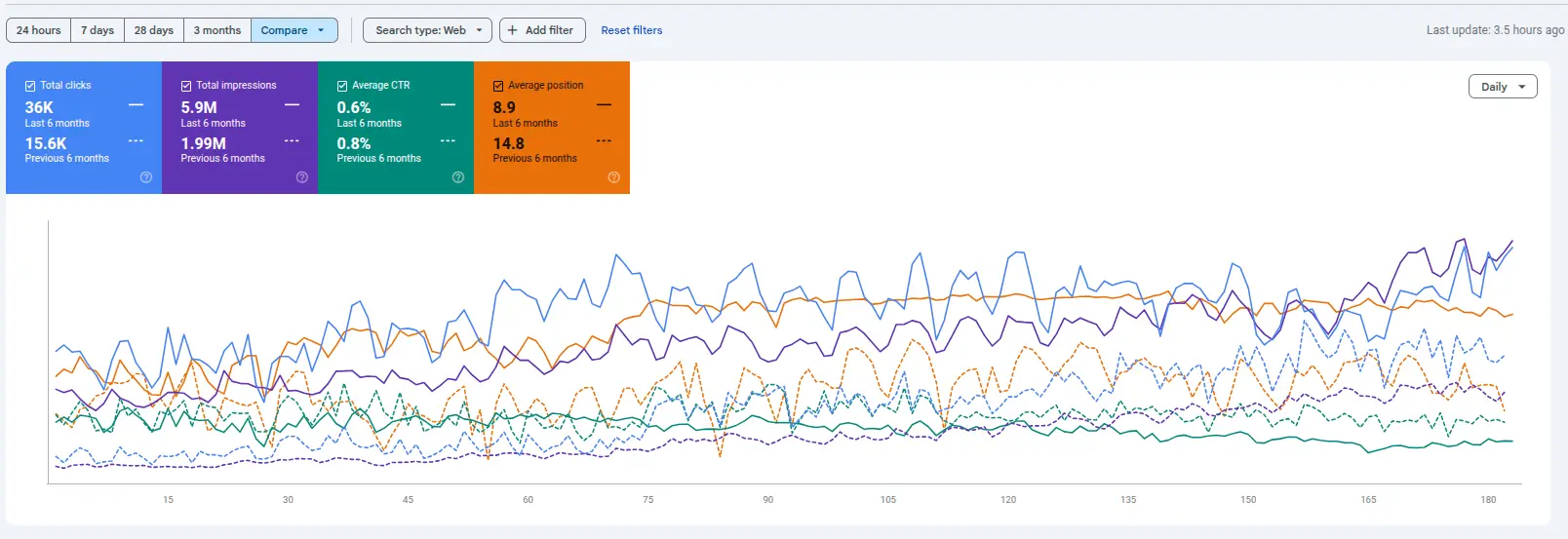
We executed a thorough investigation and metadata SEO optimization strategy for an ecommerce company to improve SERP visibility, click-through rates, and organic traffic.
The client was previously overly dependent on paid campaigns, with low organic visibility and an extremely low CTR of only 0.8% while receiving nearly 2 million impressions every 6 months.
Our goal was clear: improve metadata quality, increase click-through rates, move rankings from page two to page one, and generate consistent organic traffic through affordable metadata SEO optimization services.
The Results (Last 6 Months vs Previous 6 Months)
- +130% increase in total clicks (15.6K to 36K)
- +196% growth in total impressions (1.99M to 5.9M)
- Average position improved from 14.8 to 8.9, helping the site move closer to page one
- Consistent upward trend in daily clicks and impressions, showing stable and compounding growth
Improve Your Rankings with Expert Metadata SEO by SEO Discovery
One of the easiest ways to improve rankings for any website is to consistently optimize metadata for SEO. It helps search engines better understand the content, improves click-through rates, and gradually increases organic visibility without the need for complex or expensive SEO strategies.
SEO Discovery helps businesses build a strong SEO foundation with intelligent metadata optimization, technical improvements, and the best digital marketing services. Additionally, our content strategies increase rankings, visibility, and overall search performance across search engines.
Contact SEO Discovery today to optimize your metadata for stronger long-term organic growth.
Need Better Click Rates?
Our experts at SEO Discovery also optimize metadata for CTR
FAQs About Metadata for SEO
Metadata in SEO are HTML tags, such as titles and descriptions, that tell search engines what the page is discussing without being visible to regular users on the page.
Yes. Metadata helps search engines understand your content, which improves SEO by increasing visibility, click-through rates, and crawl efficiency on your site.
The best metadata SEO best practices include writing unique titles and descriptions, using primary keywords in a natural way, avoiding duplication, and auditing tags frequently with tools like Google Search Console.
Yes. Image metadata SEO includes alt text, file names, and structured image data. These signals improve image search rankings and contribute to overall page relevance.
Yeah. Image metadata SEO involves alt text, file names, and structured image data. These signals help improve image search rankings and add to the overall relevance of the page.
Meta titles should be 50 – 60 characters. Meta descriptions should be 150 to 160 characters long. Staying within these limits means full display in SERPs without interruption.
Best practices for AI search optimization metadata involve using clear, structured tags and schema markup to assist AI platforms like Google AI Overviews and ChatGPT in accurately interpreting and surfacing your content.
SEO Discovery’s professional SEO metadata service audits your website, optimizes meta titles and descriptions, and improves indexing to increase organic traffic and click-through performance effectively.
Generate SEO-optimized metadata with tools like Yoast, Surfer SEO, or an AI SEO platform, or partner with a specialist like SEO Discovery for fully customized, conversion-driven metadata.