

Objective
This blog highlights the main reasons why website rankings fall and provides practical ways to diagnose, fix, and recover rankings effectively.
- Google algorithm updates can cause a drop in rankings.
- Technical factors such as speed, broken links, and indexing affect visibility.
- Poor and outdated content impacts search performance.
- When you lose backlinks, your authority and rankings can drop.
- If your competitors improve their SEO, your site can be pushed down.
- AI-based changes to search can affect visibility and clicks in results.
Recover Your Lost Rankings with Professional SEO Services by SEO Discovery, Starting at $250/Month.
A website’s ranking can drop due to Google algorithm updates, technical SEO issues like slow speed, broken links, or noindex tags, outdated content, backlink loss, or stronger competitors. Regularly check Google Search Console for indexing issues, crawl errors, or any manual penalties.
Did you know? According to Ahrefs, 96.55% of content receives no traffic from Google.
Knowing these ranking drops is important as it allows you to quickly get to the primary cause, fix issues efficiently, and avoid further loss of organic traffic. It also helps your website remain optimized, competitive, and stable in search results over time.
In this blog, we will explore the most common reasons behind ranking drops and how to resolve them step by step. Let’s take a closer look.
Table Of Contents
- Why Has My Website Ranking Dropped?
- Why Is My Website Ranking Going Down Even Without Any Change?
- How to Stop Google From Ranking My Website Down
- How Content Quality Affects Google Ranking
- How We Recovered Rankings for a Client Facing a Traffic Drop
- Fix Ranking Drops with Expert SEO Support by SEO Discovery
- FAQs About Why My Google Ranking Has Dropped
Why Has My Website Ranking Dropped?
One of the most common and frustrating questions website owners ask is, “Why has my website ranking dropped?” If you’ve noticed a sudden or gradual decline in your search engine position, you’re not alone. Google rankings can fluctuate for many reasons, and understanding the root cause is the first step toward recovery.
Below are the most common reasons why your website ranking might have dropped and what you can do about it:

1. Google Algorithm Updates
Google constantly updates its search algorithm to deliver more relevant and trustworthy results to users. While these Google Algorithm Updates are meant to improve the overall search experience, they can significantly impact website rankings.
- If your website ranking dropped suddenly, it’s a good idea to check if there was a recent Google core update.
- Some updates target low-quality or duplicate content, while others may focus on page experience, mobile usability, or backlink quality.
- Stay proactive by keeping an eye on SEO news and monitoring algorithm changes.
- To diagnose a sudden website ranking drop, you can use tools like MozCast, SEMrush Sensor, or the Google Search Status Dashboard.
Tip: Always focus on providing value, improving the user experience, and keeping your website technically sound to stay resilient during updates.
2. Your Competitors Are Doing Better SEO
Sometimes, the reason your Google ranking dropped dramatically isn’t that your site got worse; it’s that your competitors got better.
- They may be investing in more consistent SEO, publishing fresh and high-quality content, or building strong backlinks from authoritative sites.
- SEO is an ongoing game, and if you stop improving, you can fall behind.
Tip: Regularly analyze your competitors. Tools like Ahrefs, SEMrush, or SpyFu can show you what keywords they’re ranking for and where they’re getting their backlinks from. Use this insight to refine your SEO strategy.
3. Technical SEO Issues
A drop in your search rankings could be due to hidden technical problems that affect how Google crawls or indexes your site.
Common technical SEO issues include:
- Broken internal or external links
- Slow page loading speeds
- Mobile usability errors
- Duplicate or thin content
- Incorrect robots.txt or no-index tags
- Canonicalization problems
- Crawl budget issues or sitemap errors
Tip: Perform regular site Technical SEO audits using tools like Screaming Frog, Google Search Console, or Sitebulb to detect and fix these issues early.
4. Poor Content or Thin Pages
Google prioritizes content that is helpful, informative, and relevant. If your pages are short, outdated, or offer little value, they might get pushed down in search results.
Some warning signs of weak content:
- Very little text on a page
- Keyword stuffing
- Outdated statistics or references
- Lack of structure (e.g., no headings or subheadings)
Tip: Improve your content by:
- Writing in-depth, original content that solves users’ problems
- Structuring pages with H1, H2, and H3 headings
- Including images, videos, and FAQs to enhance readability
- Regularly updating older posts to keep them fresh and relevant
5. Loss of Backlinks
Backlinks from high-authority domains are a major ranking factor. If you’ve recently lost some valuable backlinks, your rankings may have dropped.
Reasons for lost backlinks might include:
- The referring page was deleted
- The site owner removed your link
- The linking site was penalized or deindexed
Tip: Use backlink tracking tools like Ahrefs, Majestic, or SEMrush to monitor link losses. Try to:
- Reclaim lost links by contacting site owners
- Build new ones through guest posts, PR, or content marketing
- Keep your content share-worthy to attract natural backlinks
6. Website Redesign or Platform Change
If your Google ranking dropped dramatically after a new website launch, redesign, or CMS switch (e.g., from WordPress to Shopify), it’s likely a structural issue.
Common problems during site redesigns:
- Missing or incorrect redirects (old URLs not pointing to new ones)
- Lost metadata like title tags or meta descriptions
- Changed URLs without updating internal links
- Dropped or forgotten pages
- Improper indexing settings on the new platform
Tip: Always follow SEO migration best practices during web design services:
- Set up 301 redirects for all old URLs
- Retain and optimize metadata
- Submit a fresh sitemap to Google Search Console
- Check for crawl errors post-launch
7. Manual Actions or Google Penalties
If Google detects that your website is violating its Webmaster Guidelines, it may issue a manual action, resulting in a major drop in rankings or removal from search results entirely.
This could be due to:
- Spammy or manipulative backlinks
- Cloaking or hidden content
- Keyword stuffing
- Thin affiliate pages with no added value
Tip:
- Check Google Search Console for manual action notifications.
- If found, address the issue by removing bad links or resolving the problem.
- Then submit a reconsideration request to Google.
8. AI Overview Visibility Shift
Search is changing as more people opt for AI-generated answers over looking through traditional results. Or if you are thinking “my website ranking dropped,” or you are seeing less visibility, it could also be related to how AI overviews are changing search behavior. Even if your rankings haven’t dropped, your site may still lose clicks.
This could be due to:
- Your content is not selected for AI summaries
- Users get answers directly from AI; no need to click on websites
- Impression count remains the same, but click-through rate decreases
Tip:
- Create well-structured, easy-to-understand material for AI
- Use headings and short answers for better extractability
- Establish topical authority to increase the chances of your content being cited
- Continue to monitor Search Console for changes in clicks and impressions
Why is Website Ranking Going Down Even Without Any Change?
It can be frustrating to see your website drop in search rankings, especially when you haven’t made any noticeable changes to it. However, SEO is a constantly evolving landscape, and there are several reasons this could happen even if your site has remained the same:
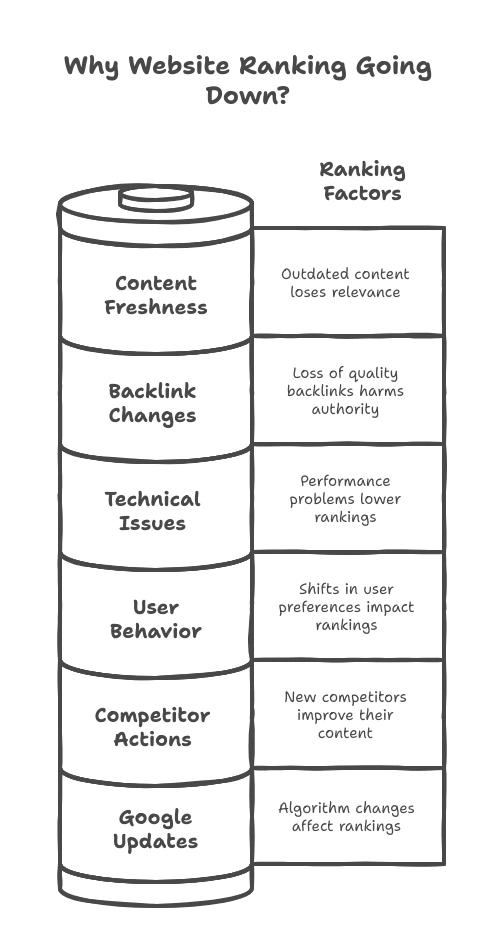
- Google Algorithm Updates: Search engines like Google frequently update their algorithms to improve search results. These updates can affect how your content is evaluated and ranked, even if your pages haven’t changed. What once ranked well may no longer meet the latest ranking criteria.
- New or Improved Competitors: The digital space is competitive. New websites might be entering your niche, or existing competitors could be improving their content, SEO strategies, or user experience. If they’re offering better or more relevant information, they may outrank your site.
- Changes in User Behavior: Search trends and user expectations can shift over time. Google often adjusts rankings to reflect these changes, prioritizing content that aligns more closely with what users are currently looking for or how they’re engaging with search results.
- Technical or Performance Issues: Even if you haven’t updated your site, technical issues can arise. Slow loading times, broken links, or mobile usability problems can negatively affect your rankings over time.
- Backlink Profile Changes: If your site has lost important backlinks or gained low-quality ones, that could also impact your rankings. Google places a lot of weight on backlinks as a sign of authority and trust.
- Content Freshness: Search engines often prioritize fresh, up-to-date content. If your competitors are regularly updating their pages and you aren’t, they may be seen as more relevant in the eyes of Google.
How to Stop Google From Ranking My Website Down
If your website ranking is going down, you’re likely wondering how to stop Google from ranking your site lower. While you can’t directly control Google’s algorithms, the best approach is to ensure your website remains healthy, valuable, and optimized for both users and search engines.
Here are some key strategies to help you maintain strong rankings:
1. Keep Your Content Fresh, Helpful, and Original:
Google values high-quality, informative, and up-to-date content. Make sure your pages provide real value to users by answering their questions or solving their problems. Regularly update your content to keep it relevant, and avoid thin or duplicate content. Originality is key, Google tends to rank unique, well-researched content higher. If creating consistent, high-performing content feels overwhelming, consider using professional content writing services to ensure your site stays fresh, engaging, and SEO-friendly.
2. Ensure Your Site Loads Fast and Works on All Devices:
Page speed and mobile-friendliness are important ranking factors for Google. If your site takes too long to load or isn’t optimized for mobile devices, visitors are more likely to bounce, which can signal to Google that your site provides a poor user experience. Use tools like Google PageSpeed Insights to check and improve load times and optimize your site for mobile users.
3. Build Quality Backlinks from Trusted Sources:
Backlinks are one of the most powerful ranking factors in SEO. Aim to get links from authoritative, relevant websites within your industry. Low-quality or spammy backlinks, on the other hand, can harm your rankings. A strong backlink profile indicates trustworthiness and relevance in your field. To strengthen your SEO strategy, consider using professional link building services that focus on earning high-quality, relevant backlinks from reputable sources.
4. Fix Broken Links and Technical SEO Issues:
Regularly audit your website for broken links, redirect chains, or other technical SEO issues. Search engines like Google want to provide users with the best experience, which includes directing them to pages that work properly. Use tools like Screaming Frog or Google Search Console to find and fix any issues that may affect your site’s performance.
5. Use Google Search Console to Monitor Performance:
Google Search Console is an invaluable tool for monitoring your site’s health and understanding how Google views your pages. It can help you spot issues like crawl errors, security problems, and penalties. Regularly review your Search Console reports and address any concerns promptly.
6. Improve User Experience (UX):
Google’s algorithms increasingly factor in user experience signals, such as time on site, bounce rate, and how users engage with your content. Make your site easy to navigate, visually appealing, and simple to interact with. A positive user experience often translates into better rankings.
7. Maintain a Secure Website:
Security is crucial for both user trust and search engine rankings. Ensure your website is running on HTTPS, not HTTP. Google prioritizes secure websites and may even penalize those that aren’t.
8. Stay Up-to-Date with SEO Trends and Algorithm Changes:
SEO is an ever-evolving field. Stay updated with the latest SEO trends and keep an eye on Google’s algorithm updates. Adjust your strategy as needed to stay ahead of the curve. Being proactive in adapting to changes helps you avoid ranking drops caused by algorithm tweaks.
9. Focus on Core Web Vitals:
In addition to general site performance, Google has emphasized the importance of Core Web Vitals, which measure factors like loading performance, interactivity, and visual stability. Optimizing for these metrics can improve your rankings and the user experience.
Ready to Recover Your Rankings?
Start your SEO audit and regain lost visibility today.
How Content Quality Affects Google Ranking
When it comes to SEO, content quality is one of the most important ranking factors. Google’s algorithms are designed to prioritize content that is helpful, relevant, and trustworthy, aiming to provide users with the best possible search results.
Let’s break down how content quality directly impacts rankings and the key elements you should focus on:
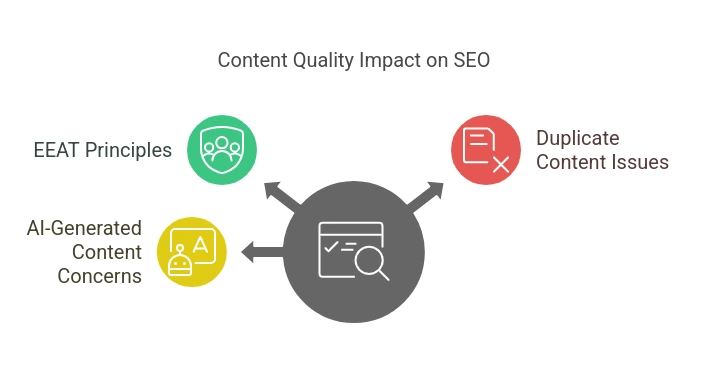
1. EEAT: Experience, Expertise, Authoritativeness, and Trust
Google uses a set of principles known as E-E-A-T (Experience, Expertise, Authoritativeness, and Trust) to assess the quality of content. These factors are especially important for websites that deal with topics that can impact a user’s well-being.
- Experience: Google wants to see that the content is written by someone with real-world experience or firsthand knowledge of the topic. Content written by someone with practical experience will be more likely to be seen as credible and authoritative.
- Expertise: Content should come from individuals who have demonstrable expertise in the subject matter. For example, medical content should be written by doctors or medical professionals, while tech content should come from industry experts or experienced developers.
- Authoritativeness: Google looks at the reputation of the author and the site as a whole. Sites that are recognized as authoritative in their field, with a history of high-quality content and backlinks from other trusted websites, will generally rank higher.
- Trust: Trustworthiness is key. Google evaluates the reliability of both the content and the website as a whole. A site that has clear ownership information, secure connections (HTTPS), and positive user reviews is more likely to be considered trustworthy. In contrast, sites with misleading information, fake reviews, or questionable practices may be penalized.
2. Why Duplicate or AI-Generated Content Can Hurt Rankings
While AI-generated content can be helpful in some contexts, it can also lead to issues if not managed properly. Duplicate content and low-quality AI-generated content are red flags for Google’s algorithms.
- Duplicate Content: Google prefers unique, original content. When you have duplicate content (whether internally across multiple pages on your site or copied from other websites), it can confuse search engines and users alike. Google may choose not to rank duplicate pages at all or may consolidate the ranking signals, making it harder for any single page to perform well. Always ensure that each page offers unique value and is not simply repurposing content from other sources.
- AI-Generated Content: While AI tools like ChatGPT and others can generate large volumes of content quickly, they often lack the depth, nuance, and human insight that high-quality content requires. Over-reliance on AI-generated content can lead to issues such as:
- Lack of originality
- Poor engagement
- Thin content
To avoid penalties or ranking drops, make sure that AI-generated content is used in a way that complements high-quality human-written content. It should be edited and refined to ensure that it meets the E-E-A-T guidelines and provides real value to users.
How We Recovered Rankings for a Client Facing a Traffic Drop
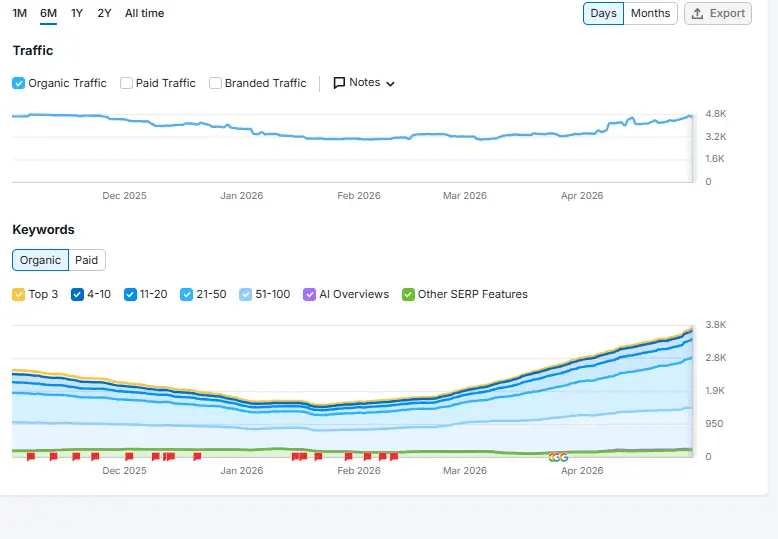
We helped one of our clients who was facing a steady drop in keyword rankings and organic traffic over several months, as many high-performing keywords slipped from the top 5 to page two, reducing visibility, inquiries, and conversions, while our audit revealed outdated content, weak backlinks, slow page speed, and technical indexing issues.
Our goal was clear: to recover rankings and restore consistent organic growth, so we fixed technical SEO issues to improve crawlability and indexing, re-optimized content with better targeting and quality, strengthened internal linking, and built high-quality backlinks to rebuild authority and improve overall search performance.
Results within 90 days:
- Organic traffic stabilized and started showing a steady upward trend
- Keywords started ranking in the top 3 to top 10 positions
- Overall, keyword visibility improved consistently over time
- The site regained momentum without sudden spikes, indicating stable growth
Fix Ranking Drops with Expert SEO Support by SEO Discovery
A drop in rankings isn’t always a permanent setback; it’s often a sign that your website needs updates, better optimization, or a stronger SEO strategy. The right enhancements will help you rebuild your visibility, increase your presence in search results, and achieve more stable long-term performance.
SEO Discovery offers full SEO services to help businesses re-establish and increase their search presence. We carry out in-depth SEO audits, monitor Google algorithm updates, analyze competitors for opportunities, improve content quality, build solid backlinks, and constantly track performance to ensure sustained growth and visibility.
Get in touch with us today to improve your SEO performance and start growing your website traffic.
FAQs About Why My Google Ranking Has Dropped
There are several reasons your website ranking might drop suddenly; common ones include Google algorithm updates, technical SEO issues, content quality concerns, or lost backlinks. It’s important to analyze recent changes to your website or search behavior to pinpoint the cause.
A Google ranking drop dramatically after a new website often results from missing redirects, lost metadata, URL structure changes, or incorrect indexing settings. Make sure you implement proper 301 redirects, preserve your SEO elements, and submit the new sitemap to Google Search Console.
Yes, rankings can decline even without direct changes. Google frequently updates its algorithm, competitors may have improved their SEO, or your site might be experiencing technical issues. Continuous SEO maintenance is essential to retain rankings.
You can use SEO tools like MozCast or SEMrush Sensor or check the Google Search Status Dashboard for recent core updates. If your ranking drop coincides with an update, your site may need to be adjusted to meet new algorithm requirements.
A slow decline could be due to outdated content, lack of fresh backlinks, declining user engagement, or stronger competition. Regularly updating content, auditing backlinks, and improving UX can help reverse the downward trend.
Start with a full website rankings drop audit to identify technical issues, thin content, or lost links. Refresh outdated pages, improve your page speed, and build high-quality backlinks. Tools like Google Search Console, Ahrefs, and Screaming Frog can guide your recovery process.
It depends on the cause. Fixing technical issues or updating content can show results in a few weeks, while recovering from a Google penalty or building a stronger backlink profile might take several months.
If you’re unsure about the cause or how to recover, working with a trusted SEO agency like SEO Discovery can save time and provide expert guidance. We’ll perform a deep audit, fix core issues, and help your site climb back up in search results.