


Struggling to Rank on Google? You Might Be Missing This Key Strategy!
Ever thought why do some websites effortlessly rank at the top of Google while others struggle to break past page two? It’s not just about keywords anymore—it’s about authority, relevance, and strategy.
Did you know that 90.63% of web pages get zero traffic from Google? That’s right—millions of websites exist, but only a tiny fraction actually attract visitors.
Imagine having a roadmap that tells Google exactly what your website is about, positioning you as the go-to expert in your niche. That’s where a Topical Map for SEO services comes in.
Search engines now prioritize websites that demonstrate expertise across an entire subject rather than just targeting random keywords. And the best way to establish that authority? A well-structured topical map.
Today, we’ll explore how to create a topical map for SEO, helping you organize your content strategically, dominate search rankings, and attract the right audience.
So let’s get started!
What Is a Topical Map for SEO?
A topical map is essentially a content structure that connects and organizes different topics and subtopics around a central theme. It helps you understand how internal linking content across your site to signal expertise to Google, which can ultimately help you rank higher.
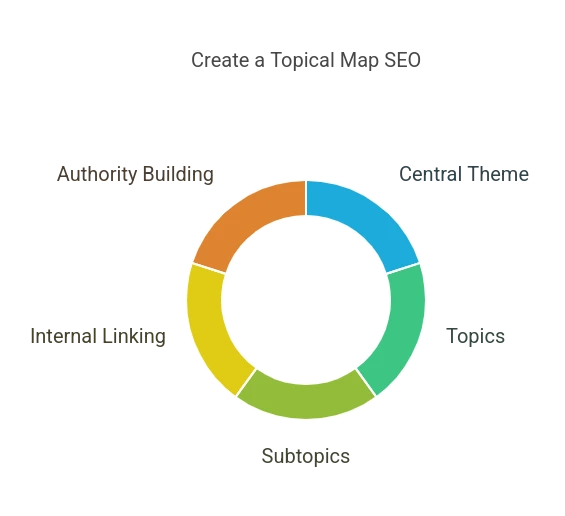
The strategy goes beyond traditional keyword mapping. Instead of targeting individual keywords in isolation, topical mapping for SEO involves identifying and structuring your content to cover all aspects of a subject. This allows you to build authority in a specific niche.
Why Does a Topical Map Help with SEO?
- Improves Relevance: A topical map oganizes your content into logically connected themes or subtopics, making it easier for search engines to understand the overall context of your site. This organization signals to search engines that your content is highly relevant to a particular subject, enhancing the chances of ranking for related queries. It’s like providing a roadmap that shows search engines how your content fits into a larger, cohesive picture.
- Boosts Site’s Authority: By grouping content around key topics and subtopics, a topical map encourages internal linking, which increases the depth of your content. When your site has a comprehensive and well-connected content structure, search engines like Google recognize it as a valuable source of information on that subject. This can lead to improved rankings over time, as the site is seen as an authoritative figure on the topic.
- Improves User Experience: A well-thought-out topical map helps users easily navigate your website, ensuring they can find related content effortlessly. By organizing your content into clearly defined sections or categories, visitors can quickly access relevant information, keeping them engaged for longer periods. This structured approach helps reduce bounce rates and increase the likelihood of users exploring more pages on your site.
- Supports Better Internal Linking: A topical SEO map reveals which areas of your website would benefit most from internal linking. By strategically interlinking relevant content, you can pass link equity throughout your site, enhancing the visibility of important pages. This internal linking structure not only improves SEO performance but also helps visitors discover related content, increasing page views and keeping users on your site for longer.
Enhance Your Site’s Structure with a Topical Map Designed to Attract and Retain Ideal Visitors!
How to Create a Topical Map for SEO
Now that we understand what a topical map for SEO is and why it’s important, let’s go through the steps to create one for your website.

Step 1: Identify Your Core Topic
The first step in building your SEO topical map is to define your core topic. This is the central theme that everything else will revolve around. It should be a subject you want to be recognized as an authority in, and it should align with the keywords and content you want to rank for.
Once you identify your core topic, you’ll then need to branch out to related subtopics. These will form the structure of your topical map.
Step 2: Research Related Subtopics and Keywords
Now that you have your core topic, the next step is to research relevant subtopics that are related to your core topic. These subtopics should cover all the different aspects of the central theme and help you target long-tail keywords that are relevant to your audience.
For keyword research, use tools like Google Keyword Planner, Ahrefs, or SEMrush. You can also use Google’s “People Also Ask” section or explore related searches at the bottom of Google’s search results.
Step 3: Group Your Content Into Categories
Once you have your subtopics, it’s time to organize them into categories. These categories should represent main areas of your core topic.
For example, in the case of sustainable living, you might organize the following categories:
- Energy Efficiency (which might include subtopics like solar panels, energy-saving appliances, etc.)
- Green Eating (which could cover topics such as plant-based diets, sustainable farming, etc.)
- Eco-Friendly Home Design (which might include home insulation, eco-friendly materials, and DIY projects)
By grouping your subtopics into categories, you create a clear structure that makes it easier to plan and create content around each category.
Step 4: Create Content Pillars and Cluster Content
The next step in creating your SEO topical map is to develop your content pillars and cluster content. A content pillar is a comprehensive, long-form page that covers a broad topic in-depth. Cluster content, on the other hand, consists of individual blog posts or pages that support the pillar by covering more specific aspects of the topic.
Step 5: Focus on Internal Linking
Internal linking is one of the most powerful tools for creating a topical map for SEO. As you build out your content pillars and cluster pages, be sure to link related articles to each other. This creates a web of content that signals to Google that your site is an authority on the topic.
When doing internal linking, make sure you:
- Link to your pillar content from each cluster page.
- Use keyword-rich anchor text to help both users and search engines understand the context of the link.
- Ensure that your internal links feel natural and provide additional value to the reader.
Step 6: Monitor and Adjust Your Topical Map
As you continue to create content, it’s important to regularly monitor the performance of your topical map. Use tools like Google Analytics and Google Search Console to track how your pages are performing and which keywords are driving traffic.
If certain subtopics or keywords aren’t bringing in the expected traffic, consider creating more targeted content around those areas or updating existing pages.
Also, be sure to adjust your internal linking structure as you add new pages to your site to keep your topical map updated.
Best SEO Topical Map Generator Tools
Creating a topical map for SEO can be a complex task, but several tools can streamline the process and help you build an effective strategy. These tools can assist in identifying related topics, generating keyword ideas, and organizing content clusters, making it easier to structure your site for better SEO performance.

1. SEMrush
SEMrush is a powerful SEO tool that provides a comprehensive content marketing toolkit. It helps you research related topics and generate keyword ideas to support your topical SEO map. With SEMrush, you can identify high-performing keywords, explore content gaps, and create a well organized structure for your content. Their keyword magic tool and topic research feature can assist in finding the right keywords to group together, ensuring your map is both relevant and optimized for search engines.
2. Ahrefs
Ahrefs offers a robust keyword explorer tool that is great for identifying keyword clusters and related search queries. By using Ahrefs, you can discover a group of keywords that share a common theme, which can then be used to structure your topical map. This tool allows you to uncover valuable long-tail keywords and see how your competitors are structuring their content, helping you organize your topics into a more effective and competitive map that targets specific user intent.
3. Topic
Topic is an AI-powered tool designed to simplify content creation and SEO optimization. It generates content clusters based on a main topic and offers suggestions for subtopics that align with your core theme. By analyzing top-ranking pages, Topic helps you identify key content gaps and areas to expand on, ensuring that your topical map is comprehensive and well-rounded. It also helps with keyword research and can suggest ideas for new blog posts or pages that support your main topic, making it easier to stay organized and focused as you build out your SEO strategy.
Create SEO Topical Map Strategy with SEO Discovery
If you’re looking to create an impactful topical map for SEO but need expert guidance, SEO Discovery is the perfect partner to help you achieve your goals. With over 22 years of experience in digital marketing, SEO Discovery is a leading digital marketing agency in India specializing in helping businesses improve their online presence and climb the rankings on Google.
SEO Discovery is well-know for providing:
1. Expert SEO Services
SEO Discovery offers a wide range of services to meet all your SEO needs, including comprehensive SEO audits, keyword optimization, on-page SEO, off-page SEO, content writing services and much more. Whether you are a small business or a large enterprise, we have the experience and expertise to help you optimize your site and grow your online presence.
2. Advanced Tools and Strategies
To create a successful topical map and an SEO strategy that stand out, SEO Discovery utilizes cutting-edge tools like SEMrush, Google Analytics, and AI-powered strategies. We ensure that your topical map is not only structured for relevance and authority but optimized for sustained long-term rankings.
3. Proven Success
Our team has a track record of delivering proven results. We have successfully generated over 1 million leads and currently ranked 6,000 competitive keywords for their clients.
4. Affordable and Scalable Solutions
SEO Discovery understands the needs of businesses at different stages of growth. With services starting from as low as $250/month, we provide cost-effective SEO services that ensure businesses of all sizes can benefit from quality SEO without breaking the bank.
5. Tailored SEO Plans
No two websites are the same, and SEO Discovery offers customized SEO strategies to ensure your website gets the unique attention it deserves. Whether you need a full SEO overhaul or a topical map designed for SEO excellence, our team will craft a plan tailored specifically for your business.
Get a Tailored Topical Map Strategy Designed Just for Your Niche!
FAQs About How to Create a Topical Map SEO
A topical map for SEO is a structured approach to organizing your website’s content around a central theme and related subtopics. It helps search engines understand the context of your website and its content, allowing you to rank higher by demonstrating authority in a specific niche. Unlike traditional keyword mapping, a topical map focuses on covering all aspects of a topic rather than just targeting individual keywords.
A topical map improves SEO by enhancing the relevance of your content, boosting your site’s authority, improving user experience, and supporting better internal linking. It helps Google and other search engines better understand the structure of your content, which increases the likelihood of your site ranking higher for relevant search queries.
To identify your core topic, think about the subject you want to establish authority in. This topic should align with your target audience’s interests and the keywords you want to rank for. It should also be broad enough to encompass multiple subtopics, yet specific enough to serve as a focus for your content strategy.
To find related subtopics, use SEO tools like Ahrefs, SEMrush, or Google Keyword Planner to discover long-tail keywords and phrases related to your core topic. Additionally, look at Google’s “People Also Ask” section or explore related searches at the bottom of the search results page to find ideas for subtopics that resonate with your audience.
Content pillars are comprehensive, long-form pages that cover a broad topic in-depth. These pillars act as the main content around which cluster pages are created. Cluster content consists of more specific blog posts or pages that link back to the pillar content, reinforcing the topic’s authority and improving internal linking.
Internal linking helps connect related content across your website. By strategically linking your cluster content to the main content pillar, you signal to search engines that your site is authoritative on the topic. This internal linking structure not only boosts SEO by distributing link equity but also enhances the user experience by making it easier to navigate your site.
Use tools like Google Analytics and Google Search Console to track how your content is performing. These tools can show you which pages are attracting the most traffic, which keywords are driving visitors, and where you may need to adjust your topical map. If certain areas of your content aren’t performing as expected, you can refine your strategy by updating content or targeting new keywords.
Yes! One of the main benefits of a topical map is that it helps you target long-tail keywords by creating content that covers specific aspects of your core topic. By addressing a wide range of relevant subtopics, you increase the chances of ranking for a variety of long-tail keywords that bring in more qualified traffic.
A topical map should be a living, evolving document. As you create new content or identify new trends in your niche, make sure to update your map. Regularly review your internal linking structure, adjust content clusters, and add new subtopics to keep your website fresh and aligned with current search trends.
Yes, several SEO tools can help you create and refine your topical map. Tools like SEMrush, Ahrefs, and Topic can help you identify relevant subtopics, generate keyword clusters, and analyze your competitors’ content strategies. These tools streamline the process of building a strategic SEO topical map.