

Objective
This blog highlights how strategic internal linking improves Ecommerce SEO by strengthening site architecture, distributing link equity, and improving product visibility. It explains practical strategies, common mistakes, and essential tools to increase crawlability, rankings, and long-term organic growth.
- Internal links pass “link juice” to help low-ranking product pages climb higher in SERPs.
- Strategic anchor text helps Google understand the context of your Ecommerce categories.
- Fixing orphan pages ensures every product is discoverable by search engine crawlers.
- Breadcrumbs and faceted navigation improve the shopping journey and site crawlability.
- Regular audits using an Ecommerce internal link tool prevent broken paths and lost revenue.
Strengthen Your Ecommerce Internal Linking with SEO Discovery, Starting at $250/Month
To improve your e-commerce store’s visibility, start by establishing a clear site architecture that follows a logical path: Home > Category > Subcategory > Product. This structural hierarchy ensures that “link equity” flows efficiently from your high-authority homepage down to individual product listings.
Did you know? According to Yoast, Internal linking is crucial for SEO as it enhances crawlability and helps search engines understand your site structure
This explains how effective a structured internal linking e-commerce approach can be for long-term growth. When your pages are linked in a way that makes sense, search engines understand your content better and rank your products more confidently.
In this blog, we will understand how to improve internal linking in Ecommerce for SEO. So, read to the end!
Table Of Contents
- What is Internal Linking SEO and Why Is It Important for Ecommerce?
- How to Set Up Internal Linking for Ecommerce SEO
- How We Helped a Client Increase Organic Traffic by 52% in 90 Days
- Best Ecommerce Internal Link Tools to Audit & Optimize
- Common Internal Linking Mistakes Ecommerce Stores Make
- Take Your Ecommerce SEO to the Next Level with SEO Discovery!
- FAQs About How to Improve Internal Linking in Ecommerce for SEO
What is Internal Linking SEO and Why Is It Important for Ecommerce?
- You may ask, what is internal linking SEO? It is the practice of linking one page on your website to another page within the same domain. In online stores, internal links Ecommerce SEO function like virtual pathways. They guide Google’s crawlers and real shoppers toward your most important products and categories.
- Here is how internal linking strengthens your Ecommerce website:
- Better page discovery: They help Google discover new product and category pages faster.
- Clear site hierarchy: Internal links Ecommerce create a structured path from homepage to categories to product pages.
- Improved ranking potential: Internal links Ecommerce spread link equity (“link juice”) from high-authority pages to deeper pages.
- Stronger keyword signals: When you understand what is meant by internal linking in SEO, you can use optimized anchor text to reinforce page relevance.
- Controlled page importance: Knowing how internal links help SEO allows you to signal which pages matter most for competitive keywords.
Turn Internal Links into Revenue Drivers!
Improve crawlability, rankings, and conversions with a strategic SEO framework.
How to Set Up Internal Linking for Ecommerce SEO
You need a plan to learn how to set up internal linking for Ecommerce SEO. Use these strategies to improve your visibility.
1. Link from Blog Pages to Product Categories
Your blog is a great place for SEO content writing and organic traffic growth. Instead of letting that traffic stay on your informational site, use internal linking to improve your SEO and direct people to your product categories.
Here is how this strengthens your SEO strategy:
- Passes link equity to sales pages: Blog posts often earn backlinks and traffic. Internal linking channels that authority to product categories.
- Improves crawlability: Search engines discover and index important product pages faster through contextual links.
- Enhances user journey: Readers move seamlessly from learning to shopping, increasing engagement and conversions.
- Strengthens keyword relevance: Anchor text like “sundresses collection” signals clear topical relationships to search engines.
2. Use Keyword-Rich Anchor Text Naturally
When making a strong internal linking plan, keyword research is very important. Anchor text that is clear and specific, like “luxury leather handbags” or “premium office chairs for home,” is better than vague words like “click here” or “read more.” Search engines can then figure out what the related page is all about.
Here is how this improves your SEO performance:
- Provides clear context to search engines: Descriptive anchors signal the exact topic of the destination page.
- Improves keyword relevance: Target keywords become strongly associated with important pages.
- Avoids wasted link value: Generic anchors like “click here” pass little to no topical signals.
- Strengthens competitive positioning: In crowded USA markets, precise keyword targeting improves ranking opportunities.
3. Add “Related Products” Sections
Adding a “Related Products” section is a classic Ecommerce internal linking strategy. It keeps people interested and makes them want to look at more pages in your store. Instead of letting users exit after viewing one item, direct them to products that go well with it or are similar.
Here is how this strengthens your SEO strategy:
- Reduces bounce rates: Visitors stay longer exploring relevant products, signaling higher engagement and improved SEO performance.
- Improves page depth: Internal links guide shoppers across multiple product pages, increasing session duration and crawl activity.
- Distributes link equity: Authority passes naturally between related products, strengthening weaker pages and improving ranking opportunities
- Enhances user experience: Shoppers quickly find complementary items, creating smoother journeys and increasing overall purchase likelihood.
4. Link from Top-Performing Pages
There are already pages on your site that get a lot of visitors and backlinks. These are your “power pages.” With the help of a technical SEO audit services company, you can find out which pages get the most authority, impressions, and engagement.
Here is how this strengthens your SEO strategy:
- Transfers link equity: High-authority pages share ranking strength with weaker pages through strategic internal linking.
- Accelerates indexing: Search engines quickly discover and crawl newly linked pages from trusted sections.
- Improves keyword targeting: Descriptive anchor text strengthens keyword relevance and boosts contextual search signals.
- Supports new launches: Internal links help new product categories gain faster visibility and traction.
5. Fix Orphan Pages
There are no internal links that lead to an orphan page. Search engines have a hard time finding and indexing something if no other page links to it. Google may not find it at all.
Here is how this strengthens your SEO strategy:
- Improves crawlability: Search engines can easily discover hidden pages through a proper internal linking structure.
- Boosts indexation: Properly connected pages gain higher chances of appearing consistently in search results.
- Distributes authority: Internal links transfer ranking power to previously isolated pages, strengthening visibility.
- Enhances site structure: A well-connected architecture improves navigation, usability, and overall SEO performance.
6. Add Breadcrumb Navigation
By using breadcrumbs, you can help people find their way around your website. It makes it easy to see how to get from the home page to the topic pages and then to the product page you’re looking at. This improves usability and creates a logical site structure.
Here is how this strengthens your SEO strategy:
- Improves user experience: Visitors smoothly return to broader categories without confusion or frustrating navigation issues.
- Creates structured internal links: Breadcrumbs automatically connect product pages to relevant parent and category pages.
- Enhances crawl efficiency: Search engines clearly interpret hierarchy and relationships between categories and products.
- Reduces bounce rates: Clear navigation paths encourage users to explore additional relevant sections.
7. Use Faceted Navigation Carefully
Users can sort products by size, color, price, brand, and other factors using faceted navigation. This makes the experience better for users, but it can also lead to thousands of different URLs. If not handled properly, search engines may waste crawl budget on endless filter combinations.
Here is how to manage this effectively:
- Control indexation: Allow Google to index only your main category pages.
- Use canonical tags wisely: Point filtered URLs back to the primary category page when appropriate.
- Manage crawl paths: Prevent search engines from getting trapped in infinite filter combinations.
- Audit link attributes carefully: Understand how to fix nofollow internal links SEO issues to ensure important pages receive proper link equity.
8. Update Old Content Frequently
Your older blog posts and tips are still useful for SEO. Instead of leaving them alone, revisit them and add links to your newest products, updated categories, or product lines that have just been launched.
Here is how this strengthens your SEO strategy:
- Refreshes content signals: Updated pages signal freshness to search engines and improve ranking stability.
- Passes authority to new pages: Older high-ranking posts transfer link equity to newly launched product pages.
- Improves user experience: Readers access updated, relevant products aligned with current trends and availability.
- Increases crawl frequency: Search engines revisit refreshed pages more frequently, improving indexing speed.
How to Improve Internal Linking in Ecommerce for SEO
To improve your e-commerce store’s visibility, start by establishing a clear site architecture that follows a logical path: Home > Category > Subcategory > Product. This structural hierarchy ensures that “link equity” flows efficiently from your high-authority homepage down to individual product listings.
Did you know that a study by NinjaOutreach found that proper internal linking can increase organic traffic by up to 40%?
This clearly shows how effective a structured internal linking e-commerce approach can be for long-term growth. When your pages are linked in a way that makes sense, search engines understand your content better and rank your products more confidently.
In this blog, we will understand how to improve internal linking in Ecommerce for SEO. So, read to the end!
Results (Post-Optimization):
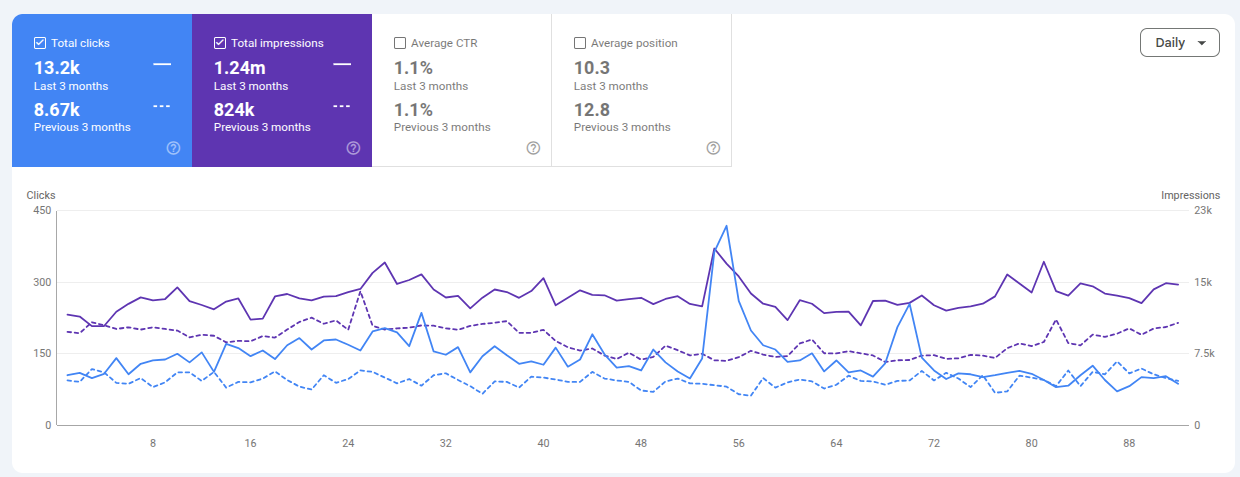
- Total Clicks increased from 8.67k to 13.2k, representing a 52.2% growth in organic traffic.
- Total Impressions surged from 824k to 1.24m, significantly expanding brand reach in search results.
- Average Position improved from 12.8 to 10.3, moving dozens of competitive keywords to the first page.
- Crawl Efficiency improved by eliminating orphan pages, allowing Google to index new products in hours rather than weeks.
Make Every Product Page Rank Higher!
Strengthen site structure, improve visibility, and increase conversions consistently.
Best Ecommerce Internal Link Tools to Audit & Optimize
You need the right technology to build a strong system of internal links. An Ecommerce internal link tool that you can trust will help you see the “big picture” of your site’s structure, authority flow, and crawl behavior.
Here are the most effective tools to use:
- Google Search Console: Ideal for analyzing which pages receive the most internal links and monitoring indexing performance. It helps you spot underlinked pages quickly.
- Ahrefs or Semrush: Powerful platforms for keyword research, backlink analysis, and identifying broken internal links that impact rankings.
- Sitebulb: Excellent for visualizing site architecture and understanding how link equity flows across your Ecommerce store.
Yoast SEO: A user-friendly WordPress plugin that suggests internal linking opportunities while you create content.
Common Internal Linking Mistakes Ecommerce Stores Make
To keep your visibility high, don’t fall for these common mistakes. Poor internal linking weakens the structure of your site, makes crawling less effective, and limits the effectiveness of your Local SEO Services in markets where competition is high.
Key Mistakes to Avoid:
- Too many links: Wondering how many internal links per page SEO experts suggest? Keep it under 100 to prevent spam signals and diluted authority.
- Broken links: Dead links frustrate users, waste crawl budget, and directly harm user experience and Local SEO Services performance.
- Using Nofollow: Avoid nofollow for internal links unless necessary, as it blocks SEO value flow between important pages.
- Irrelevant links: Only connect contextually related pages to maintain keyword relevance and strong topical authority signals.
Take Your Ecommerce SEO to the Next Level with SEO Discovery!
Strong internal links are the basis of good Ecommerce SEO. It makes your site easier to crawl, spreads link equity, and improves the rankings of your most important product pages in search results. Do not let a bad site layout stop your progress. Together with SEO Discovery, you can create an internal linking plan based on data that will improve your store’s visibility, increase conversions, and bring in steady, long-term organic revenue.
Upgrade Your Ecommerce SEO Framework Today!
Strengthen site structure, improve rankings, and drive consistent organic growth.
FAQs About How to Improve Internal Linking in Ecommerce for SEO
Internal linking SEO is the practice of connecting one page of your website to another page within the same domain. It improves navigation, strengthens site structure, and helps search engines understand relationships between content.
Internal linking helps search engines crawl and index product and category pages efficiently. It passes authority from strong pages to important sales pages, improving keyword rankings, visibility, and overall ecommerce organic performance.
There is no strict limit on internal links per page. Generally, 3 to 5 links per 1,000 words works well. Focus on relevance and user value rather than adding excessive links.
Yes, internal links help SEO rankings by distributing link equity across your website. They strengthen deeper pages that lack backlinks, improve crawl paths, and signal content importance to search engines clearly.
Internal links from high-traffic pages signal search engines that new product pages are important. This speeds up indexing, transfers authority, improves discoverability, and increases the chances of ranking for targeted keywords.
Internal linking anchor text refers to the clickable words used in a hyperlink. Using descriptive, keyword-rich anchor text helps search engines understand the linked page’s topic and improves contextual relevance.
Both internal and external links are essential for SEO success. External links build overall domain authority, while internal links control how that authority flows through your website and strengthen strategic pages.
For mobile users, internal links simplify navigation without relying on complex menus. They guide visitors to relevant pages quickly, improve user experience, reduce bounce rates, and support better engagement metrics.
To boost category SEO, link to main categories from headers, footers, blogs, and high-authority pages. Use descriptive anchor text to pass link equity and signal category importance to search engines.
Audit your website to identify internal links marked “nofollow.” Remove the nofollow attribute unless absolutely necessary, allowing search engines to crawl, pass authority, and properly index important pages.