

Objective:
This blog aims to explain how AI improves on-page SEO by enhancing keyword research, content quality, meta tags, and user experience, helping businesses achieve better rankings with smart, data-driven optimization.
AI is changing on-page SEO by automating keyword optimization, making content better, and getting results faster than traditional methods. AI can analyze competitors’ pages, figure out search intent, and show you exactly what your content needs for better rankings.
According to a report by HTF Market Intelligence, the market for AI SEO tools is expected to reach 1.5 billion by 2030
This shows how AI is going to impact the world of digital marketing and seo. So, if you’re wondering how to use AI for on-page SEO, you’re at the right place.
This blog will show you exactly how to leverage artificial intelligence to improve your website’s search performance by utilizing AI for on-page seo. So, read to the end.
Key Takeaways
- AI makes on-page SEO faster, smarter, and more accurate than traditional manual optimization methods.
- AI tools improve keyword research, content quality, meta tags, and internal linking with data-driven insights.
- Optimizing FAQs with short answers and schema is crucial for AI Overview visibility.
- Using top AI tools like Surfer, Jasper, and Clearscope significantly enhances content performance.
- Best results come from combining AI automation with human expertise for balanced, effective on-page SEO.
Table Of Contents
- Understanding AI's Role in Modern On-Page Optimization
- Essential SEO On-Page Elements That AI Can Optimize
- Practical Ways to Implement AI On-Page SEO
- AI Overviews Impact on FAQ Pages
- Most Important AI Tools for On-Page SEO
- Quick Comparison: Best AI Tools for On-Page SEO
- How We Used AI Tools for Client On-Page SEO
- Working with White Label On-Page SEO Providers
- Common Mistakes to Avoid with On-Page AI SEO
- Get Better Results with AI-Driven On-Page SEO from SEO Discovery
- FAQs About AI for On-Page SEO
Understanding AI's Role in Modern On-Page Optimization
With traditional SEO, you had to spend hours looking at keywords, tweaking meta tags, and restructuring content. Using AI for on-page SEO optimization has changed everything. AI can instantly look at thousands of data points, find ways to improve things, and identify optimization opportunities that humans would need days to discover.
The AI revolution in on-page SEO isn’t just about speed. It’s all about accuracy. AI tools understand search intent, analyze competitor strategies, and predict what Google’s algorithms are looking for. In other words, your attempts to optimize will be more targeted and effective.
Essential SEO On-Page Elements That AI Can Optimize
Before diving into specific AI applications, let’s talk about which SEO on-page elements can gain the most from AI:
- Title tags and meta descriptions that match user intent: AI analyzes search patterns to create tags that are compelling and click-worthy, based on what people are actually looking for in your niche.
- Optimizing header tags with strategic keyword placement: AI figures out the best header structure and makes sure that your H1, H2, and H3 tags have thematically relevant keywords that make the content more authoritative and easy to read.
- Better content quality and readability: AI tools check the level of vocabulary, phrase complexity, and paragraph length to make sure your content connects with your audience while still meeting professional standards and keeping them interested.
- Internal linking structure for better site navigation: Machine learning algorithms will map your site’s architecture and suggest useful internal links that distribute page authority well and make the user experience better while increasing their time on site.
- Image alt text and multimedia optimization: AI creates keyword-rich, detailed alt text for images and videos, which makes them easier for screen readers to access and gives ranking signals for search engines.
- Schema markup implementation for rich snippets: AI finds places where structured data can be added, which helps search engines understand your content better and raises your chances of showing up in featured snippets and rich results.
- Page speed and technical performance factors: AI-powered tools utilized by local seo service providers constantly check loading times, find elements that use a lot of resources, and offer ways to speed up the site or make the code better so that users are satisfied and the site works better overall.
Practical Ways to Implement AI On-Page SEO
Content Creation and Optimization
AI on the page SEO tools are great at content creation. They analyze top-ranking pages, identify gaps in the content marketing, and offer topics that your audience will be interested in. For instance, if you’re writing about digital marketing, AI can suggest subtopics that are related, optimal content length, and keywords that are relevant to your subject.
Use AI writing assistants to:
- Generate content outlines: AI reviews pages that are at the top of the search results, identifies common themes, and makes thorough outlines that cover all the essential subtopics that users expect.
- Improve readability: To keep readers interested, machine learning tools will highlight phrases that are too hard to understand and suggest simpler words and better formatting.
- Suggest semantic keywords: AI suggests LSI and related terms that fit easily, which makes the content more relevant without keyword stuffing.
- Improve flow and structure: NLP tools can find weak transitions and repeated phrases and rewrite sentences in a way that is easier and smoother while keeping your brand voice intact.
Keyword Research and Analysis
Traditional keywords research involves working on spreadsheets manually. On-page SEO AI tools now instantly look at search volume, competition, and user intent. They find long-tail opportunities and suggest different keyword versions that you might miss.
AI-powered keyword tools can:
- Discover hidden opportunities: AI can find low-competition, high-intent keywords that people who do manual research often miss. This can help you get qualified traffic in niche markets.
- Analyze competitor strategies: AI looks at rival pages backwards to find their best keywords, content gaps, and places where you can rank higher than them.
- Predict trending search terms: Predictive analytics look at search trends and online conversations to see which keywords will be popular in the future. This lets you make content ahead of time.
- Group keywords by intent: AI organizes keywords into informational, navigational, commercial, and transactional categories, helping you build content that matches each stage of the buyer journey.
Meta Tag Optimization
With AI-powered on-page SEO analysis, it’s easy to create compelling meta tags that get people to click on your links. Artificial intelligence (AI) generates many different versions of title tags and meta descriptions to see which ones get more clicks.
For example, an on-page SEO company offering the best seo services might use AI to create 10 different title tags, each optimized for a different type of user. They would then look at click-through data, emotional triggers, and character count optimization to see which one performs best for the most search engine visibility and appeal.
Content Structure Enhancement
AI on-page SEO tools look at the structure of your content and offer ways to make it better. They tell you where to put headers, how to break up long paragraphs, and where to put bullet points to make your writing easier to read. Advanced algorithms look at visual hierarchy, the amount of white space, and the flow of the content to make sure that readers can quickly scan and understand the information while staying interested in longer pieces.
AI Overviews Impact on FAQ Pages
The way Google ranks FAQ material is changing because of AI-made summaries. The AI overviews impact on the FAQ pages SEO is significant. Your Frequently Asked Questions (FAQ) sections now need to provide clear, short answers that AI can easily extract and show in search results. This means that long-form FAQ answers are less useful for getting seen.
To optimize FAQs for AI overviews:
- Answer in 40 to 60 clear words: Answers should be short and to the point. AI overviews like answers that are clear, short, and don’t have extraneous information.
- Make your headlines question-based: Use H2 or H3 tags to make each FAQ look like a whole question. This will help search engines find question-answer pairs.
- Add facts and figures: Add reliable studies or numbers to boost trust and make AI summaries more appealing.
- Put together answers for snippets: Start with a direct answer in the first line, and then add a few short details to back it up to make it more likely to be chosen for a featured snippet.
- Add schema code for FAQs: You can improve your chances of showing up in rich results and AI-generated summaries by using organized data to draw attention to questions and answers.
Most Important AI Tools for On-Page SEO
On-page SEO is now faster, better, and much more accurate thanks to AI tools. There are a lot of tools out there, but here are the most important ones for anyone who wants to improve their writing and rank higher.
1. Surfer SEO
On-page SEO is now faster, better, and much more accurate thanks to AI tools. There are a lot of tools out there, but here are the most important ones for anyone who wants to improve their writing and rank higher.
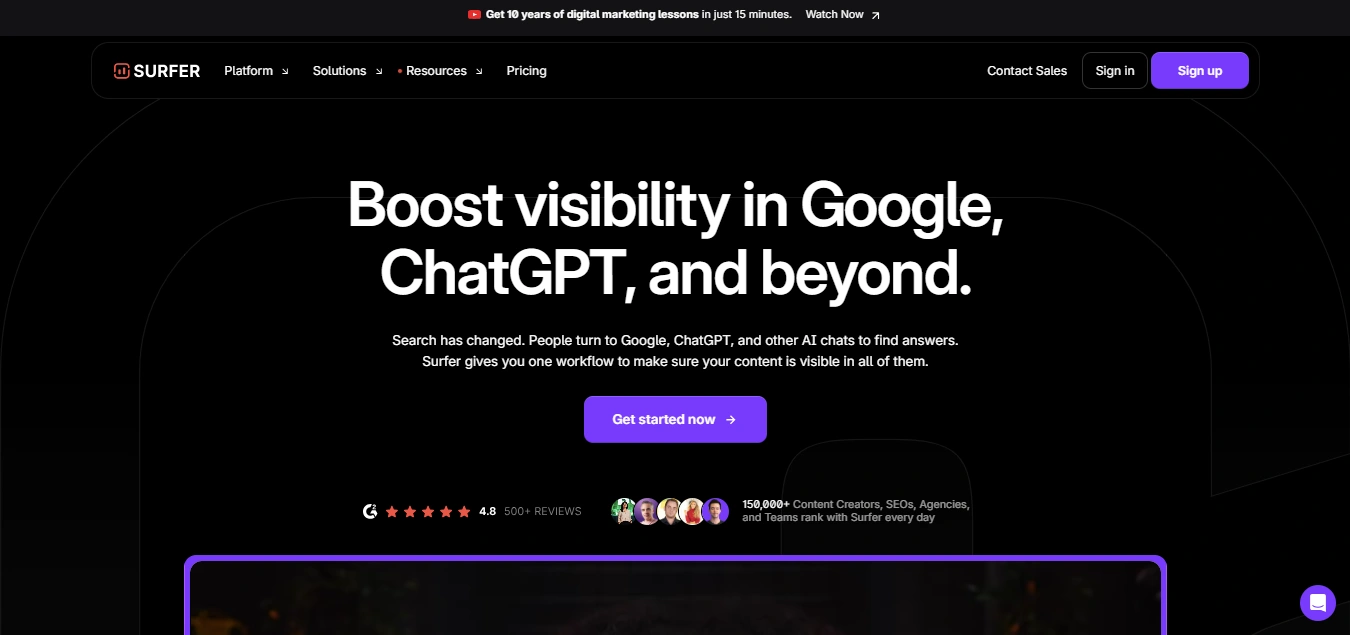
Top SEO firms use Surfer SEO, which is one of the best tools out there. It analyses the top-ranking pages and gives you suggestions right away that are based on search intent.
Why it’s important:
- Gives suggestions for NLP keywords
- Improves keyword density, word count, and headers
- Gives a Content Score based on how Google ranks sites
- Offers chances for internal linking
Surfer is a crucial tool to have if you want to write content that Google likes.
2. Clearscope
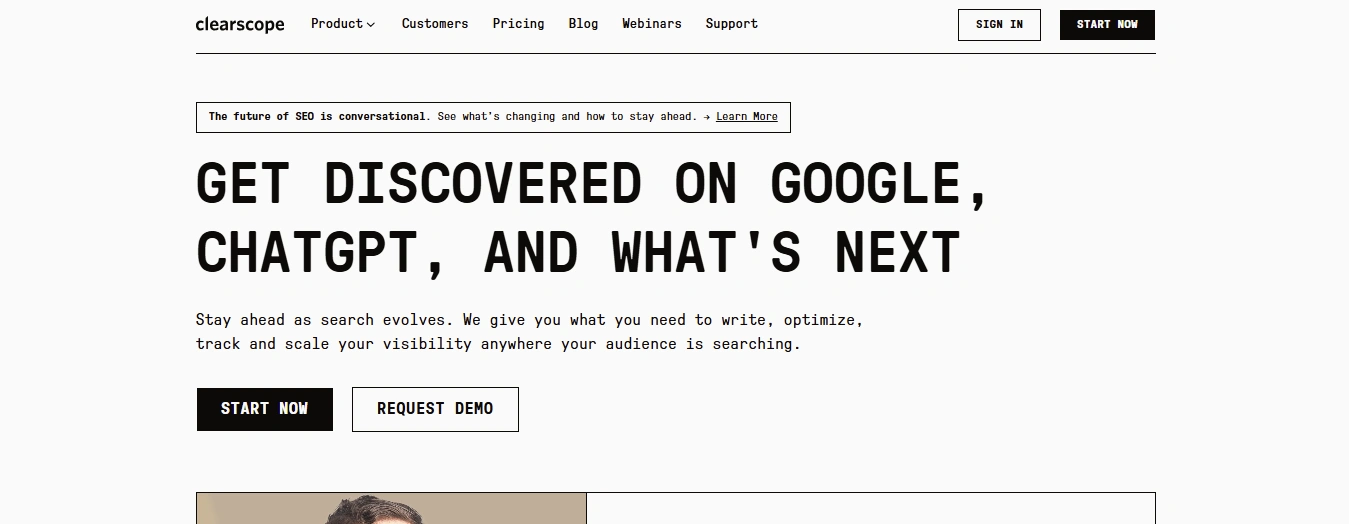
Clearscope is all about semantic search and making sure that information is relevant.
Its AI-driven topic modelling helps you make content that better answers what users want.
Why it’s important:
- Suggests terms that are semantically related
- Grades your content using the A+ to F scale
- Readability and subject depth are both improved.
- Boosts performance compared to competitors in saturated niches
Clearscope is considered the gold standard for building authority on any topic.
3. Jasper AI
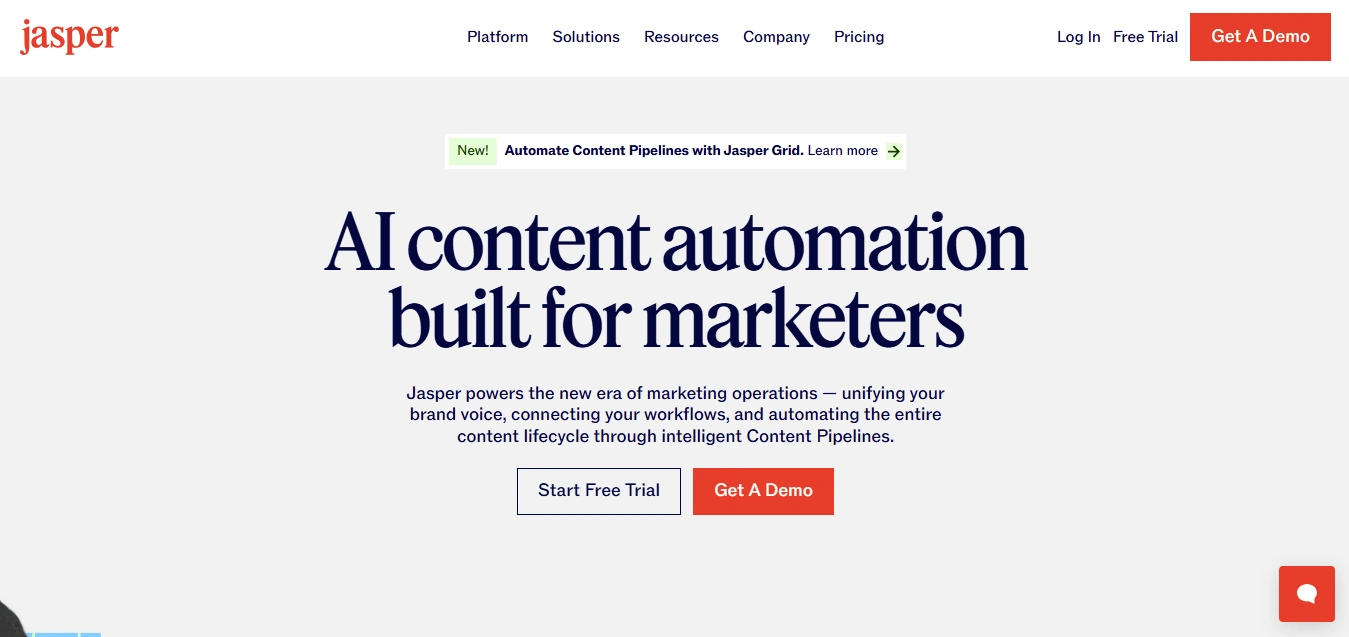
Jasper AI helps writers and marketers quickly make content that is good for SEO.
It works well with Surfer SEO, which makes creating and optimizing content easy.
What makes it important:
- Writes drafts that are good for SEO
- Makes plans, introductions, ends, and meta tags
- Adapts to your brand voice.
- Reduces content creation time by up to 70%
- Jasper is a game-changer for teams that make a high volume of content.
4. Frase.io
Based on real user questions, Frase is the best AI tool for figuring out what people are looking for and making content better.
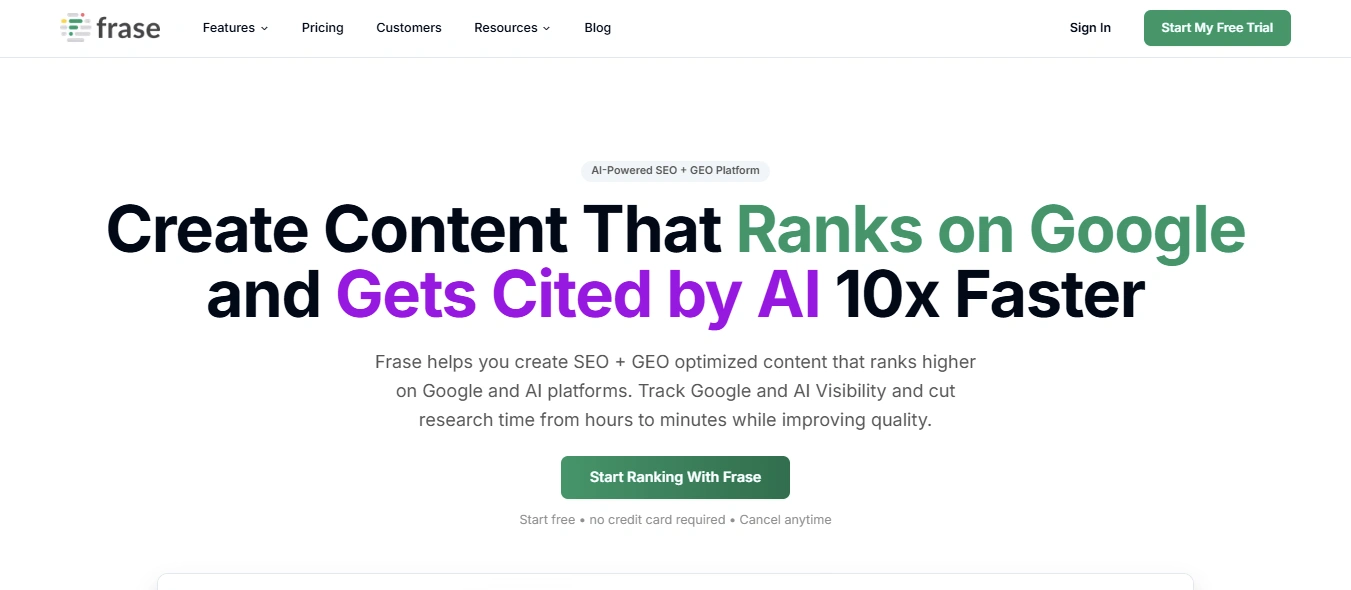
This is why SEO rely on it:
- Finds out what Google users are looking for
- Makes FAQs that work better (important for AI Overviews)
- Summarises the content of competitors
- Suggests missing subtopics for full coverage.
Since Google favours direct answers, Frase is essential for optimizing FAQs and ranking snippets.
5. Rank Math
If you use WordPress, Rank Math’s Content AI gives you strong optimization directly inside the editor.
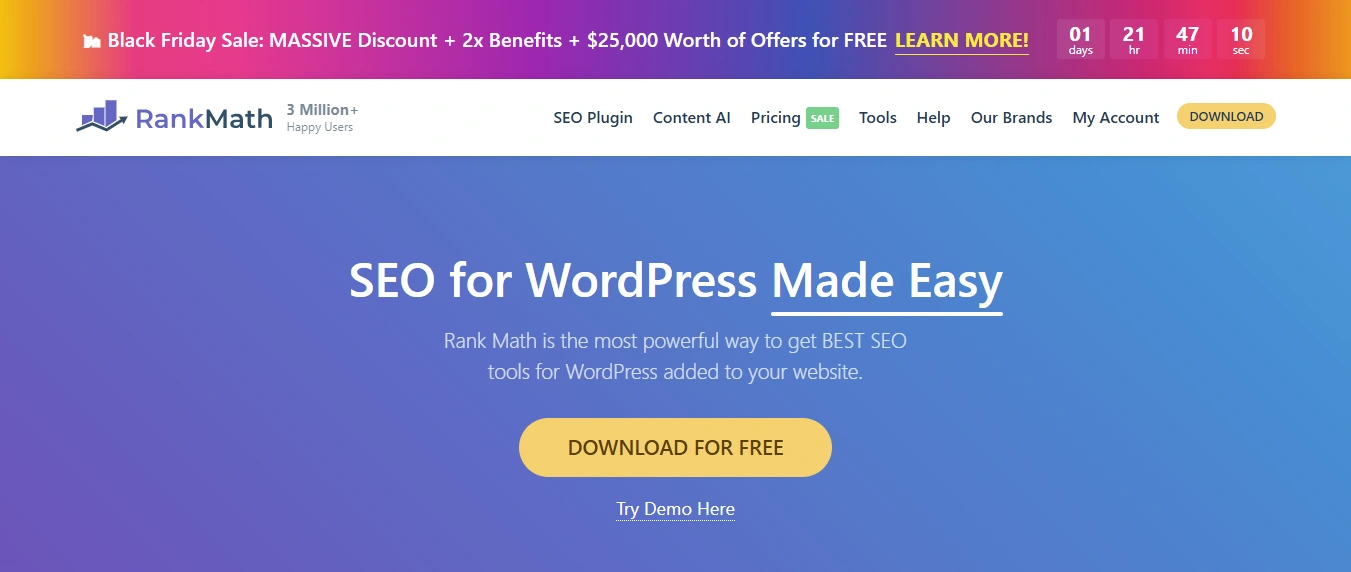
Why it’s important:
- Makes meta descriptions and titles
- Offer content scoring
- Suggestions for internal links
- Helps create schema markup in one click
- Suggests relevant Keywords based on what you’re writing about
It’s the easiest and most beginner-friendly AI tool that on-page SEO services can utilize.
Quick Comparison: Best AI Tools for On-Page SEO
Here is a quick and easy comparison of the top AI tools that help improve on-page SEO, content quality, keyword use, and overall performance.
| AI Tool | Primary Use | Best For | Key Features | Ideal User |
| Surfer SEO | Content optimization | Writers & SEO teams | NLP keywords, content score, internal linking, SERP analysis | Anyone creating long-form, SEO-focused content |
| Clearscope | Semantic keyword optimization | Authority building & competitive niches | Semantic terms, content grading, readability boost | Brands aiming for high topical authority |
| Jasper AI | AI writing assistant | Fast content production | SEO drafts, outlines, brand voice, meta tags | Agencies & teams producing content at scale |
| Frase.io | SERP intent & FAQ optimization | Snippet & AI Overview optimization | Question analysis, competitor summaries, and FAQ creation | SEO pros focused on ranking for direct answers |
| Rank Math | WordPress on-page optimization | Website owners using WordPress | Meta tags, schema, content scoring, internal links | Beginners & WordPress-based websites |
How We Used AI Tools for Client On-Page SEO
A B2B SaaS company in the project management niche was struggling to rank for competitive keywords. Their blog posts had decent content but weren’t breaking into the top 10 for target keywords like “project management best practices” and “team collaboration tools.”
Our AI-Powered Approach
Step 1: Keyword Research with Frase.io
We used Frase to analyze what users were actually searching for. The tool revealed that searchers wanted comparison tables, implementation timelines, and specific feature breakdowns, not just generic advice. We discovered 15 long-tail variations our client hadn’t targeted, including “project management tools for remote teams” with lower competition.
Step 2: Content Optimization with Surfer SEO
Surfer analyzed the top 10 ranking pages and gave us a Content Score of 42/100 for the existing article. It recommended:
- Increasing word count from 1,000 to 2,000 words
- Adding 23 semantic keywords like “workflow automation” and “task dependencies”
- Restructuring headers to match user intent
After implementing these changes, the content score jumped to 87/100.
Step 3: Meta Tags with Jasper AI
We generated 10 title tag variations and tested them for CTR potential. The winning title, “Project Management Best Practices: 12 Strategies That Actually Work in 2025”, was 15% more click-worthy than the original generic title.
Step 4: FAQ Optimization with Rank Math
Using Rank Math, we added FAQ schema markup with concise 50-word answers optimized for AI Overviews. Within three weeks, two of their FAQs appeared in featured snippets.
Results After 90 Days
- Rankings improved from position 18 to position 4 for the main keyword
- Organic traffic increased by 156%
- Two featured snippets captured
- Average time on page increased
AI tools handled the heavy lifting like keyword analysis, competitor research, and optimization scoring, while our team added strategic direction, brand voice, and user-focused improvements. This combination delivered results that neither AI alone nor manual work could achieve.
Working with White Label On-Page SEO Providers
A lot of businesses opt for white label on page SEO services to help them grow. This includes AI SEO services that help with optimization at a large scale while maintaining quality standards. With this partnership model, digital marketing firms can offer complete optimization along with paid ad services without having to build their own AI system or hire technical staff.
When looking for a white label on-page SEO partner, make sure that:
- Use advanced AI tools: Make sure the service provider doesn’t use old manual methods but instead uses modern AI platforms that offer deep insights, automated suggestions, and continuous monitoring.
- Clear Reporting:
- Look for technical seo audit services with clear reports that show how keywords are working, how traffic is changing, what optimizations have been done, and how total performance has improved.
- Consistent quality:To keep standards high across all projects, choose a partner with strong quality control, standardized processes, thebest GMB services and expert oversight.
- Customized packages: They should have a range of service options that can be changed to fit the needs of the client, the budget, and the project scope.
Common Mistakes to Avoid with On-Page AI SEO
Errors can still slow down your SEO progress, even if you use advanced tools. Stay away from these usual mistakes:
- Over-optimization: Don’t use too many phrases. It makes writing harder to read, gives it a robotic tone, and can trigger Google panalities.
- Ignoring user experience: AI suggestions should enhance value for the readers, not just for the algorithms. Pay attention to making things clear, useful, and easy to navigate.
- Poor mobile optimization: More than 60% of searches happen on phones. Technical SEO services make sure that changes made by AI work with flexible layouts, quick loading times, and a design that works well with touch screens.
- Losing brand voice: AI can dilute your tone if you don’t watch it. Always make sure the result fits the personality and communication style of your brand.
- Skipping manual review: AI isn’t perfect, so check every suggestion to make sure there aren’t any mistakes, contextual errors, or suggestions that conflict with your business goals.
Get Better Results with AI-Driven On-Page SEO from SEO Discovery
Mastering how to use AI for on-page SEO isn’t optional anymore. In today’s digital landscape, it’s necessary to stay competitive. AI tools make optimization faster, better, and more effective than ever before, no matter if you do it yourself or work with SEO service providers.
Best digital marketing services at SEO Discovery offer cutting-edge solutions that combine AI technology with human expertise to give measurable results to businesses that need professional help.
Ready to Improve Your On-Page SEO with AI?
SEO Discovery combines smart AI tools with expert strategy to help you grow faster.
FAQs About AI for On-Page SEO
Find quick answers to common questions about using AI for on-page SEO.
AI-powered on-page SEO leverages machine learning to analyse content, identify keywords, and determine user intent. It generates quick and precise optimization proposals that, in turn, improve ranking, enhance user experience, and increase visibility of the website.
AI tools analyze search volume, difficulty, intent, and competitors for a given keyword instantly. They reveal hidden long tail keywords, trendiest words, and semantic variations that manual keyword research may not uncover.
AI can optimize title tags, meta descriptions, header hierarchy, internal links, content readability, alt-text of images, schema markup, and page loading speed, enabling web pages to be more relevant, complete and search engine friendly.
Artificial intelligence analyze top-ranking pages, generates structures, improves readability, eliminates duplication, and offers semantic keyword suggestions. All these measures not only improve the quality of the content but it also strengthen content quality while keeping user intent and brand voice aligned.
The most valuable tools are Surfer SEO, Clearscope, Jasper AI, Frase.io, and Rank Math Content AI that can support you in achieving the optimum keyword density, content readability, matching user intent, and WordPress-based seo improvements.
AI creates multiple title and description variations, checks CTR potential, analyzes competitors, and chooses the most engaging, keyword-focused meta tags that improve rankings and click-through rates.
Certainly, AI analyzes your website, finds suitable linking opportunities, prescribes anchor text, and enhances user experience flow, thus helping to build authority and improve SEO overall.
Yes. White label on-page SEO providers use AI tools to deliver scalable optimization, consistent quality, expert insights, and detailed reporting, helping agencies grow without hiring extra in-house teams.
While AI is capable of speeding up the research and making it more precise, it still requires a human to take care of the context, creativity, the right tone, and strategy. Therefore, the best outcome is achieved when SEO experts utilize AI tools.