
Objective
This blog helps business owners, marketers and agencies pick the right SEO reporting software. It covers the features that matter, compares popular free and paid tools, and explains how to set up reports that track progress, prove ROI and guide better SEO decisions.
- SEO reporting software turns scattered data into clear insights on traffic, rankings, backlinks and ROI.
- The features to look for are custom reports, Google Analytics and Search Console integration, an easy interface and reliable data.
- Looker Studio is a strong free starting point. SEMrush, Ahrefs and Moz Pro add competitor, keyword and backlink analysis.
- AgencyAnalytics and Raven Tools suit agencies that manage several clients.
- Set your goals before you pick metrics, and review reports weekly or monthly.
- Local businesses should track “near me” and city-specific keyword rankings to win local customers.
Is your SEO actually working, or are you guessing? Without the right data, it’s hard to tell which pages bring in traffic, which keywords are slipping and whether your investment is paying off.
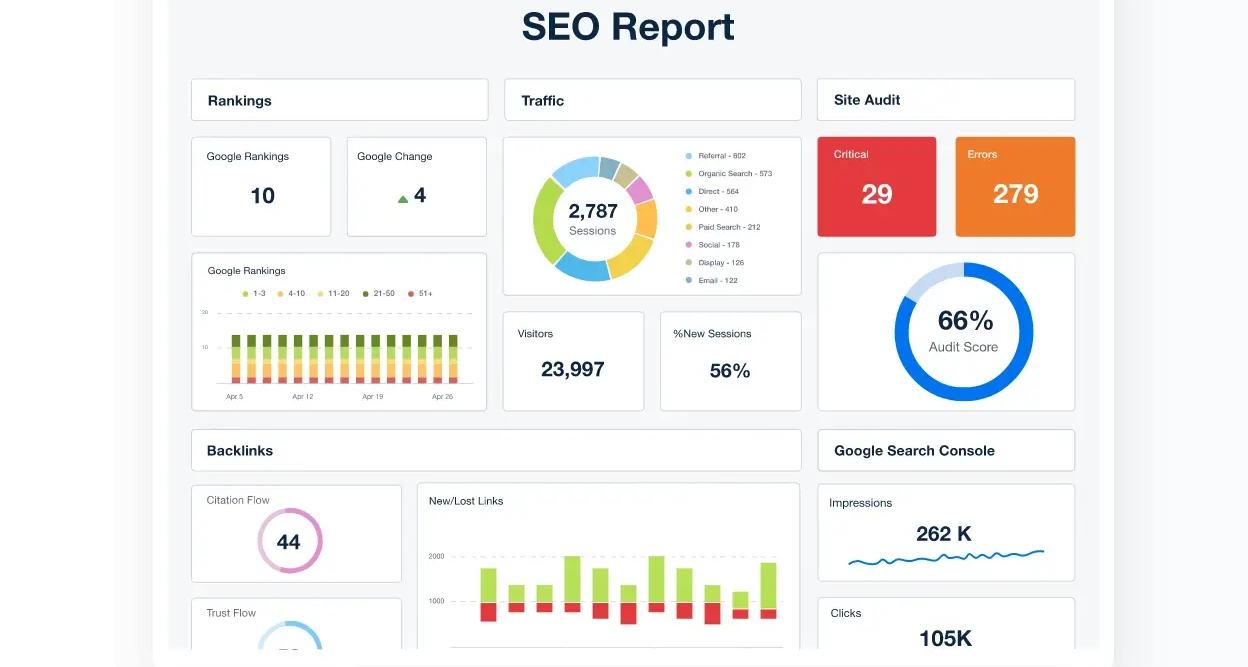
SEO reporting software answers those questions. It pulls rankings, traffic, backlinks and conversions into one clear view, so you spend less time collecting data and more time acting on it.
Did You Know?
Google Search Console stores up to 16 months of search performance data. That’s enough to compare results year over year and spot seasonal trends. Connecting it to Looker Studio or your SEO reporting tool gives you this data from Google itself at no cost.
With so many tools on the market, choosing one can feel overwhelming. In this guide, we cover the features that matter most, compare the best free and paid options, and show you how to set up reports that support real growth, whether you run a local shop in Chicago, an agency in Los Angeles or a business serving customers worldwide.
Not Sure Which SEO Tool Fits Your Business?
Why Do You Need SEO Reporting Software?
Think of SEO reporting tools as your site’s health tracker. They tell you how your SEO campaign is doing and give you better insights about making smarter decisions.
The following are the main reasons why you need to have SEO reporting:
- Tracking Progress: This will show how your website is enhancing over time.
- Spot Weak Areas: You identify where the focus should be in terms of effort.
- Save Time: These tools will collect all the data, so it doesn’t go to your head.
- Measure ROI: Know if your SEO investment is working.
For instance, an SEO reporting tool can be used by a business in Chicago, IL, to track the frequency of their website being displayed in local search results. A company in Los Angeles, CA, would want to track international traffic to know if they’re reaching a global audience.
Key Features of the Best SEO Reporting Software
Choose the following features in the SEO reporting tool that fit your needs:
- Custom reports
Each business may have different goals and objectives. Therefore, having a flexible reporting mechanism means that you will get to measure the metrics that are significant to you.
- Integration
Ensure that the SEO software one chooses to work with integrates efficiently with the other tools used within the company. These are Google Analytics and Google Search Console, among others.
- User-friendly interface
The best tools are so easy to use, even for a beginner. Seek software that does not make complicated data complicated.
- Reliable Data
Accurate data is important to make appropriate decisions. Seek a tool that is known for delivering accurate data.
- Cheap Options
Some tools come with a hefty price tag but there are also free alternatives like Google Data Studio for basic features.
Best SEO Reporting Tools
Here’s a list of some of the best SEO reporting software, both free and paid, that businesses in Chicago, Los Angeles, and other cities can use.
- SEMrush
SEMrush is a full-service tool that encompasses keyword tracking as well as competitor analysis. It’s trendy among businesses for the purpose of creating in-depth SEO reports.
- Ahrefs
Another notable reporting capability of Ahrefs is backlink analysis. This is great for businesses that strive hard for domain authority.
- Looker Studio
Among the best free options available, Looker Studio gives you the ability to customize dashboards. It links well with other Google applications like Analytics and Search Console.
- Moz Pro
Moz Pro is perfect for small businesses and beginners. It eases SEO reporting by rendering the data into readable insights on rankings and site health.
- AgencyAnalytics
AgencyAnalytics is an agency-focused tool. It can help with the management of numerous clients and can also provide professionally presented reports.
- Raven Tools
Raven Tools provides an all-in-one reporting tool for SEO, social media, and PPC reporting.
Turn Your SEO Data Into Real Growth.
We build custom SEO dashboards and reports that show exactly what’s driving traffic and leads.
Guide to Get Started
Once you’ve chosen a tool, it’s important to use it effectively. Here is a step-by-step guide to getting started:
- Define Your Goals
Ask yourself what you want to achieve. Are you trying to increase traffic, improve rankings, or get more leads? Knowing your goals will help you focus on the right metrics.
- Set Up Your Software
Most tools require some setup. Connect them to your website and any other platforms you use, like Google Analytics.
- Select Key Metrics
Common metrics to track include:
Organic Traffic: Number of people visiting your site from search engines.
Keyword Rankings: Where your site appears in search results for important terms.
Backlinks: The number and quality of websites linking to yours.
- Create Custom Reports
Tailor reports to point out the data that matters most. For instance, a Chicago business may focus on local search performance, and a Los Angeles company may focus on international traffic.
- Review Reports Regularly
SEO is an ongoing process. Set aside time to review your reports weekly or monthly and adjust your strategy based on the data.
Why Local Businesses Need SEO Reporting
Local businesses often rely on SEO to attract customers nearby. Whether you’re in Chicago, Los Angeles, or any other city, using the right tools can help you dominate local search results.
For instance, SEO reporting software can help a business based in Chicago, IL, see how well it ranks for terms like “best coffee shop Chicago.” Similarly, a company in Los Angeles can get insights on how often it appears in searches like “top web design Los Angeles.”
These insights enable a local business to finetune its strategies and resonate better with the target market.
Free vs. Paid SEO Reporting Software
When deciding between free and paid tools, consider your budget and goals.
Free Tools
Free tools like Google Data Studio are great for beginners or small businesses. They provide basic reporting features and are easy to set up.
Paid Tools
Paid options like SEMrush or Ahrefs offer advanced features like competitor analysis, backlink tracking, and in-depth reporting. They’re ideal for larger businesses or agencies managing multiple clients.
Comparing SEO Reporting Tools
| Tool | Best For | Free Plan Available? | Key Features |
|---|---|---|---|
| SEMrush | Advanced | No | Competitor analysis, keyword tracking |
| Ahrefs | Backlink tracking | No | In-depth backlink analysis |
| Google Data Studio | Beginners and free reporting | Yes | Custom dashboards, Google integrations |
| Moz Pro | Small businesses | Limited | Simple and clear reports |
| AgencyAnalytics | Agencies | No | Multi-client reporting, integrations |
Final Thoughts
The best SEO reporting software isn’t the one with the most features. It’s the one that fits your goals, budget and team. If you’re just starting, Looker Studio with Google Analytics and Search Console gives you a solid free base. As you grow, tools like SEMrush, Ahrefs or AgencyAnalytics add the depth you need for competitor research, backlink tracking and client reporting.
Whichever tool you choose, the results come from how you use it. Define your goals, track the metrics tied to them, and review your reports on a regular schedule. Data only creates value when it turns into action.
If you’d like expert help turning reports into rankings, SEO Discovery’s team can build a reporting setup and SEO strategy around your business goals.
Ready to See Real SEO Results?
Partner with SEO Discovery for tailored strategies, transparent reporting and measurable ROI
FAQs
It’s a tool that collects and shows your website’s SEO data, such as organic traffic, keyword rankings, backlinks and technical health, in easy-to-read reports and dashboards.
Looker Studio (formerly Google Data Studio) is one of the best free options. It connects directly to Google Analytics and Google Search Console so you can build custom dashboards.
Check key metrics weekly and do a deeper review monthly. SEO changes take time, so monthly and quarterly trends are more meaningful than daily swings.
Start with organic traffic, keyword rankings, backlinks, click-through rate and conversions. Local businesses should also track Google Business Profile performance and local keyword rankings.
Free tools work well for beginners and small sites. Paid tools are worth it when you need competitor analysis, in-depth backlink data, white-label reports or multi-client management.
Yes. It shows how you rank for location-based searches like “best coffee shop Chicago,” so you can improve your local visibility and attract nearby customers.
Agency Analytics and Raven Tools are built for agencies. They offer multi-client dashboards, integrations and branded, client-ready reports.