
Objective
This guide provides a comprehensive framework to measure SEO ROI in 2026, aligning technical search performance with revenue data to prove the financial value of organic growth in an AI-driven market.
- The early discovery process of SEO needs credit for its work, which extends beyond final click results.
- Link search data to sales to track visitors to “Closed-Won” revenue.
- The measurement of ROI requires assessment of expenses that were avoided through paid advertising.
- The current definition of success measures the frequency with which AI assistants suggest your brand to users.
- SEO operates as an effective business resource which generates revenue for companies beyond the initial optimization efforts.
Get clear ROI tracking from SEO Discovery starting at $250/month.
In the rapidly evolving digital landscape of 2026, the question on every CMO’s mind is no longer just “Are we ranking?” but rather, “How to measure SEO ROI effectively?” The search environment has shifted from simple lists to a complex ecosystem of AI-generated answers, voice-activated assistants, and personalized LLM results. If you are still trying to measure SEO ROI using outdated vanity metrics like raw traffic volume or keyword positions, you are missing the bigger picture of sustainable business growth.
Around 49% of marketers say organic search provides the highest ROI of all marketing channels and organic search drives roughly 40 % of overall business revenue.
Table Of Contents
- How SEO Services Transformed Organic Revenue for Global Brands
- Why a Professional SEO Agency Focused on Measurable ROI is Vital
- Modern Tracking and Measuring SEO ROI in the AI Era
- Can You Find an SEO Agency Guaranteeing Measurable ROI?
- Comparing SEO ROI Measurement Methods for Agencies
- Practical Steps: How to Measure ROI on SEO Today
- Ready to Turn Your Organic Search into a Predictable Revenue Engine?
- FAQs About How to measure SEO ROI in 2026?
Establishing the Best SEO ROI Measurement Methods
To understand the health of your digital marketing, you need to move beyond “estimated traffic” and look at the actual movement of capital. The most effective SEO ROI measurement methods involve a mix of direct attribution, cost-avoidance modeling, and long-term asset valuation.
The standard formula remains the bedrock of your analysis:
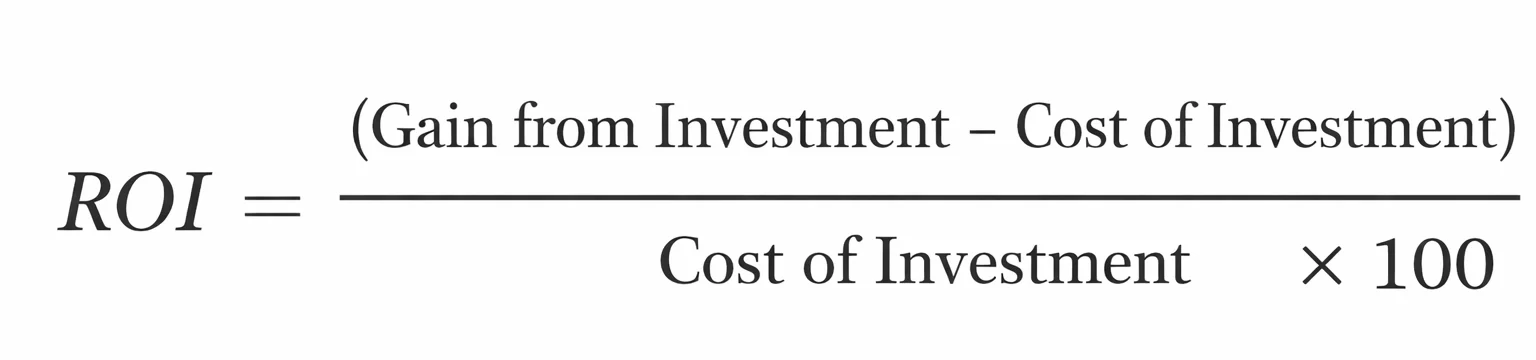
Nevertheless, the “Revenue” part of this formula is the one most brands find challenging by 2026. AI-powered tools for mobile could be just the way a user will come across an overview, and later on, he/she will make a conversion on a desktop through a branded search. It is only by implementing multi-touch attribution (MTA) that we can correctly measuring the ROI of SEO. MTA makes certain that in the event a user learns about your brand through a top, funnel informative blog post, but after three weeks, decides to buy, then SEO gets the right share of the credit.
The Lifecycle of SEO Costs
To get an accurate “Cost of Investment,” you must look beyond the monthly retainer. Your cost side should include:
- Human Capital: Internal hours spent on strategy and approval. For many businesses, integrating the best seo services requires a clear allocation of these internal resources to ensure every campaign stays on track.
- Production Costs: Costs for high-fidelity video, original research, and AI-human hybrid editing.
- Technical Infrastructure: Premium hosting, CDN costs, and API credits for SEO software.
How SEO Services Transformed Organic Revenue for Global Brands
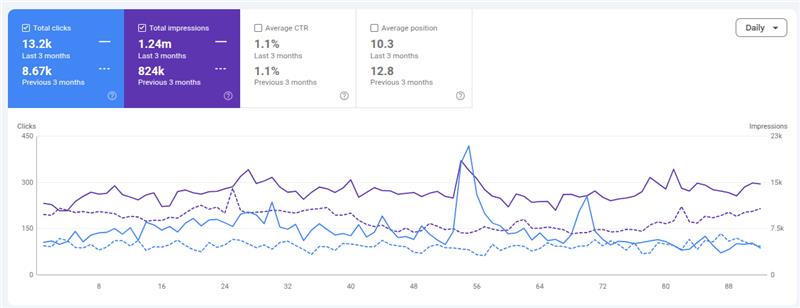
By moving beyond basic rankings and focusing on revenue-centric optimization, SEO Discovery transformed this client’s digital presence from baseline performance to a high-traffic asset.
As shown in our recent performance data, we achieved a substantial uplift in visibility and engagement for our client:
- Total Clicks: We increased organic traffic from 8.67k to 13.2k in just three months.
- Impression Growth: Brand visibility surged from 824k to 1.24m total impressions.
- Rank Stability: We improved and maintained a competitive average position of 10.3.
- Consistent Momentum: Daily click volume peaked at nearly 450 clicks per day, vastly outperforming the previous period.
Why a Professional SEO Agency Focused on Measurable ROI is Vital
Many businesses are overwhelmed by the technical aspects of modern tracking, especially with the phasing out of third-party cookies. This is why partnering with an SEO agency focused on measurable ROI has become the industry standard for enterprise-level growth. At SEO Discovery, we understand that whereas a traditional agency might simply talk about “pixel rank changes,” a revenue-focused one will actually sync its strategy with your CRM to guide your customer journey.
Usually, when a company collaborates with a results-oriented SEO agency that is driven by measurable ROI, the dialogue moves away from the technical clutter to the business impact. Rather than talking about meta tags or bounce rate, you talk about CAC and LTV. Such a company uses highly technical methods like Local SEO Services and server-side tagging to be able to measure not just the quantity of leads but also their quality very closely.
Can You Find an SEO Agency Guaranteeing Measurable ROI?
A prominent query during the procurement stage is whether you should employ an SEO agency that guarantees a measurable return on investment. As hardly anyone can “guarantee” that a particular Google ranking or a certain number of clicks is obtained since changes in the algorithm are continuous, an SEO agency guaranteeing measurable ROI in terms of reporting transparency and accountability is non-negotiable.
Businesses often seek a comprehensive GMB Service to stabilize their local presence while navigating these algorithm shifts. It is expected that a trustworthy agency in 2026 will provide a “Single Source of Truth” dashboard that shows how every organic entry point leads to a conversion.
They do not promise the weather (the algorithm), but they do promise the ship (the tracking and strategy) is capable of making the most of the traffic that comes, as if capturing every possible dollar from it. To achieve this, SEO Discovery ensures every data point is verified against real sales figures.
Do you want to stop wasting advertising dollars?
Discover how to measure ROI on SEO by comparing organic traffic to market CPC spend.
Modern Tracking and Measuring SEO ROI in the AI Era
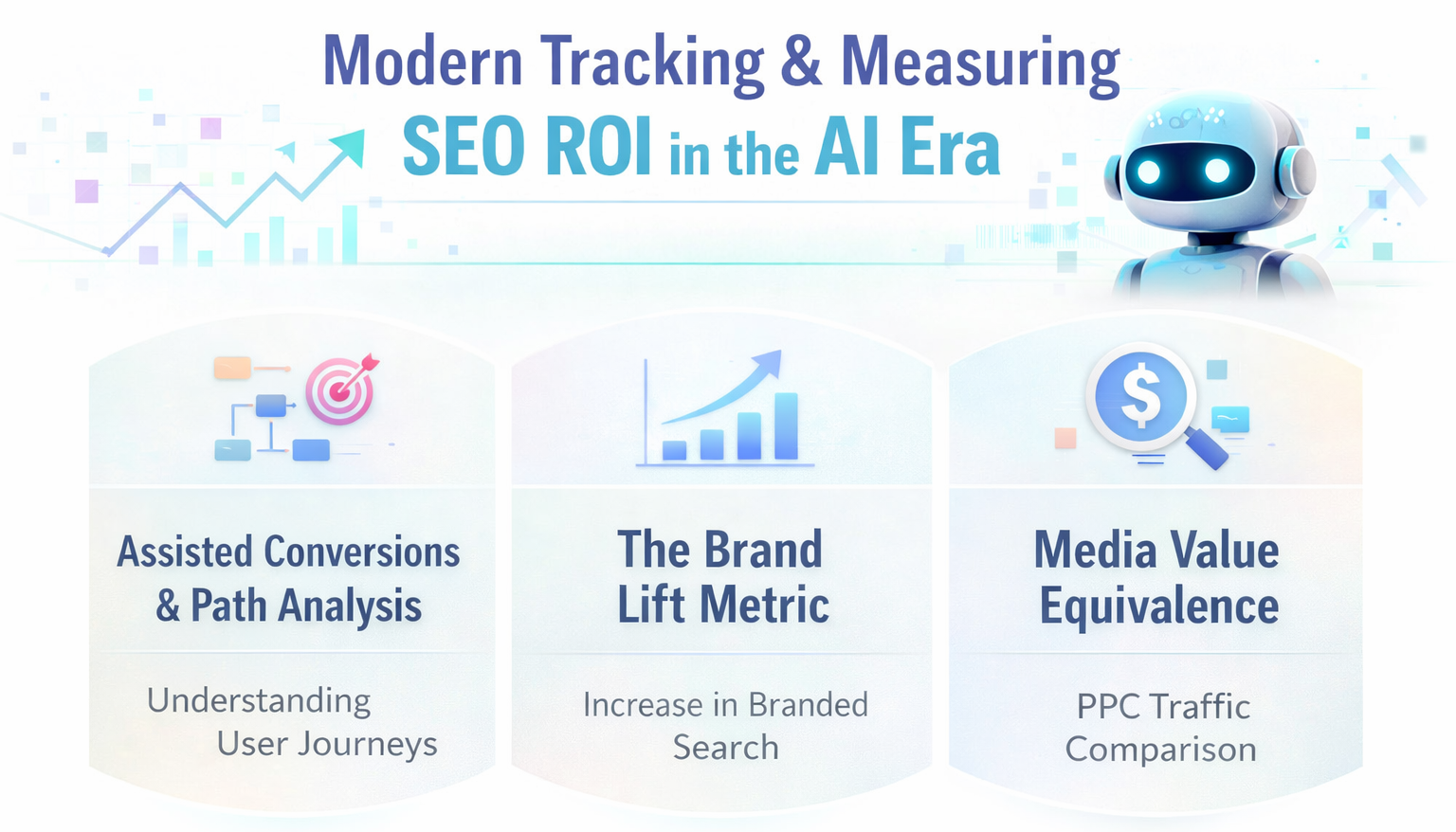
The era of Search Generative Experience (SGE) and AI Overviews has witnessed that traditional click-through rate (CTR) is no longer the sole measure of success. Many forward-thinking brands now invest in AI SEO services to optimize for LLM citations. Besides tracking and measuring SEO ROI, in 2026, there will be a new metric called “Share of Model,” which is how frequently AI assistants such as Gemini or ChatGPT mention your brand as their top recommendation in their conversational output.
In order to maintain a competitive edge, the framework for tracking and measuring SEO ROI must also be built around these three fundamental points:
1. Assisted Conversions and Path Analysis
SEO is rarely a ‘one, and, done’ thing. With path analysis, you can find out how many times a person had to check your organic content before they eventually pressed a ‘Request a Demo’ button. To support this, Link building services play a crucial role in establishing the initial authority needed to appear in these user paths. Even if SEO wasn’t the last touchpoint, it must be highly profitable if, in 40% of your sales, it was the first one.
2. The Brand Lift Metric
When your SEO gets better, one of the results is usually an increase in your branded search volume (people searching for your company name). This happens because of the “Billboard Effect” of being at the top of the rankings for informational queries. Performing comprehensive keywords research allows you to identify these high-intent informational terms. By calculating this raise, you can allocate some of the revenue from your direct traffic to your SEO budget.
3. Media Value Equivalence
One of the clearest ways to show return on investment (ROI) is to work out how much the same amount of organic traffic would have cost a paid search campaign (i.e. PPC equivalent). Utilizing professional SEO content writing ensures that your organic pages convert at a rate comparable to paid landing pages. If your organic rankings for a keyword bring 10, 000 clicks and the term has a $15 CPC, then you have created $150, 000 worth of “Media Value” just for that month.
Comparing SEO ROI Measurement Methods for Agencies
The evaluation process for various SEO ROI measurement methods agencies leads to two primary analytical approaches, which include the “Lead Attribution Model” and the “Market Share Model.”
The Lead Attribution Model
This serves as the B2B and SaaS industry benchmark for excellence. The process requires establishing a link between your analytics system (such as GA4) and your customer relationship management system (Salesforce). Proper internal linking ensures that once a visitor arrives, they are guided toward high-value lead magnets. The unique identifier allows you to track “Visitor A” who visited through an organic search for “Cloud Security Trends” and became a lead that resulted in a $50,000 contract deal.
The Market Share Model
This approach finds common application among B2C and E-commerce businesses. The agencies use Digital Share of Voice measurement for their operations instead of tracking separate leads. To maximize this share, many brands turn to the Best Digital marketing Services available today. Your market share stands at 20 percent because your website attracts 200000 out of 1000000 total category searches. Your average conversion rate, together with order value, represents the foundation for accurate ROI projections based on this share.
The agencies with successful SEO ROI measurement systems for 2026 use methods that combine these two systems. The system assesses direct financial impacts from the CRM system while it also measures value from high-authority backlinks and AI-generated citations. By measuring the ROI of SEO through both lenses, you get a 360-degree view of your investment’s performance, accounting for both immediate sales and long-term brand dominance.
Will you scale your business with AI search?
Start tracking and measuring SEO ROI today to dominate the era of Search Generative Experience.
Practical Steps: How to Measure ROI on SEO Today
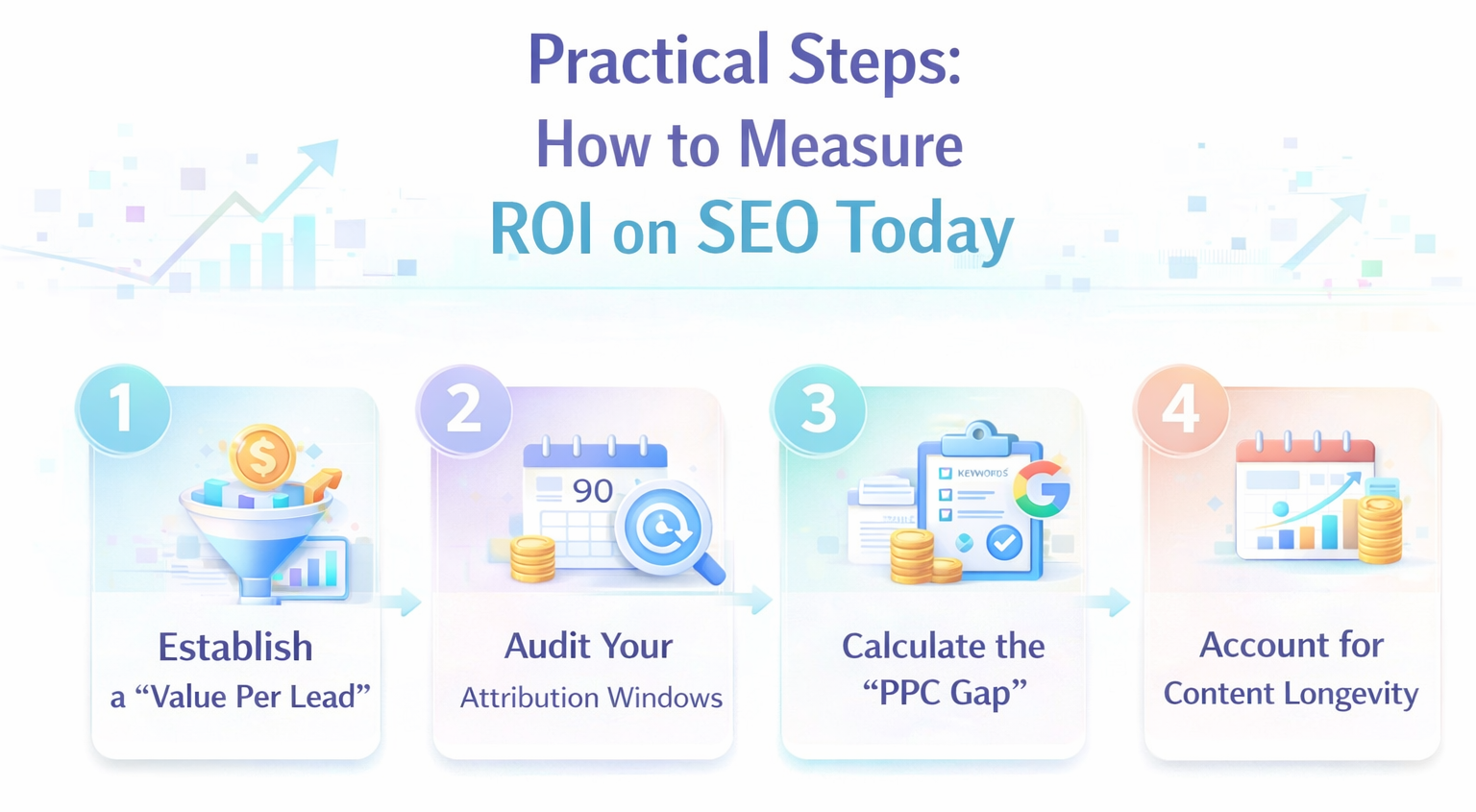
If you are looking for a definitive checklist on how to measure ROI on SEO, start with your data foundation. Conducting a regular Technical SEO audit Services is the first step in ensuring your tracking environment is stable. Without clean, first-party data, your ROI calculations will be flawed and likely undervalued.
Step 1: Establish a "Value Per Lead"
This serves as the B2B and SaaS industry benchmark for excellence. The process requires establishing a link between your analytics system (such as GA4) and your customer relationship management system (Salesforce). Effective content marketing helps increase the value of each lead by educating the prospect before they ever reach your sales team. The unique identifier allows you to track “Visitor A” who visited through an organic search for “Cloud Security Trends” and became a lead that resulted in a $50,000 contract deal.
Step 2: Audit Your Attribution Windows
In 2026, the buying cycle is longer. Set your attribution window to at least 90 days. High-quality SEO content writing keeps users engaged over these long cycles, allowing you to capture the full impact of your top-of-funnel content that might take months to nurture a prospect into a buyer.
Step 3: Calculate the "PPC Gap"
One of the quickest ways to see how to measure ROI on SEO is to look at your top 100 keywords and calculate their total cost if they were paid ads. This “saved spend” is a direct contribution to the company’s profitability. It represents the money you didn’t have to pay to Google to maintain your market position.
Step 4: Account for Content Longevity
Unlike a TV ad or a PPC campaign, SEO content has a “decay rate.” A blog post written in 2024 might still be generating revenue in 2026. To accurately measure SEO ROI, you must distribute the cost of that content over its entire productive lifespan, not just the month it was published.
Ready to Turn Your Organic Search into a Predictable Revenue Engine?
You should stop making assumptions about your marketing expenses. Your business requires a comprehensive financial partner because AI-driven search systems and broken customer journeys demand more than a standard search company.
Are you looking for an SEO agency focused on measurable ROI that can prove its value in your CRM, not just on a spreadsheet? Our team specializes in high-impact tracking and measuring SEO ROI using the latest 2026 attribution models. Our services will help you improve your methods for measuring SEO ROI, while we provide an SEO agency that delivers transparent performance results, which will help your business grow.
Are you seeking a partner that guarantees results?
Hire an SEO agency guaranteeing measurable ROI through our transparent and real-time revenue dashboards.
FAQs About How to measure SEO ROI in 2026?
Typical SEO return on investment reaches 5:1 which means businesses earn five dollars for each dollar spent on SEO services. SaaS companies that experience rapid growth tend to achieve higher returns on their investments as time progresses.
SEO functions as a long-term investment. Businesses typically achieve measurable returns on their investments after 6 to 12 months while they can begin tracking PPC savings within a shorter timeframe.
PPC advertising functions as a direct and transactional system. SEO measurement becomes a challenging process because it requires tracking multiple user interactions and AI Overviews which include “zero-click” searches and brand establishment through extended time periods.
No one can guarantee Google rankings but a trustworthy SEO agency will provide measurable ROI through their tracking systems and their dedication to adjusting strategies until they accomplish revenue targets.
The 2026 optimal technology stack consists of GA4 which tracks website traffic combined with Salesforce CRM for sales information and dedicated “Share of Model” systems that monitor AI citation references.
Zero-click searches provide brand impressions without a website visit. We measure their ROI through “Brand Lift” (increased branded searches) and “Share of Model” citations in AI results.
Yes. For an accurate ROI, you should include all costs, including agency retainers, software, and the time your internal team spends on SEO tasks.
These occur when SEO brings a user to your site early in their journey, but they eventually convert via a different channel (like an email or an ad). These elements serve as essential components for determining the exact SEO return on investment.
The system now examines user interactions through “Share of Model” instead of counting “blue link” clicks. The system currently measures how frequently LLMs suggest your brand as an answer to user inquiries.
Monthly reports are standard for tracking trends, but a deep-dive ROI analysis should be conducted quarterly to account for the time it takes for organic changes to impact the bottom line.