


Is your website struggling to show up on Google, even though it looks great and has solid content? You’re not alone. Many site owners face this issue because of hidden technical problems that search engines notice—even if users don’t. These issues often fly under the radar until traffic drops or rankings stall.
Without a proper technical SEO audit, problems like broken links, slow loading pages, or poor mobile usability can quietly block your success.
91% of web pages get no traffic from Google, often due to unresolved technical SEO issues.
In this blog, we’ll show you how to run a technical SEO audit and fix the common issues that might be hurting your site. Simple steps, big results—let’s get into it.
Table of Contents
- What Are Technical SEO Issues?
- Why Addressing Technical SEO Issues is Crucial
- Most Common Technical SEO Issues
- How to Run a Technical SEO Audit
- Fixing Common Technical SEO Issues
- Long-Term Strategies to Prevent SEO Technical Issues
- Additional Optimization Tactics
- When to Hire SEO Experts
- Why Choose SEO Discovery for Your Technical SEO Needs?
- FAQs About Technical SEO Issues
What Are Technical SEO Issues?
Technical SEO issues are challenges within a website’s infrastructure that prevent search engines from effectively crawling, indexing, and ranking the content. Unlike content-related problems, these are more backend-focused and involve the site’s performance, security, coding structure, and overall user experience. These issues can impact how search engines interact with a website, which in turn affects the visibility of the site in search engine results pages (SERPs). Common SEO technical issues can range from slow page load times, broken links, improper use of redirects, to improper handling of mobile optimization, and improper site architecture. Identifying and fixing these issues is crucial for improving a site’s overall SEO performance and ensuring that search engines can efficiently access and evaluate its content.
Why Addressing Technical SEO Issues is Crucial
If technical issues remain unresolved, even high-quality content may remain buried in search results. Search engines use complex google algorithm updates to scan and rank websites, and if a site’s infrastructure is flawed, it won’t pass these automated inspections.
Resolving these SEO technical issues ensures that a site is:
- Easily crawlable by search engines
- Mobile and user-friendly
- Optimized for fast loading speeds
- Structured correctly for indexing
Regularly performing a technical SEO audit is critical to maintaining long-term SEO health.
Most Common Technical SEO Issues
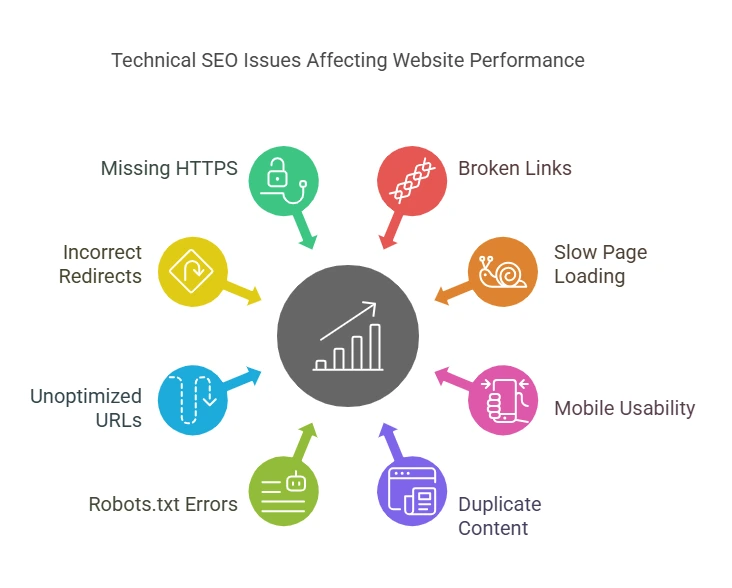
Identifying and resolving the most common technical SEO issues is the first step toward a better-performing website.
1. Broken Links and 404 Errors
Broken internal or external links lead users to dead ends and create a frustrating experience. Additionally, search engine crawlers encounter obstacles, which may lead to reduced indexing.
How to Fix: Use tools such as Screaming Frog or Ahrefs to locate broken links and either update or remove them. Implementing 301 redirects for removed pages can preserve link equity.
2. Slow Page Loading Speed
A website that takes more than 3 seconds to load loses a significant percentage of its visitors. Slow Page Loading Speed is a direct ranking factor in Google’s algorithm.
How to Fix: Compress large image files, minimize code, enable caching, and consider using a Content Delivery Network (CDN). Regular audits with Google PageSpeed Insights can help maintain performance.
3. Mobile Usability Issues
With mobile-first indexing, Google prioritizes how a site performs on mobile devices. Poor website design or slow mobile loading times directly affect rankings.
How to Fix: Ensure responsive design, avoid intrusive interstitials, and use large, legible fonts. Google’s Mobile-Friendly Test provides clear insights.
4. Duplicate Content
Duplicate content confuses search engines and dilutes ranking signals. It often arises from similar product descriptions, parameter URLs, or CMS templates.
How to Fix: Implement canonical tags, consolidate similar pages, or use 301 redirects. Professional content writing services can create unique and SEO-optimized content to replace duplicates.
5. Errors in Robots.txt and Sitemap.xml
These essential files guide search engine crawlers. If misconfigured, they may block important sections of a website.
How to Fix: Ensure the robots.txt doesn’t disallow critical directories. Submit a properly formatted sitemap.xml to Google Search Console.
6. Unoptimized URL Structures
URLs that are long, cluttered, or filled with unnecessary parameters can confuse both users and search engines.
How to Fix: Use short, readable URLs that include relevant keywords. Avoid dynamic strings where possible.
7. Incorrect Redirects
Using 302 redirects instead of 301s for permanent page changes may confuse search engines and lead to ranking drops.
How to Fix: Conduct a redirect audit to identify improper redirects and switch to permanent (301) redirects where appropriate.
8. Missing HTTPS (SSL Certificate)
Security is now a trust and ranking signal. A site without HTTPS may be flagged as ‘Not Secure’ by browsers.
How to Fix: Install an SSL certificate and ensure all internal linkings are updated to HTTPS.
How to Run a Technical SEO Audit
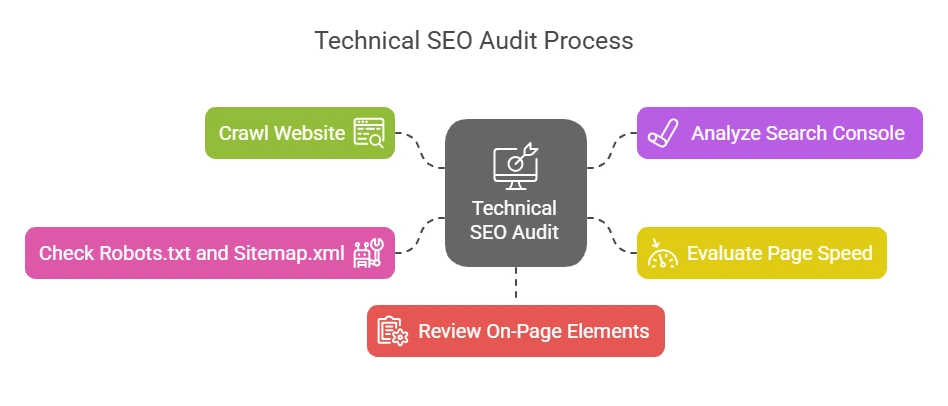
Conducting a technical SEO audit provides a structured way to identify and address existing problems.
Step 1: Crawl the Entire Website
Use SEO crawlers like Screaming Frog, DeepCrawl, or Sitebulb to get a full picture of technical health. They help detect issues like broken links, redirect chains, and duplicate content.
Step 2: Analyze Google Search Console Data
Search Console offers direct feedback from Google, including crawl errors, indexing issues, mobile usability reports, and Core Web Vitals data.
Step 3: Evaluate Page Speed and Performance
Use tools like GTmetrix, Google PageSpeed Insights, or WebPageTest to assess performance and identify slow-loading elements.
Step 4: Check Robots.txt and Sitemap.xml Files
Ensure these files are accessible, correctly formatted, and up to date. Submit the sitemap in Google Search Console to improve indexing.
Step 5: Review On-Page Technical Elements
Audit meta tags, headers, structured data, and URL formats. Though on-page SEO overlaps with content strategy, it plays a major technical role.
Businesses can streamline this process by leveraging professional technical SEO audit services offered by agencies.
Not Sure Where Your Website Stands? Let’s Audit It Together!
Fixing Common Technical SEO Issues
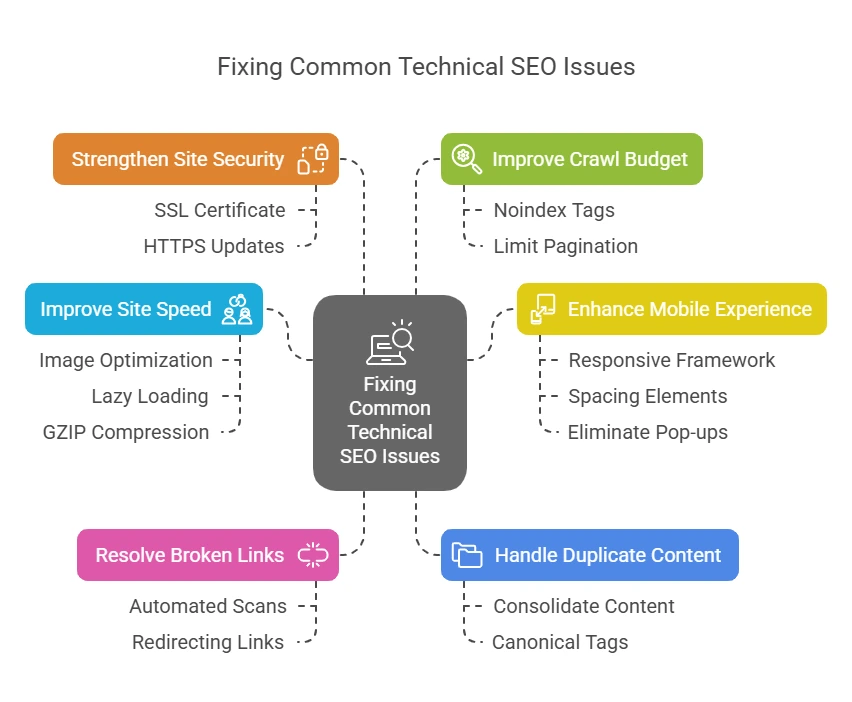
Once problems are identified, the focus shifts to implementing fixes. Here’s how to start fixing common SEO technical issues:
1. Resolve Broken Links
Keep user experience and crawler flow smooth by fixing or redirecting all broken links. Use automated scans to regularly identify and fix new issues.
2. Improve Site Speed
Speed up loading time by optimizing images, using lazy loading, and implementing GZIP compression. Remove unused scripts and defer non-essential code.
3. Enhance Mobile Experience
Adopt a responsive framework, ensure clickable elements are appropriately spaced, and eliminate mobile-only pop-ups.
4. Handle Duplicate Content Efficiently
Eliminate duplicates by consolidating content and applying canonical tags. Consider SEO Guest Post Services to diversify your content reach and improve uniqueness.
5. Strengthen Site Security
Apply an SSL certificate site-wide. Ensure mixed content issues are resolved and update internal links to HTTPS.
6. Improve Crawl Budget Efficiency
Use noindex tags for thin or irrelevant pages and limit pagination depth. These changes prevent search engines from wasting crawl capacity.
E-Commerce SEO services often include advanced speed optimization and indexing fixes tailored to online stores.
Long-Term Strategies to Prevent SEO Technical Issues
Routine Audits
Make it a habit to check your site’s technical health regularly, at least every few months. Doing this helps you catch any issues early on before they affect your rankings. You can use tools like Google Search Console or work with an SEO expert to track changes and ensure everything is running smoothly. Regular audits keep your website in good shape and prevent problems from piling up.
Monitoring Google Algorithm Changes
Google’s algorithms are always changing, and these updates can affect your website’s SEO. For example, Core Web Vitals, which focuses on things like page speed and how quickly users can interact with your site, has become very important. By staying up-to-date with Google’s updates, you can make sure your site follows the new rules and doesn’t lose rankings. Keep an eye on Google’s announcements or follow SEO blogs to stay informed.
Collaborate with Experts
Working with a digital marketing agency or SEO expert ensures that your site is always being monitored and updated. They can spot issues before they become bigger problems and help you keep your site running smoothly. Experts also know the latest SEO trends, so they can make sure your site stays optimized for search engines.
Implementing Scalable SEO Solutions
As your website grows, it’s important to have a solid SEO foundation in place. This means organizing your site well, using structured data, and making sure your site can handle more visitors and pages without running into technical issues. By setting things up properly from the start, you can avoid future headaches as your website expands.
Staying Updated with Best Practices and New Technologies
SEO is always changing, with new tools and best practices emerging regularly. Keeping up with the latest SEO trends and technologies helps you stay ahead of potential issues. Learning about new developments or working with experts who are familiar with the latest SEO strategies ensures your site remains competitive and well-optimized.
Additional Optimization Tactics
- Apply schema markup to enrich search results.
- Use breadcrumb navigation to enhance site structure.
- Keep critical content within a few clicks of the homepage.
- Set up structured data for products, reviews, and local business listings.
Local businesses can benefit from targeted local SEO services, while startups may explore SEO for Small Businesses packages for cost-effective solutions.
When to Hire SEO Experts
While some fixes are manageable, many technical SEO issues require technical expertise. For growing businesses or complex websites, it makes sense to hire SEO specialist teams.
Professional services may include:
- Full technical SEO audit services
- Customized content marketing strategies
- Targeted local SEO services for regional visibility
- Content writing services to eliminate thin or duplicate pages
- SEO Guest Post Services to gain authoritative backlinks
Why Choose SEO Discovery for Your Technical SEO Needs?
When it comes to resolving complex technical SEO issues and boosting your site’s visibility, partnering with the search engines optimization agency can make all the difference. SEO Discovery is a globally trusted digital marketing agency in India with over a decade of experience helping businesses of all sizes dominate search rankings.
- Comprehensive Technical SEO Audits
- Dedicated SEO Specialists
- Tailored SEO Strategies
- 24/7 Support and Transparent Reporting
- Cost-Effective SEO Packages
Ready to Eliminate Your Technical SEO Issues and Drive More Traffic to Your Site?
FAQs About Technical SEO Issues
Technical SEO refers to the optimization of a website’s infrastructure to help search engines crawl, index, and rank the website effectively. It includes optimizing site speed, mobile usability, security, site structure, and more.
Technical SEO is crucial because it ensures that search engines can easily access and evaluate a website’s content. Without proper technical optimization, even the best content may struggle to rank, resulting in lower visibility and traffic.
A technical SEO audit involves evaluating your website’s health using SEO tools to identify issues such as broken links, slow loading times, poor mobile usability, and improper redirects. You should analyze Google Search Console, conduct site crawls, and review performance metrics to pinpoint issues.
The most important technical SEO issues to address include broken links, slow loading speeds, mobile usability, duplicate content, missing HTTPS (SSL certificate), and issues with robots.txt and sitemap.xml files.
To fix technical SEO issues, you need to address specific problems like updating broken links, optimizing page speed, ensuring mobile responsiveness, implementing proper redirects, and ensuring your site uses HTTPS. Regular audits and ongoing monitoring are essential to keeping your site in top shape.
Growmatic’s process for fixing technical SEO issues includes a thorough website audit to identify key areas for improvement. They then implement fixes such as improving page speed, correcting broken links, optimizing mobile experience, and more, followed by ongoing monitoring to ensure lasting performance.
It’s recommended to perform a technical SEO audit at least every 3 to 6 months to ensure your website is optimized and compliant with the latest SEO best practices. Regular audits help catch any emerging issues before they negatively impact rankings.
Some popular tools for identifying technical SEO issues include Screaming Frog, Ahrefs, Google PageSpeed Insights, GTmetrix, DeepCrawl, and Google Search Console. These tools can help you detect issues like broken links, slow loading times, and indexing problems.